The EV Battery Chemistry That's Safest and Cheapest Is the Hardest to Recycle
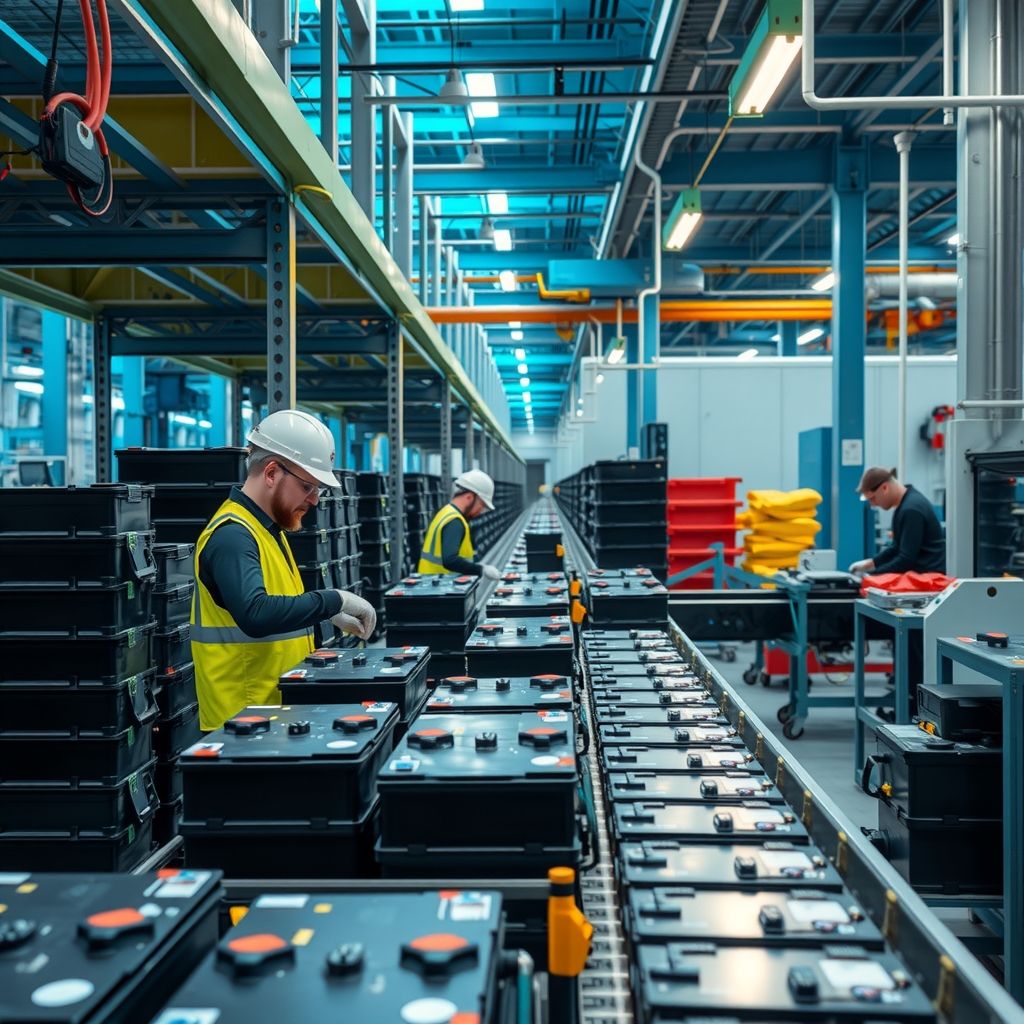
Lithium iron phosphate (LFP) batteries now power a growing share of affordable EVs because they are cheap, don’t need cobalt or nickel, and are far less prone to thermal runaway than the chemistries they’re replacing. That same combination of properties makes them economically difficult to recycle. In North America, recyclers are currently charging gate fees of roughly $1.50 to $2.00 per kilogram just to accept LFP scrap — meaning the chemistry that made EVs affordable is also the one nobody wants to recycle for free.
This isn’t a minor technical footnote. It’s a structural problem for the EV industry’s sustainability case: the batteries that are winning on cost and safety are losing on circularity, right as regulators start mandating recovery rates that assume recycling pays for itself.
Why LFP won the affordability race
LFP cells cost less to make because they skip cobalt and nickel entirely, relying instead on iron and phosphate — abundant, cheap materials. They’re also chemically more stable, which is why LFP packs are far less likely to catch fire than nickel-cobalt-manganese (NMC) or nickel-cobalt-aluminum (NCA) packs. CATL and BYD built their dominance of the global battery market substantially on LFP, and it now powers most of the lower-priced EVs sold in China and an increasing share of models elsewhere.
Why that same chemistry breaks recycling economics
Recycling economics for lithium-ion batteries have always depended on recovering valuable metals — cobalt and nickel were worth enough to fund the entire recycling process, including collection, transport, and processing. LFP packs don’t have that subsidy. The only valuable material left to recover is lithium, and lithium alone usually isn’t worth enough to cover the cost of extraction.
The numbers make this concrete. A peer-reviewed review of hydrometallurgical recycling found the net profit from processing end-of-life LFP cathode material ranges from roughly –$11.80 per kWh in the UK to –$4.90 per kWh in China — both negative. In North America, Benchmark Mineral Intelligence estimates a current gate fee of $1.50 to $2.00 per kilogram for LFP scrap, and since EV packs commonly weigh a ton or more, that translates to hundreds of dollars a recycler must be paid just to take a pack. One mid-2026 case cited in industry trade coverage involved a single working EV pack for which the only recycling quote obtained was –$1,800. As one recycling executive put it bluntly: “There’s really no value in recycling iron phosphate.”
Lithium’s own price collapse compounds the problem. Spot lithium prices fell from roughly $80,000 per metric ton in late 2022 to about $8,300 per metric ton by June 2025 — a nearly 90% drop that undercuts the case for recovering lithium alone, regardless of how efficient the extraction process becomes.
The irony: the batteries LFP replaced were profitable to recycle
NMC and NCA packs — the premium, higher-range chemistries still used in many longer-range EVs — remain economically attractive to recycle precisely because of the cobalt and nickel content that makes them more expensive to build in the first place. The industry’s shift toward cheaper, safer LFP cells for cost-sensitive vehicles is, in effect, trading recyclability for affordability.
Where regulation is forcing the issue
The EU’s battery regulation sets lithium recovery targets that increase over time, independent of whether recovery is profitable on current market terms. Starting in 2027, a mandatory digital battery passport will require tracing a pack’s chemistry and treatment history throughout its life, which will make it harder for low-value LFP packs to simply disappear into landfill or informal scrap channels. These rules effectively convert a market failure into a compliance cost that someone in the supply chain — manufacturer, importer, or fleet operator — has to absorb.
What the industry is betting on
Recyclers who remain optimistic point to improving process efficiency and scale rather than lithium price recovery. Redwood Materials’ CEO has said the economics are “getting more economical” and “more competitive” every month, driven by better extraction yields and larger processing volumes rather than higher commodity prices. Industry analysts also point to closed-loop arrangements — where a manufacturer supplies its own production scrap to a recycler at no cost, in exchange for guaranteed reprocessed material — as more viable than open-market LFP recycling, since they remove the price-discovery problem entirely.
What this means in practice
For automakers and fleet operators, this changes the calculus on end-of-life planning. A battery warranty or take-back program priced assuming even modest scrap value for LFP packs is pricing against a cost center, not a revenue line — and that cost should be budgeted for now, not discovered later. For investors evaluating battery recyclers, the more meaningful signal is which companies have locked in closed-loop supply agreements or state subsidy exposure, not projected lithium price recovery. And for anyone tracking the EV industry’s sustainability claims, the real test isn’t whether batteries can technically be recycled — it’s whether the dominant, cost-driven chemistry choice is compatible with recycling at scale without a standing subsidy. Right now, for LFP, it isn’t.