The AI era is breaking the old SaaS pricing playbook
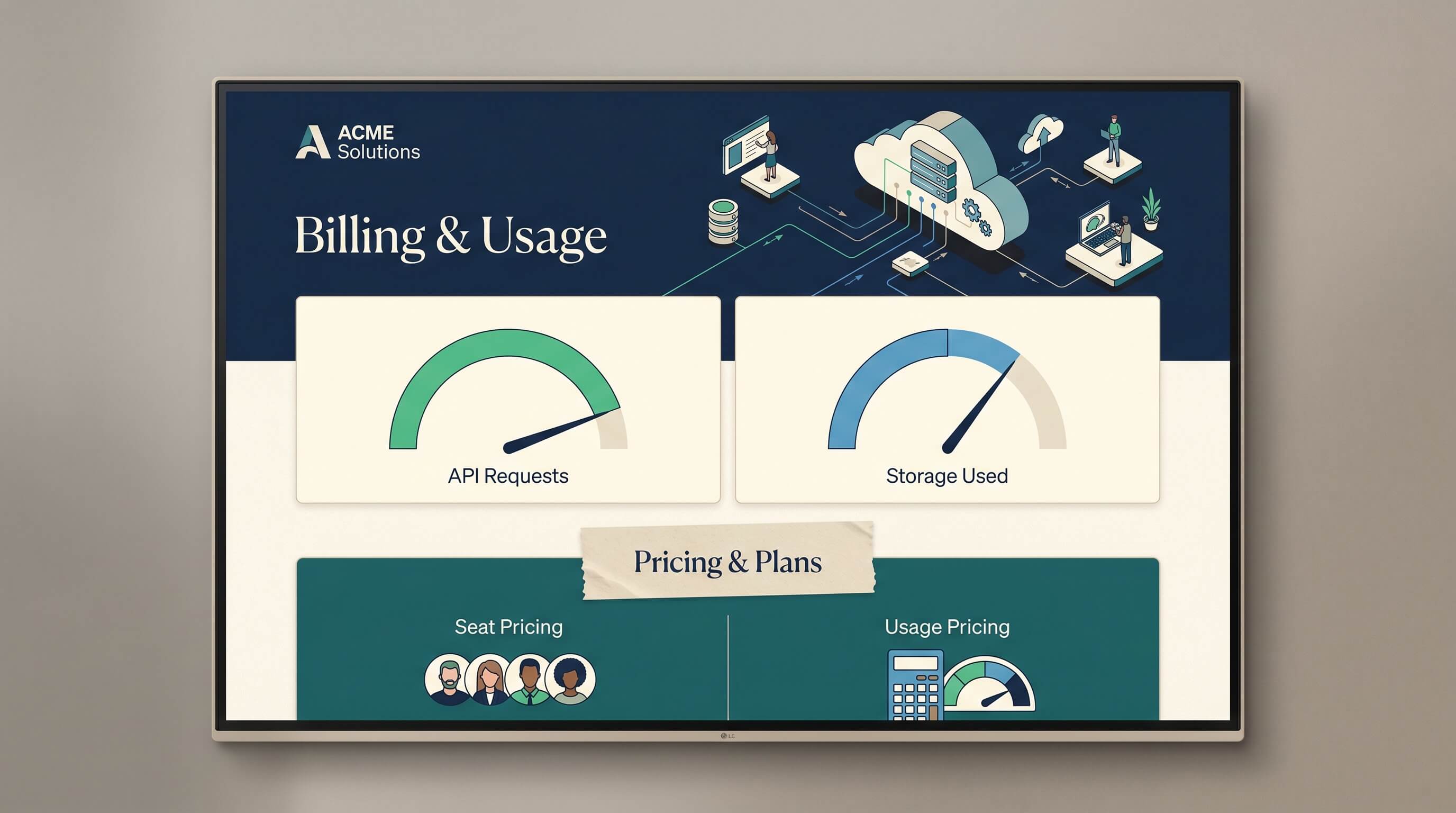
Software pricing used to be easier to explain. A team bought seats, each employee got access, and the vendor’s revenue scaled more or less with headcount. That model was not perfect, but it matched how most SaaS products were consumed. In the AI era, that logic is starting to break.
The reason is simple. Modern software increasingly does work without a human clicking every button. AI copilots draft, summarize, classify, search, reconcile, and automate workflows behind the scenes. The cost structure of these products is also different. Vendors are paying for compute, tokens, inference, storage, and event volume in ways that do not map cleanly to a fixed monthly charge per user. As more apps become AI-heavy, seat pricing alone starts to feel like a blunt instrument.
Why per-seat pricing is losing its grip
The old seat model assumes a relatively stable relationship between user count and product value. That works for chat tools, document editors, and many CRM functions. It works less well when an application’s core cost driver is not how many people have access, but how much machine work happens inside the system.
Consider the difference between two customers with the same number of employees. One might run a few light AI summaries each day. Another might generate thousands of sales call transcripts, support resolutions, document classifications, and agent-triggered workflows. Charging both the same way may look simple, but it creates tension everywhere else. Vendors either eat the cost, cap the experience, or force customers into awkward plan negotiations.
That is why usage-based and hybrid billing are getting more attention. Stripe’s own 2026 guide on usage-based pricing notes that 74 percent of suppliers had already adopted usage-based models and 56 percent expected usage-based revenue to grow by 2027. Those figures do not prove one universal winner, but they do show where the center of gravity is moving.
Usage pricing fixes one problem and creates another
Usage-based pricing is attractive because it ties cost more directly to product consumption. If a customer processes more records, sends more messages, runs more agent actions, or consumes more tokens, the bill rises in a way that feels logically connected to value. For vendors, that is cleaner than pretending all customers cost roughly the same to serve.
But usage pricing introduces its own risk: anxiety. Customers hate bill shock. They may say they want pay-as-you-go flexibility, but many finance teams still prefer predictability over theoretical fairness. That is why the most durable pricing experiments are often hybrid. A base subscription covers predictable access and some included usage, while metered overages capture growth. It is not as elegant as a pure model, but business software rarely rewards elegance over clarity.
The new pricing metric is now a product decision
One of the most useful lessons from Stripe’s pricing material is that the billing metric itself can make or break trust. If a customer cannot estimate the bill using information they already understand, the model starts to feel suspicious. Metrics such as tokens, API calls, records processed, or agent actions can work when they are legible. Internal “compute units” or invisible background behaviors often do not.
This matters because pricing is not just a finance decision anymore. It is part of product design. Usage visibility, spend alerts, caps, forecast tools, and transparent invoices are all product features in an AI-heavy app. If billing surprises the customer, that is not just a contract issue. It is a usability failure.
What AI changes beyond the invoice
AI also blurs the line between human users and software workers. If one employee can launch ten autonomous workflows that complete the work of a larger team, what is a seat actually measuring? Access? Oversight? Permission to trigger compute? The more agentic software becomes, the weaker the old seat metaphor looks.
That does not mean seats disappear. Many applications still need seat-based structure for permissions, collaboration, procurement, and contract management. The likely future is layered pricing rather than total replacement. A customer may pay for platform access by seat, then pay variable charges for automation volume, model usage, or completed outcomes. This is more complicated, but it may be a more honest reflection of how software now creates value.
Where vendors go wrong
The worst move is copying infrastructure pricing without the product discipline to support it. Customers accept usage billing from cloud and developer platforms because those categories trained them to expect granular consumption charges. In business apps, the tolerance is lower. If pricing feels opaque or punitive, buyers will call it greed, not innovation.
Vendors also get into trouble when they use AI as a justification for arbitrary upselling. Customers are willing to pay for clear value. They are less patient when “AI pricing” becomes a vague surcharge attached to features that used to be included. The products that win will be the ones that explain not only what costs more, but why the underlying economics changed.
The practical takeaway for buyers and builders
If you buy software, start reading pricing architecture as carefully as feature lists. Ask what is metered, what is included, what triggers overages, whether you can set caps, and whether usage aligns with business value you can actually observe. If you build software, treat billing transparency as part of onboarding and retention. Customers should not need a finance detective to understand your invoice.
The old SaaS pricing playbook was built for a world where humans used software directly and software costs were relatively stable. AI is changing both assumptions. The companies that adapt well will not just find new ways to charge more. They will find pricing models that match how work, compute, and value are actually produced. That is a harder job than selling seats, but it is becoming a necessary one.