Stablecoins Are Becoming Boring in the Most Useful Way
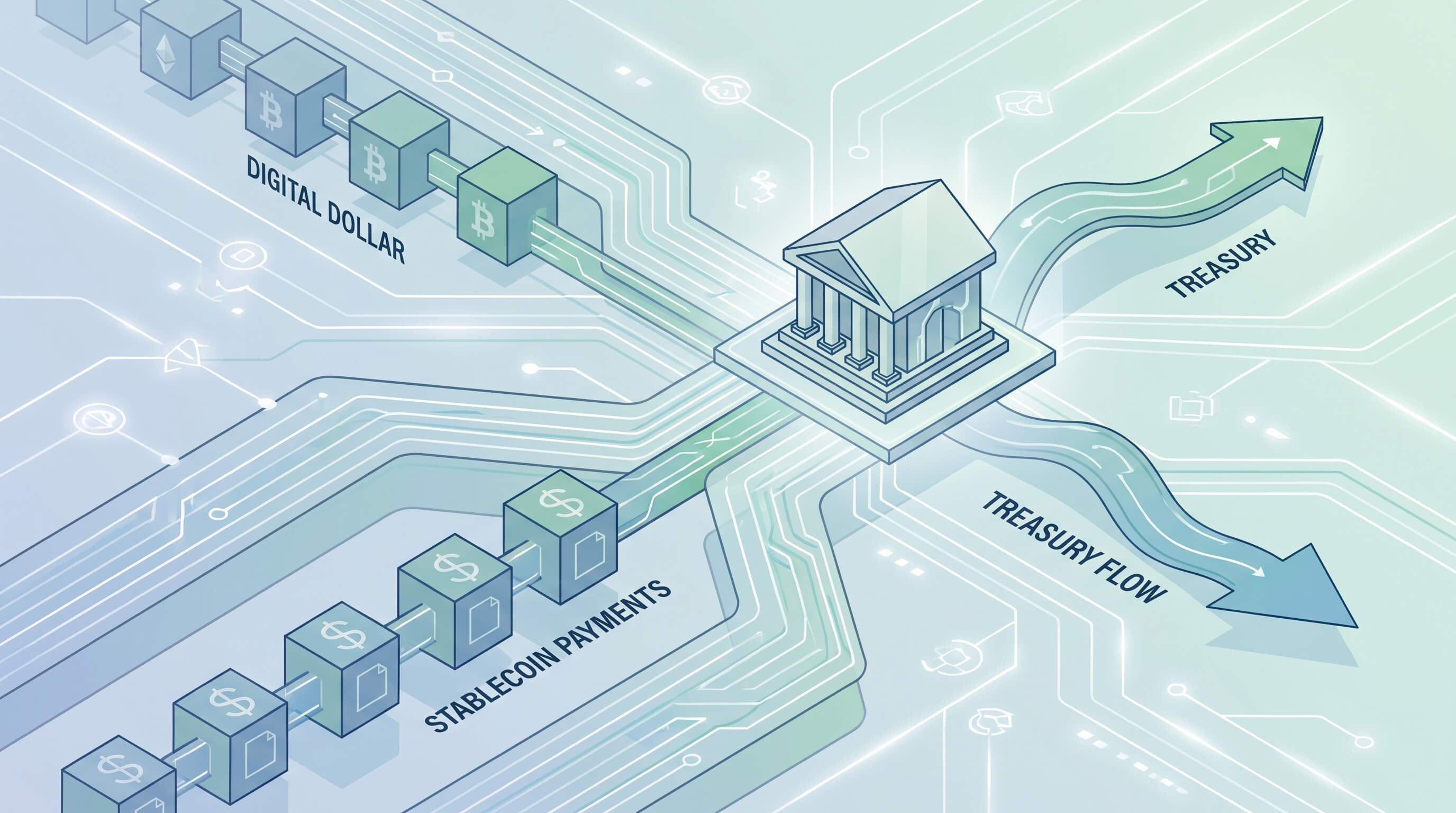
Stablecoins are becoming boring, and that is exactly why they matter now. The big shift in cryptocurrency is no longer about whether tokens can capture retail attention or create another burst of market excitement. It is about whether dollar-denominated digital assets can disappear into the background of business operations and make money movement easier, faster, and more predictable.
That is a much more useful test. Payment systems and treasury systems do not win by feeling revolutionary every day. They win by reducing failed transfers, shrinking settlement delays, improving visibility, and making cross-border operations less painful. Stablecoins are starting to look credible on those terms. The real story is not speculation. It is infrastructure.
Boring is the product goal
In consumer crypto culture, boring used to sound like failure. In payments, boring is the highest compliment. A treasury team does not want drama from the asset that moves supplier payments, marketplace payouts, or cash between entities. It wants something that behaves consistently, can be reconciled cleanly, and fits into compliance and accounting workflows without creating new uncertainty.
That is why stablecoins are maturing into a more serious category. The useful version of adoption is not millions of people changing how they think about money. It is finance teams quietly using a digital dollar rail because it works well enough to justify integration. When that happens, the user story changes. The blockchain stops being the headline and becomes one layer in an operational stack.
Where the practical demand is coming from
The strongest demand is coming from use cases that already hurt under existing rails. Cross-border payouts remain fragmented. Merchant settlement still depends on batch timing, banking cutoffs, and country-specific friction. Global businesses move money through a patchwork of banking partners, local payment networks, and treasury controls that were not built for internet-speed coordination.
Stablecoins offer a different shape of system. They are available around the clock, can settle quickly, and can be handled by software in a more native way than many legacy rails. That does not automatically make them better in every context. Domestic bank transfers and card networks still do many jobs extremely well. But for cross-border treasury movement, contractor payouts, B2B settlement, and marketplace disbursements, stablecoins increasingly look like a practical tool rather than a crypto experiment.
This is also why the newest stablecoin conversation sounds less like trading and more like operations. Businesses are asking ordinary questions: Which counterparties will accept this? How fast can funds be redeemed into bank accounts? What reporting data is available? Which chain offers dependable throughput at acceptable cost? Those are the questions of infrastructure buyers.
Treasury is becoming the strategic wedge
Payments get public attention, but treasury may be the deeper entry point. Many companies do not need customers to pay on-chain in order to benefit from stablecoins. They may only need a better way to move liquidity between regions, pre-fund certain flows, or reduce idle cash trapped in slow settlement windows.
That matters because treasury adoption is often more controllable than consumer behavior. A company can redesign internal cash movement faster than it can retrain an entire user base. If a business can shorten the time between receiving funds in one market and deploying them in another, that can improve working capital discipline even without changing the front-end customer experience.
Stablecoins also fit a world where software teams increasingly collaborate with finance teams on infrastructure decisions. Once money movement becomes programmable, companies can build rules around sweeping balances, releasing payouts, routing exceptions, and reconciling transactions. The opportunity is not that every payment becomes a Smart Contract. It is that some parts of treasury operations become easier to automate when the underlying asset is already digital and interoperable with modern systems.
The winners will look more like utilities than crypto celebrities
This transition changes what success looks like. The stablecoins that matter most over the next phase are unlikely to be the ones with the loudest communities or the most exciting narratives. They are more likely to be the ones that become trusted by payment processors, fintech platforms, enterprise finance teams, and regulated intermediaries.
That means reserve quality, redemption reliability, legal clarity, and integration support matter more than brand mythology. If a stablecoin is going to function as infrastructure, users need confidence that it can be issued, transferred, redeemed, and monitored with minimal surprises. The industry learned the hard way that not every stablecoin design deserves the same level of trust. As a result, enterprise adoption naturally favors products that look boring in the best sense: constrained, transparent, and operationally legible.
What still has to improve
None of this means the job is finished. Wallet UX is still too uneven for many mainstream workflows. Compliance expectations differ across jurisdictions. Chain selection remains a real design choice, not an invisible detail. Finance teams also need better tooling around permissions, audit trails, sanctions screening, and exception handling if stablecoins are going to sit comfortably inside normal treasury operations.
There is also a concentration risk problem. If the market depends too heavily on a small number of issuers, custodians, or chains, then a supposedly modern payment layer may inherit new chokepoints. Businesses want programmable money, but they also want continuity planning. The more important stablecoins become, the more redundancy, interoperability, and governance discipline will matter.
Why this angle is fresher than the old crypto debate
The stale version of the stablecoin story asks whether crypto payments will finally replace cards or whether consumers will start living entirely in Wallet apps. That frame misses the more important change. Stablecoins do not need to replace every payment method to reshape financial infrastructure. They only need to become the preferred rail for some high-friction categories of settlement and treasury movement.
That is a much more believable path. It matches how infrastructure usually spreads. New systems first win where the old ones are slow, expensive, or hard to automate. Then they earn the right to expand. In that sense, the useful future for stablecoins looks less like a cultural revolution and more like a gradual back-office upgrade.
What businesses should do next
Companies evaluating stablecoins should start with narrow operational use cases, not ideology. Pick one painful corridor such as contractor payouts, merchant settlement in a specific market, or internal treasury transfers between entities. Measure redemption speed, reconciliation quality, compliance fit, and total process friction. Compare the workflow against existing bank and payment rails instead of against crypto aspirations.
- Map the exact money movement problem first. Stablecoins are most useful when they remove a specific settlement or liquidity bottleneck.
- Choose regulated, transparent counterparties. Reserve quality and redemption processes matter more than token popularity.
- Treat chain choice as an infrastructure decision. Throughput, fees, ecosystem support, and operational reliability all affect the result.
- Build treasury controls early. Approvals, monitoring, and reconciliation should be designed before volume arrives.
- Keep the user experience simple. The best implementation may hide most of the crypto complexity from end users and finance staff.
That is why boring is the right destination. When stablecoins stop performing as a story and start performing as infrastructure, they become more valuable. The companies that benefit most will not be the ones chasing crypto excitement. They will be the ones using stablecoins as a disciplined layer for payments and treasury, where reliability is the feature that matters most.