Smart Rings Establish Themselves as a Distinct Wearable Category
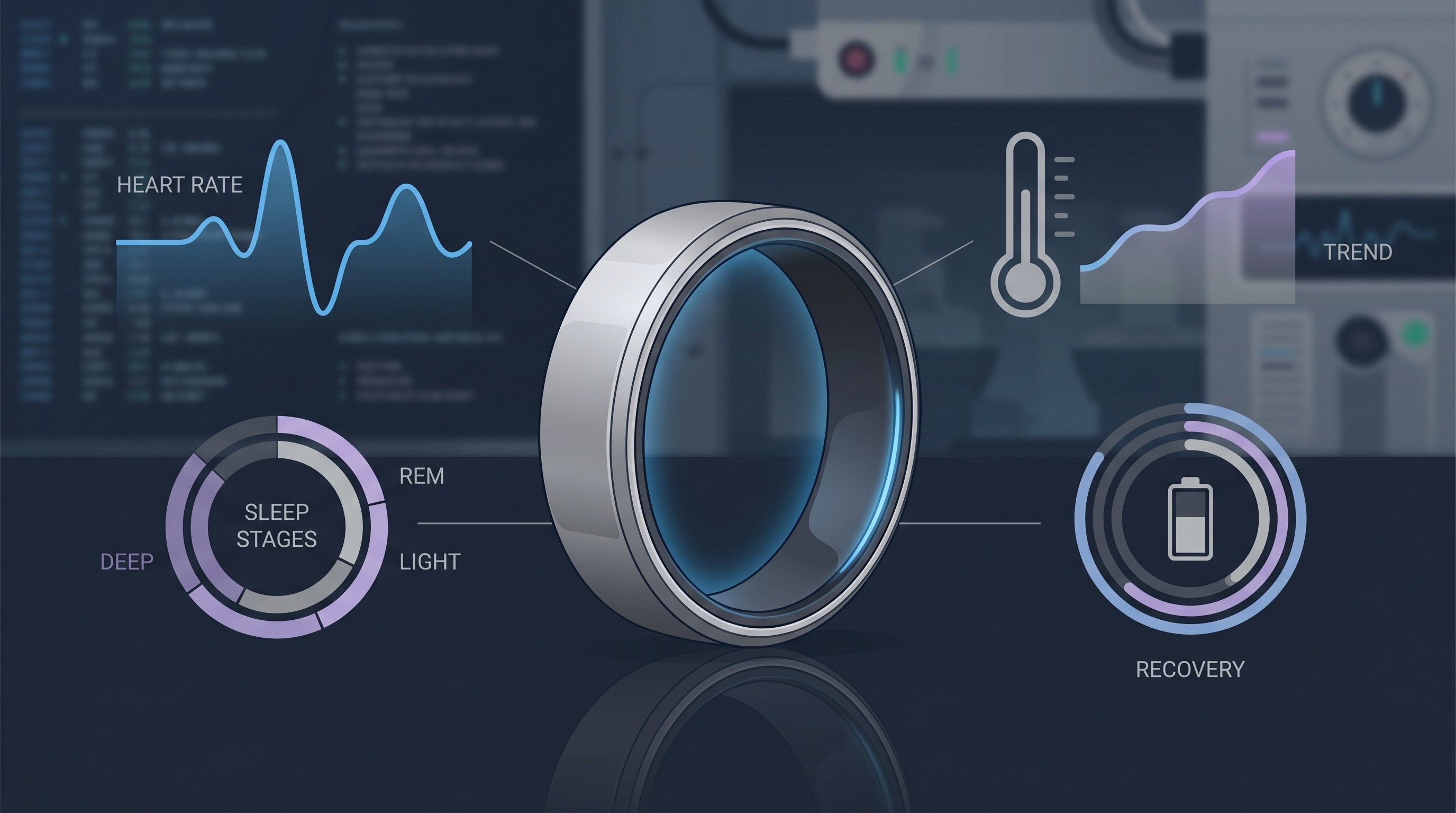
The wearable technology market has long been dominated by smartwatches, attempting to miniaturize smartphone functionality onto the wrist. However, a new contender has quietly yet decisively emerged: the smart ring. Far from being merely a 'tiny smartwatch,' smart rings are establishing themselves as a distinct and highly focused wearable category. Their success stems from a deliberate narrowing of product promise, prioritizing continuous, passive health monitoring over the broad, interactive features of their wrist-bound counterparts. This strategic focus allows smart rings to excel in specific areas where smartwatches often fall short, fundamentally reshaping expectations for personal health devices.
This specialization is not accidental; it is the core of the smart ring's value proposition. By foregoing screens, speakers, and complex operating systems, smart rings achieve unparalleled battery life and a level of comfort that makes 24/7 wear truly practical. This continuous wear is critical for collecting the consistent biometric data necessary for accurate sleep, recovery, and overall health trend analysis. Devices like the Oura Ring have pioneered this approach, demonstrating that less can indeed be more when it comes to integrating technology seamlessly into daily life. As new entrants like the Samsung Galaxy Ring prepare to expand the market, understanding the unique strengths and inherent tradeoffs of this form factor is crucial for consumers navigating the evolving landscape of personal tech.
The Unrivaled Advantages: Comfort, Battery, and Passive Sensing
The primary differentiators for smart rings are their discreet form factor, extended battery life, and superior comfort for continuous wear. Unlike smartwatches, which often require daily charging and can feel bulky, a smart ring like the Oura Ring typically offers 4-7 days of battery life on a single charge. This longevity is a direct result of its minimalist design, which eliminates power-hungry displays and complex processors. The absence of a screen also means no distracting notifications or constant temptation to interact, fostering a more 'set-it-and-forget-it' user experience.
Comfort is another significant advantage. Wearing a lightweight ring on a finger, particularly during sleep, is far less intrusive than a smartwatch. This enhanced comfort directly translates to better data collection. For accurate sleep staging, heart rate variability (HRV), and body temperature tracking, continuous wear throughout the night is essential. A device that causes discomfort or needs frequent removal for charging compromises the integrity and consistency of this vital data. The finger, with its rich network of capillaries, also provides an excellent site for photoplethysmography (PPG) sensors to measure blood flow, which is critical for heart rate and blood oxygen saturation (SpO2) readings.
Precision in Sleep and Recovery Tracking
Smart rings truly shine in the realm of sleep and recovery tracking. The Oura Ring, for instance, utilizes advanced sensors including infrared PPG for heart rate and HRV, a negative temperature coefficient (NTC) thermistor for precise skin temperature, and a 3D accelerometer for movement. These sensors, combined with sophisticated algorithms, allow the ring to accurately differentiate sleep stages (REM, deep, light), track nocturnal heart rate and HRV, and detect subtle changes in body temperature that can indicate illness or menstrual cycles. The continuous nature of the data collection, facilitated by the ring's comfort and battery life, provides a holistic view of a user's physiological state over time.
The focus on recovery is particularly valuable for athletes and individuals managing stress. By analyzing HRV, resting heart rate, and sleep quality, smart rings can provide actionable insights into the body's readiness for physical or mental exertion. This contrasts with many smartwatches that, while offering sleep tracking, often prioritize active workout metrics and notifications, making their sleep data a secondary feature rather than a core competency. The passive, unobtrusive nature of the ring ensures that data collection doesn't interfere with the very rest it aims to optimize.
Where Smart Rings Outperform and Fall Short Against Smartwatches
While smart rings excel in passive health monitoring, they inherently face limitations compared to smartwatches. Smartwatches, with their screens and more powerful processors, offer a broader range of functionalities: on-demand notifications, mobile payments (NFC), GPS tracking for runs, comprehensive workout modes with real-time feedback, and the ability to run third-party applications. For users who prioritize these interactive features, a smartwatch remains the superior choice.
However, the smart ring's limitations are also its strengths. The lack of a screen eliminates distractions, promoting a more mindful approach to health tracking. The absence of GPS and complex apps simplifies the device, allowing for extreme miniaturization and power efficiency. For someone seeking to understand their sleep patterns, recovery status, and general physiological trends without being constantly tethered to a screen, the smart ring is a clear winner. The tradeoff is clear: deep, continuous, passive data versus broad, interactive, on-demand functionality.
The Oura Ring and Samsung Galaxy Ring: Anchor Examples
The **Oura Ring** stands as the established leader in the smart ring space. Its iterative development, refined algorithms, and robust API have made it a benchmark for sleep and recovery tracking. Oura's model relies heavily on a subscription service to unlock its full suite of insights, a point of contention for some users but one that funds ongoing research and algorithm improvements. Its ceramic and titanium constructions offer durability and a premium feel.
The upcoming **Samsung Galaxy Ring** represents a significant entry from a major tech giant. While full details are still emerging, Samsung's move signals a strong validation of the smart ring category. Leveraging its vast ecosystem, the Galaxy Ring is expected to integrate deeply with Samsung Health, offering a seamless experience for Galaxy smartphone users. It will likely feature similar biometric sensors to Oura, focusing on sleep, activity, and potentially even fertility tracking. Samsung's entry could democratize smart rings, potentially challenging Oura's subscription model with a more integrated, possibly one-time purchase approach or a different subscription strategy tied to its broader health platform.
Challenges and Considerations: Accuracy, Sizing, and Subscriptions
Despite their advantages, smart rings are not without their challenges. **Accuracy** is a perennial concern for all wearables. While the finger is an excellent site for PPG, factors like ring fit, skin tone, and movement can still impact sensor readings. Ensuring a consistently snug fit, which is crucial for accuracy, introduces the challenge of **sizing**. Unlike watches with adjustable straps, rings require precise sizing, often involving a sizing kit, which can be an inconvenience for online purchases. A poorly fitting ring will yield unreliable data.
Another significant hurdle is the **subscription model**. While Oura has demonstrated the value of ongoing software development and personalized insights, consumers are increasingly wary of subscription fatigue. As more devices move towards recurring fees for 'premium' features, the perceived value of these subscriptions will come under greater scrutiny. Samsung's approach to subscriptions with the Galaxy Ring will be a critical factor in its market adoption and could set a precedent for the industry.
Actionable Takeaways: Who Should Buy a Smart Ring?
For consumers considering a smart ring, the decision largely hinges on their specific needs and priorities. **You should consider a smart ring if:**
- Your primary focus is sleep and recovery tracking: If understanding your sleep patterns, heart rate variability, and daily readiness is paramount, a smart ring offers unparalleled comfort and data consistency.
- You prefer a minimalist, screen-free experience: If you find smartwatches distracting or prefer to disconnect from constant notifications, the unobtrusive nature of a ring is ideal.
- You value extended battery life: The multi-day battery life of smart rings significantly reduces charging hassle.
- You want passive, continuous health insights: For tracking long-term trends in body temperature, resting heart rate, and activity without active interaction.
- You are an athlete or highly active individual focused on recovery: The deep insights into physiological readiness can be invaluable for optimizing training.
Conversely, **a smart ring might not be for you if:**
- You rely on active notifications and on-screen interactions: If you need to check messages, answer calls, or control music from your wrist, a smartwatch is essential.
- You require mobile payments (NFC) from your wearable: While some rings are integrating NFC, it's not a standard feature across the board.
- You need precise, real-time GPS tracking for workouts: Smart rings typically lack built-in GPS and rely on a connected smartphone.
- You prefer a single device for all fitness metrics: Smartwatches often provide more comprehensive, real-time workout metrics and coaching.
- You are averse to subscription models for unlocking full features: Be prepared to potentially pay a recurring fee for advanced analytics.
Smart rings are not replacements for smartwatches; they are complementary devices that address a different set of user needs. By embracing their limitations and doubling down on their strengths, smart rings have successfully carved out a distinct and valuable niche in the crowded wearable tech market, offering a focused, comfortable, and insightful approach to personal health monitoring.