Smart Rings Are Settling Into a Second-Screen Role Beside Smartwatches
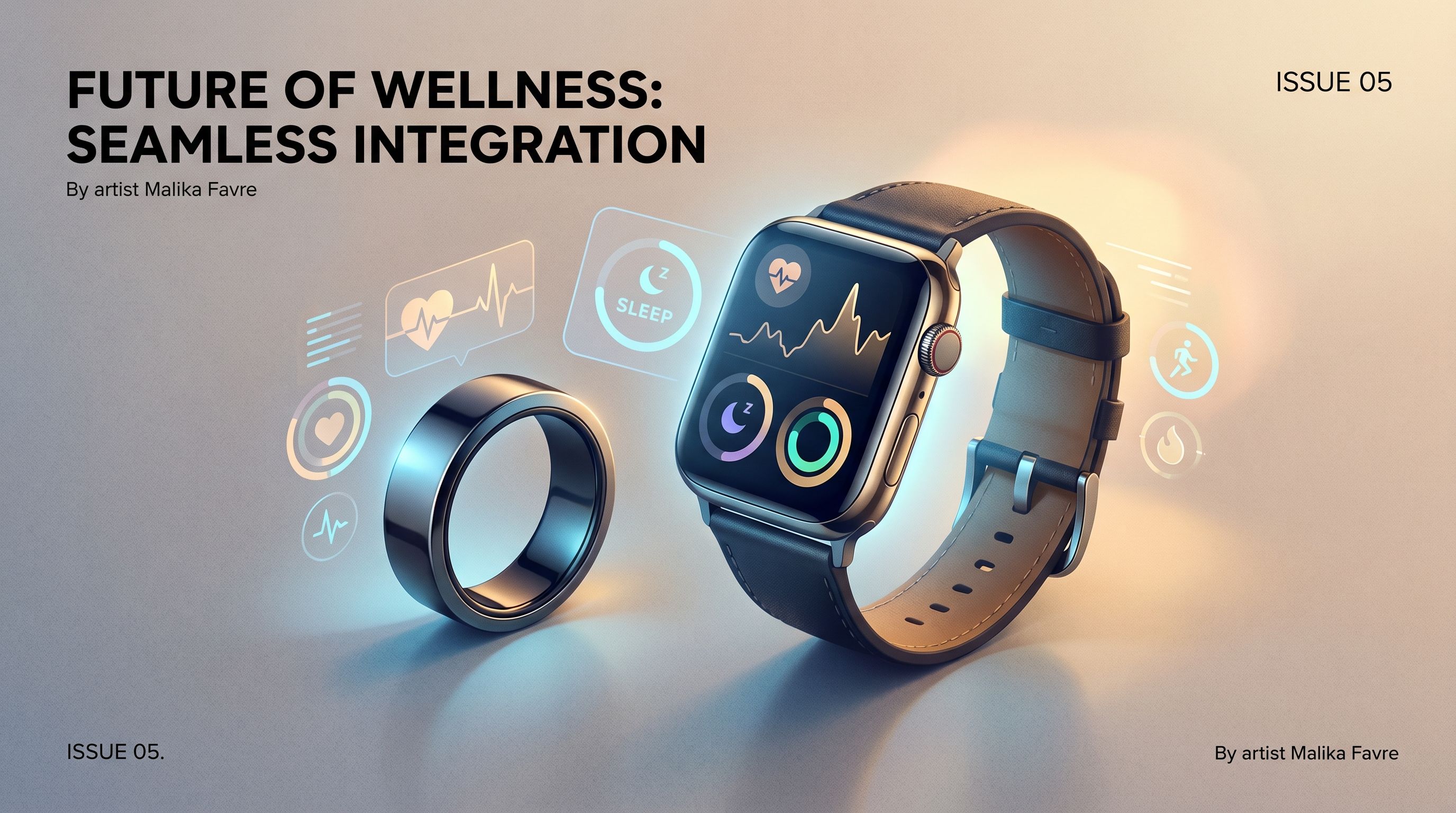
Wearables are no longer moving toward a single winner. Instead, the market is separating into clearer roles, and smart rings are emerging as companions rather than replacements for smartwatches. That distinction matters because the strengths of each device come from a basic design choice: one sits on the finger and fades into the background, while the other lives on the wrist with a screen that invites constant interaction.
Seen through that lens, smart rings make the most sense as passive wearables. They are good at staying out of the way, collecting signals through the day and night, and giving users a lower-friction way to follow patterns around sleep, recovery, and general routine. Smartwatches, by contrast, remain better at active interaction. They are still the obvious choice for workouts, GPS-based activities, notifications, apps, timers, and the kind of live feedback that only a screen can deliver in the moment.
Passive sensing is becoming a real category
The strongest case for smart rings is not that they do everything a smartwatch can do. It is that they do less, on purpose, and that restraint can be useful. Many people want health and lifestyle data without adding another glowing display to their day. A ring can track quietly during meetings, sleep, commutes, and ordinary daily movement with less social friction than constantly checking a watch.
That matters especially at night. Comfortable overnight wear often leads to better sleep data for a simple reason: people actually keep the device on. A smartwatch may offer more features overall, but if it feels bulky in bed or needs more frequent charging, consistency can slip. For a product category built around long-term patterns rather than one-off readings, comfort is not a side issue. It is part of the data quality story.
A screen still changes what a wearable can do
The rise of rings does not weaken the smartwatch case. If anything, it clarifies it. A smartwatch is still the better tool whenever the user needs immediate feedback or direct control. Runners and cyclists benefit from live pace, route guidance, heart-rate views, lap timing, and GPS. Everyday users benefit from message triage, alarms, calendar prompts, quick replies, and app access. An OLED display on the wrist turns the device into an interface, not just a sensor.
That difference is hard to erase. Even if a ring gathers useful background signals, it cannot easily replace the moment-to-moment utility of glancing at a watch during a workout or reading a notification without reaching for a phone. The screen is not a cosmetic extra. It defines the product category.
Second screen is the wrong metaphor, but the right market position
Calling a smart ring a second screen is slightly misleading because most rings have little or no visual interface. Still, the phrase captures their role beside a smartwatch. They function as a secondary wearable in a broader system, taking on the passive sensing work while the watch handles active interaction. In that setup, the ring becomes the device you forget you are wearing, and the watch becomes the device you consult when you need something now.
That division can make the whole wearable stack feel more deliberate. Instead of forcing one device to do everything, users can choose a quieter split between background tracking and foreground information. For some people, that will be more attractive than a more capable but more demanding single device.
The value of intentionally doing less
Consumer tech often treats feature count as the clearest sign of progress. Wearables are showing the limits of that idea. Notification overload is real, and many users are already negotiating which alerts deserve their attention. A product that intentionally does less can feel better, not worse, if it removes friction instead of adding another stream of interruptions.
That is one reason rings are resonating. They offer a version of wearable computing that is quieter, more discreet, and more compatible with people who do not want to be in constant dialogue with a screen. This does not mean the ring is superior in absolute terms. It means it fits a different emotional and practical brief.
Tradeoffs are becoming easier to see
As the categories separate, the compromises are becoming more visible too. Subscription fatigue remains a real issue in health-tech. Consumers are more cautious about hardware that comes with recurring costs just to unlock fuller insights from their own data. Battery life also shapes the experience differently across devices. A ring that lasts comfortably through the night and the next day may be more useful for recovery tracking, while a smartwatch may force users to think harder about charging windows if they want continuous wear.
There is also the question of expectations. Smart rings should not be framed as formal diagnosis tools, and smartwatches should not be oversold either. Both categories are best understood as health and lifestyle devices that help people notice patterns, habits, and signals. They can support awareness. They are not substitutes for clinical evaluation.
Where the market is likely heading
The most believable future is not ring versus watch. It is ring plus watch for some users, ring instead of watch for others, and watch alone for people who care more about apps and active coaching than passive sensing. The key shift is that smart rings no longer need to win the same argument as smartwatches. Their job is not to become tiny watches. Their job is to be excellent at background tracking, comfort, and discretion.
That narrower role may turn out to be stronger than the broader ambition. In consumer gadgets, products often mature when they stop trying to imitate adjacent categories and start owning the specific problem they solve well. Smart rings now look closer to that stage. They are settling into a second-screen role beside smartwatches, not because they failed to become more, but because that supporting role may be exactly where they offer the most value.
Actionable takeaways
- Choose a smart ring if your priority is comfortable overnight wear, passive tracking, and fewer interruptions during the day.
- Choose a smartwatch if you want workouts, GPS, notifications, apps, and live feedback on the wrist.
- Use both deliberately if you want passive sensing from one device and active interaction from another.
- Check the business model before buying, especially if subscriptions are required for core insights.
- Treat the data as guidance, not diagnosis, and use trends to inform habits rather than chase perfect scores.