Smart rings are becoming the next personal computing interface for health
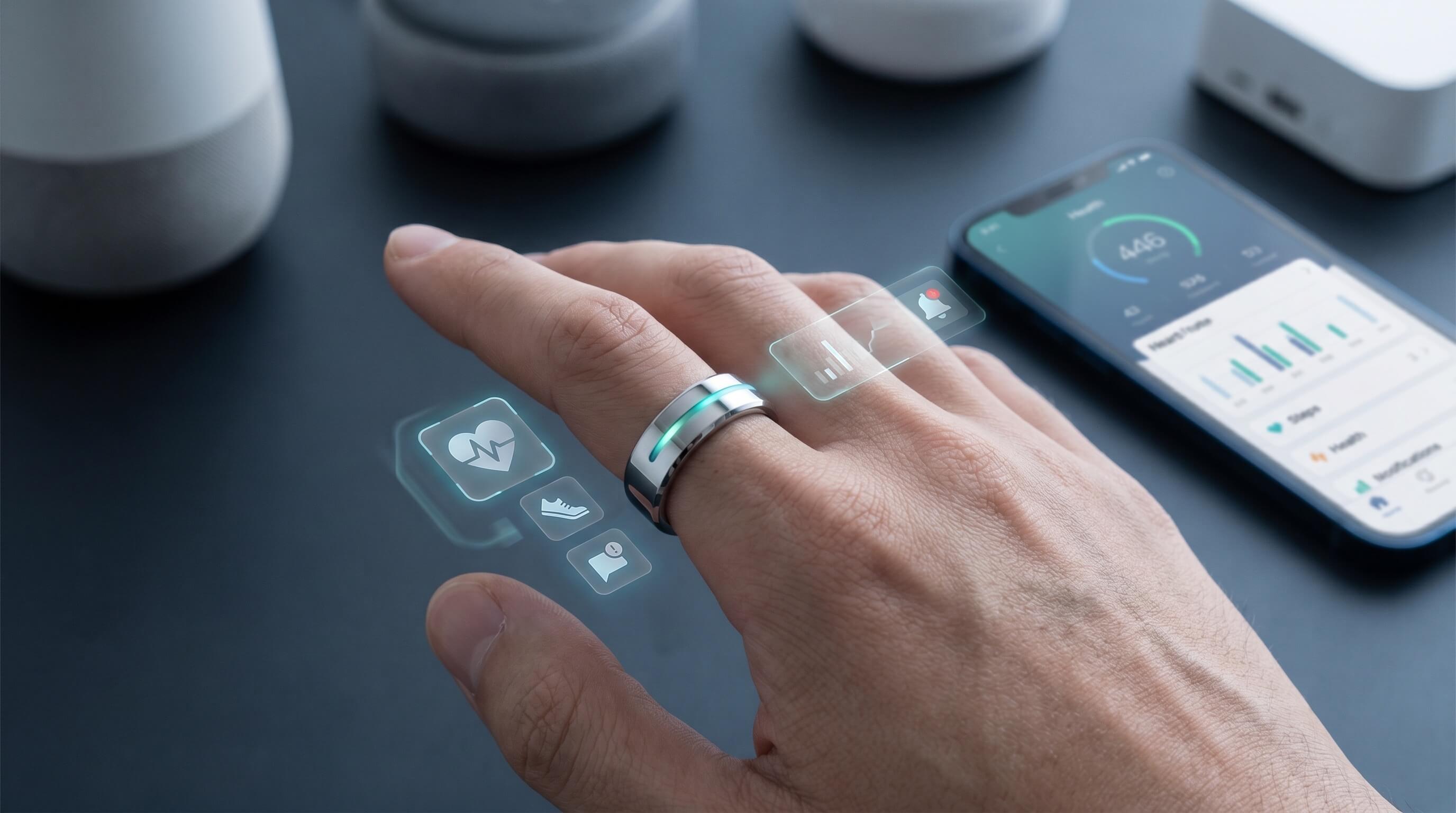
Smart rings are moving beyond passive wellness tracking and into something closer to ambient health computing. The change is not just about smaller sensors or prettier titanium shells. It is about where a ring sits in the stack: always on the body, socially acceptable in places where watches feel intrusive, and increasingly tied into software that can turn raw signals into daily guidance. If that trend holds, the most important wearable on your hand may not be a smartwatch screen at all.
The thesis is simple: smart rings will win meaningful parts of the wearable market not by replacing watches feature for feature, but by doing the opposite. They work when they stay invisible. That makes them well suited for sleep, recovery, stress monitoring, medication reminders, gesture input, and lightweight authentication—jobs where persistent presence matters more than a display.
Why rings are gaining ground now
Early smart rings were easy to dismiss as niche wellness gadgets. They counted sleep stages, estimated readiness, and offered another daily score in an already crowded health app ecosystem. What changed is the convergence of three things: better miniaturized sensors, stronger battery efficiency, and a broader consumer willingness to wear health hardware all day and all night.
That combination matters because wearables fail when they create too much friction. Many people charge smartwatches daily, take them off for sleep, or leave them behind when they want to dress up, work out with gloves, or simply disconnect. Rings avoid part of that problem. They are small, light, and easier to wear continuously. Continuous wear is not a cosmetic advantage; it is the condition that makes longitudinal health data useful.
This is where rings have a structural edge. A wearable that stays on during sleep, work, exercise, travel, and rest produces a more coherent baseline. For metrics like resting heart rate, skin temperature trends, heart rate variability, sleep consistency, and recovery signals, baseline quality often matters more than flashy dashboards.
From tracker to companion
The next phase for smart rings is not more metrics. It is better interpretation. The strongest products are starting to act less like passive logs and more like low-noise companions that surface a small number of useful interventions. That could mean nudging someone to delay a hard workout after poor recovery, flagging an unusual temperature pattern, or adjusting notification intensity when stress markers stay elevated through the afternoon.
That sounds modest, but it is the right direction. Most health apps fail because they overwhelm users with charts that require manual interpretation. The future value of a smart ring lies in software that understands context: what is normal for this user, what changed today, and what action is worth taking now.
In practice, that means the winner may not be the company with the most sensors. It may be the company with the cleanest feedback loop between sensing, modeling, and behavior. A ring that gives three accurate, timely recommendations per week can be more valuable than one that tracks twenty variables badly.
Where smart rings fit better than smartwatches
Rings are not general-purpose wearables. They are specialized devices with clear tradeoffs. They cannot match a smartwatch for navigation, quick replies, workout controls, or glanceable notifications. But they do have advantages in the parts of daily life where a screen adds little and comfort matters a lot.
Sleep and recovery
This remains the clearest use case. A ring is easier to wear overnight than a watch, especially for people who dislike a bulky device on the wrist. That matters because sleep quality, overnight heart rate, temperature trends, and heart rate variability are still the foundation for many consumer health insights.
Low-friction daytime monitoring
Many users want health signals without feeling constantly on device. A ring can collect biometrics quietly while the phone handles visualization and coaching. That division of labor makes sense: the body-facing hardware gathers data, while the richer interface lives elsewhere.
Context-aware computing
Rings are also interesting as input devices. Gesture control has been promised for years, but a finger-worn device is a more natural home for subtle input than a wrist computer. That could matter for AR glasses, accessibility tools, presentation control, media playback, or quick home-automation actions.
Authentication and identity
A ring is a plausible hardware token because it is personal, hard to misplace while worn, and suitable for proximity-based authentication. Over time, that could expand beyond unlocking phones into payments, secure access, cars, workplace identity, and device handoff between screens.
The technical challenges are still real
Miniaturization does not eliminate physics. Rings have tiny batteries, limited room for antennas, and less surface area for some sensing methods than wrist wearables. Fit matters more too. A watch strap is adjustable; a ring size is less forgiving, and finger swelling changes throughout the day can affect both comfort and signal quality.
There is also the interpretation problem. Consumer wearables still struggle with false confidence. Stress scores, sleep stages, and recovery metrics can be directionally useful without being clinically precise. The more companies market rings as health companions rather than trackers, the more pressure they face to explain where their models are strong, where they are probabilistic, and where users should not overreact.
Regulation will shape this category as well. Wellness positioning gives companies room to move fast, but the closer products get to medical claims, especially around atrial fibrillation, glucose-related inference, illness detection, or women’s health, the higher the evidentiary bar becomes. That is good for users, but it will separate serious platforms from marketing-heavy ones.
What the market is likely to look like
The smart ring market will probably split into three tiers. First are premium health platforms that combine strong hardware with subscription-driven coaching and analytics. Second are ecosystem rings tied to phone makers or broader device platforms, where the ring acts as one sensor node among many. Third are lower-cost imitators that compete on appearance and basic tracking but struggle on accuracy and software quality.
The second category is the most strategically important. Once a ring becomes part of a wider personal computing system, it stops being a standalone accessory. It can inform how your phone filters notifications, how your earbuds adapt audio during exercise, how your smart home responds at night, or how an AI assistant frames recommendations based on fatigue and stress. That is where rings start to look less like jewelry with sensors and more like a quiet interface layer for health-aware computing.
What buyers should evaluate before jumping in
For readers considering a smart ring today, the most important question is not battery life or finish color. It is whether the product solves a problem you actually have. If you want better sleep consistency, lighter recovery tracking, or a wearable you can forget about, a ring may be a better fit than a smartwatch. If you want rich workout feedback, glanceable alerts, or standalone apps, it probably is not.
Also look closely at subscription requirements, battery longevity over time, replacement policies, data export options, and how transparent the company is about accuracy limits. In wearables, software quality and interpretation often matter more than raw sensor count.
Actionable takeaways
Smart rings are worth taking seriously because they align with a basic truth about consumer hardware: the best device is often the one that stays out of the way. Product teams should focus less on feature parity with watches and more on low-friction, high-retention use cases. Buyers should evaluate them as health-computing companions, not miniature smartwatches. And platform companies should view rings as one of the most promising body-worn inputs for a broader ambient computing stack.
That is the deeper shift underway. Smart rings are not just getting better at tracking sleep. They are becoming quiet, persistent interfaces between the body, the phone, and the software layer that increasingly decides how useful personal technology feels day to day.