Smart Contract Wallets Are Turning Crypto UX Into Permissions Infrastructure
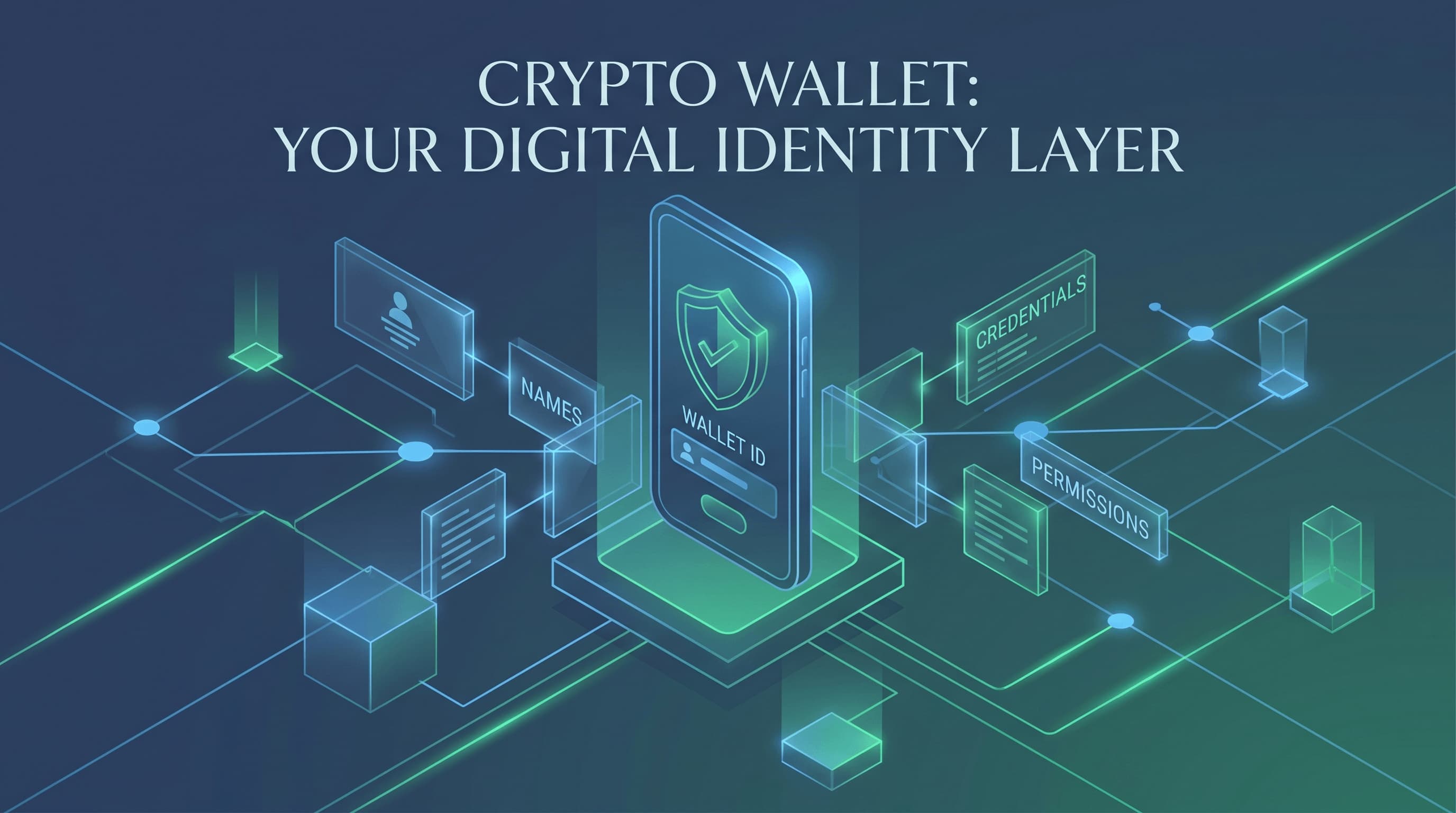
For years, the prevailing mental model for a cryptocurrency wallet has been straightforward: a digital key ring. It’s a tool designed to securely store private keys, enabling users to sign transactions and prove ownership of their digital assets on a blockchain. This foundational utility, while critical, has often been a bottleneck for broader adoption, imposing a steep learning curve and rigid security paradigms that contrast sharply with the user-friendly experiences of traditional web services.
However, a significant architectural shift is underway. Wallets are no longer merely key storage tools; they are rapidly transforming into sophisticated identity, permissions, and signing infrastructure for the entire spectrum of digital services. This evolution, primarily fueled by the advent of smart contract wallets and foundational improvements like Account Abstraction and ENSv2, positions the wallet as a persistent, programmable identity layer. This layer is capable of dictating not just asset ownership, but also granular access, delegated authority, and reputation across a decentralized web.
The Evolution of the Wallet: Beyond Key Storage
From Private Keys to Programmable Logic
Traditional crypto wallets, often referred to as Externally Owned Accounts (EOAs), are directly controlled by a single private key. Losing this key means losing access to all associated assets, and there's no inherent mechanism for recovery or advanced logic. Every interaction requires a direct signature from this key, making complex operations cumbersome and error-prone. This design prioritizes simplicity and direct control but sacrifices flexibility and resilience, often forcing users into an "all or nothing" security posture.
Smart contract wallets, in contrast, are accounts controlled by code deployed on a blockchain. Instead of a single private key, these wallets are governed by a set of rules defined within their smart contract logic. This programmability opens up a vast design space, allowing for features previously impossible with EOAs. They can implement custom authentication methods, multi-signature requirements, time-locks, spending limits, and even social recovery mechanisms, where trusted individuals or services can help restore access without ever holding the user's private keys directly. This fundamental shift from static key ownership to dynamic, code-governed control is the bedrock of the wallet's transformation into a permissions infrastructure.
Account Abstraction: The Technical Foundation for Flexibility
The concept of Account Abstraction is central to enabling the full potential of smart contract wallets. As explained by Ethereum.org, Account Abstraction aims to blur the lines between EOAs and smart contract accounts, allowing users to have accounts that are both programmable and capable of initiating transactions directly. This means smart contract wallets can behave like EOAs, but with all the added benefits of smart contract logic.
Specifically, Account Abstraction facilitates several critical features. First, it enables social recovery, where a user can designate trusted guardians (friends, family, or institutions) who can collectively approve a key change if the primary key is lost, without ever having direct control over the assets. Second, batching transactions allows users to sign multiple operations (e.g., approving a token and then swapping it) in a single transaction, significantly improving efficiency and reducing gas costs. Third, gas sponsorship allows third parties (like dApps or relayers) to pay for a user's transaction fees, removing a major barrier for new users unfamiliar with crypto economics. Finally, it allows for highly flexible security rules, such as requiring multiple authenticators for high-value transactions, setting daily spending limits, or even integrating biometric authentication. These features collectively empower wallets to become highly customizable and secure permission layers, rather than just simple asset custodians.
ENSv2 and the Identity Layer: Naming, Payments, and Reputation
While Account Abstraction provides the technical backbone for flexible accounts, the Ethereum Name Service (ENS) offers the human-readable identity layer that makes these accounts practical and user-friendly. ENS allows users to replace complex hexadecimal addresses with simple, memorable names like "alice.eth." The recent announcement of ENSv2, which will remain on Ethereum L1 after significant gas-cost reductions, further solidifies its role as a core identity primitive.
ENSv2 is slated to introduce features like simpler registration processes and the ability to purchase names or even stablecoins from any chain, greatly enhancing its accessibility and utility. This evolution means an ENS name is not just an alias for a wallet address; it becomes a persistent, multi-faceted digital identity. It can serve as a payment identifier, a login credential for decentralized applications, a recipient for cross-chain transactions, and even an anchor for onchain reputation. As smart contract wallets gain more capabilities, an ENS name linked to such a wallet can become the single point of reference for a user's entire digital persona – encompassing assets, permissions, and interactions across the decentralized ecosystem. This integration elevates the wallet from a mere financial instrument to a foundational component of digital identity and interaction.
Wallets as Permissions Infrastructure: Granular Control and Zero Trust
The convergence of smart contract wallets, Account Abstraction, and an enhanced ENS creates a powerful paradigm: the wallet as a programmable permissions infrastructure. This means users can move beyond simple "approve all" or "reject all" transaction models. Instead, they can grant granular permissions for specific actions, for defined periods, or under certain conditions. For instance, a user could delegate permission for a specific dApp to spend up to 10 DAI per day, or to sign transactions on their behalf only when interacting with a specific smart contract, without giving away full control of their primary key.
This capability aligns closely with the "Zero Trust" security model, where no entity, inside or outside the network perimeter, is trusted by default. Onchain, this translates to wallets that can enforce strict, conditional access rules for assets and interactions. Users can define exactly what an application or another address can do with their funds or identity, minimizing the attack surface and enhancing security. This is a profound shift from a model where a single private key grants absolute power, to one where the wallet itself becomes an intelligent agent, mediating and enforcing user-defined permissions across the digital landscape.
Navigating the User Experience Labyrinth
Despite the immense potential, the path to mainstream adoption for smart contract wallets as permissions infrastructure is fraught with user experience challenges. The very flexibility that makes them powerful also introduces complexity.
Firstly, recovery mechanisms, while robust, require users to understand and manage their designated guardians or recovery methods. Social recovery, for example, demands users identify and trust specific individuals, which can be a psychological and logistical hurdle. Secondly, the increased complexity of transactions and permissions opens new phishing and scam vectors. Users must now discern not just the legitimacy of a transaction, but also the implications of granting specific permissions, which can be difficult even for tech-savvy individuals. Thirdly, the fragmentation of the ecosystem – multiple chains, Layer 2s, and different wallet implementations – creates significant cross-chain confusion and "wallet fatigue." Users may struggle to manage assets and identities across disparate environments, leading to a disjointed and frustrating experience. Finally, the lack of clear norms and mental models for interacting with programmable permissions means users are often left to infer the consequences of their actions, rather than relying on intuitive interfaces and established patterns. Addressing these challenges requires concerted effort from developers to abstract away complexity, standardize interfaces, and educate users effectively.
Actionable Takeaways for Builders and Users
The trajectory towards smart contract wallets as permissions infrastructure is clear, but its success hinges on pragmatic development and user education.
For builders and developers, the imperative is to prioritize user experience design. This means creating intuitive interfaces for managing complex permissions, simplifying gas management through sponsorship models, and standardizing recovery flows. Focus on building interoperable identity layers that allow users to carry their reputation and permissions seamlessly across different applications and chains. Tools that provide clear, human-readable explanations of permissions being requested, rather than raw contract calls, will be crucial. Furthermore, investing in robust security audits and clear documentation for these new wallet capabilities is non-negotiable.
For users, the shift demands a more informed approach to digital interactions. Understand that your wallet is becoming more than a vault; it's a control panel for your digital identity. Exercise caution when granting permissions, always review what a dApp is asking to do, and familiarize yourself with the recovery options your smart contract wallet provides. Explore wallets that offer enhanced features like social recovery, batching, and gas abstraction, and actively engage with the community to understand best practices. The future of crypto UX lies in this sophisticated permissions infrastructure, and an informed user base is its strongest defense and most powerful advocate.