Direct-to-Cell Connectivity: Evolving from Emergency Lifeline to an Essential Network Layer
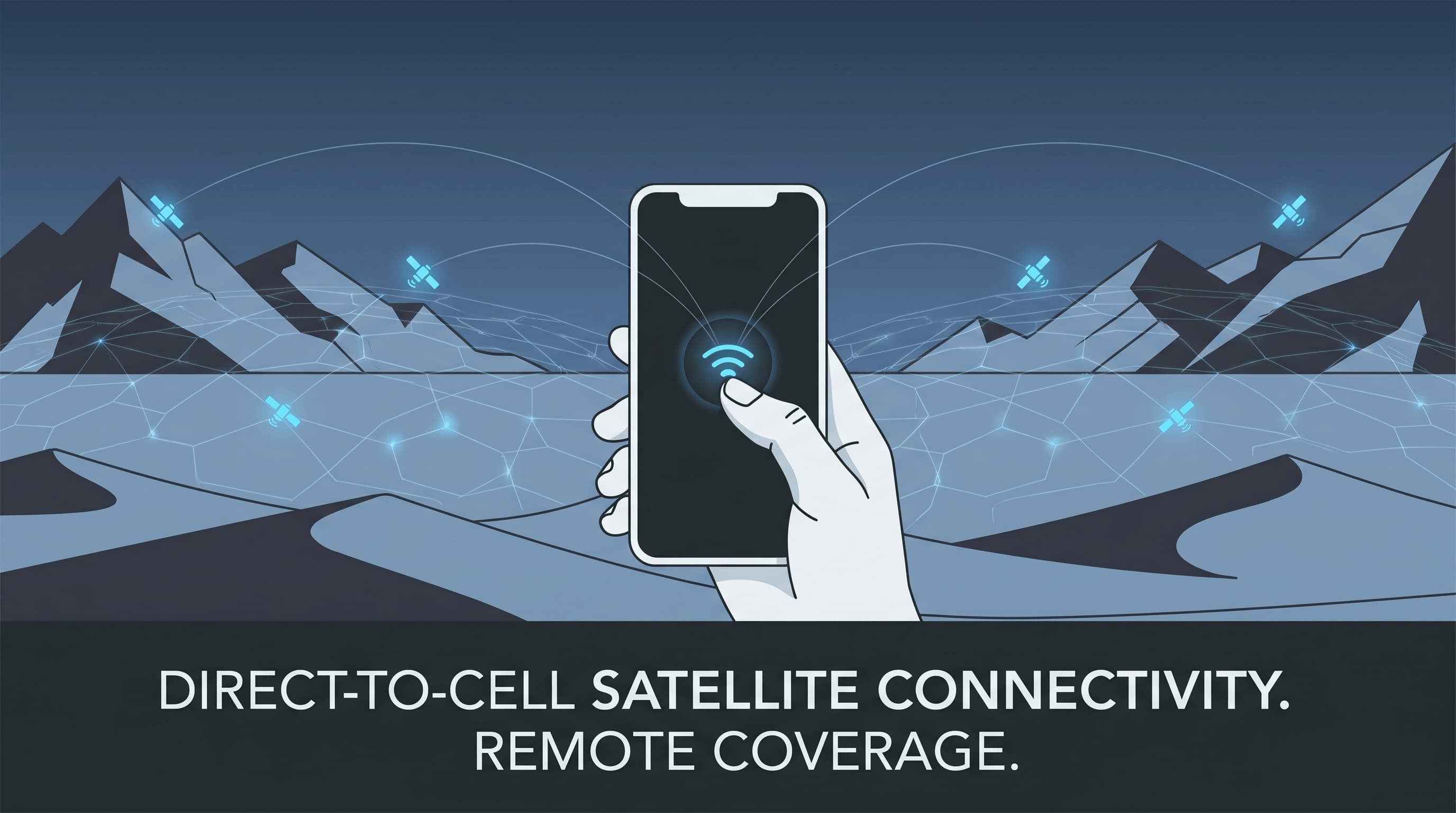
The landscape of global mobile connectivity is undergoing a profound transformation, with direct-to-cell satellite communication emerging as more than just an emergency fallback. Initially conceived as a last resort for critical situations, this technology is now establishing itself as a legitimate and essential supplemental layer within the broader mobile network ecosystem. This shift is not merely incremental but represents a fundamental re-evaluation of how coverage gaps are addressed, driven by robust technological advancements and strategic collaborations between mobile network operators (MNOs) and satellite providers.
This evolution is underpinned by the standardization efforts within 3GPP for Non-Terrestrial Networks (NTN) and the strategic deployment of Low Earth Orbit (LEO) satellite constellations, coupled with the economic viability of utilizing low-band spectrum. What began with basic emergency texting capabilities is rapidly expanding to include broader messaging, location sharing, and even nascent data services, fundamentally altering the calculus for ubiquitous connectivity and extending the reach of mobile networks into previously unserved or underserved regions.
The Genesis of Direct-to-Cell: Emergency First
Early deployments of direct-to-cell connectivity primarily focused on critical emergency services. Apple's Emergency SOS via Satellite, introduced with the iPhone 14, exemplifies this initial phase. As detailed on Apple Support, this feature allows users to text emergency services, request roadside assistance, message friends and family, and share their location when traditional cellular or Wi-Fi networks are unavailable. This capability provides a vital lifeline in remote areas, offering peace of mind to adventurers and travelers. However, its design inherently acknowledges significant constraints: messages can take approximately 30 seconds to transmit under ideal conditions, with longer delays expected under foliage or without a clear view of the sky. This initial implementation, while revolutionary, underscored the limitations of early direct-to-cell as a high-bandwidth, always-on solution.
Expanding Horizons: Beyond Emergency
The paradigm began to shift significantly with partnerships like T-Mobile's collaboration with Starlink. T-Mobile's "T-Satellite" service, leveraging Starlink's direct-to-cell satellites, redefines the scope of this technology. Unlike earlier iterations that required specific device pointing, T-Mobile notes that their service uses Starlink satellites as "cell towers in space," requiring no special alignment from the user's device. This significantly enhances usability. Currently supporting text messaging, location sharing, picture messaging, and future satellite data capabilities for eligible devices, T-Mobile's offering extends coverage across the continental US, Puerto Rico, Hawaii, and parts of southern Alaska, as highlighted on T-Mobile Support. This broader functionality and expanded geographic reach signal a clear move beyond mere emergency fallback.
Technical Underpinnings of the Shift
The maturation of direct-to-cell is deeply rooted in several key technological advancements. The 3GPP Non-Terrestrial Networks (NTN) standards are paramount, providing a standardized framework that allows unmodified smartphones to connect directly to satellites. This eliminates the need for specialized satellite phones or bulky external antennas, making the technology accessible to a vast existing user base. NTN standards define the protocols and interfaces necessary for satellite-based communication to integrate seamlessly with terrestrial 5G networks, ensuring interoperability and future-proofing.
Furthermore, the economics of low-band spectrum play a crucial role. Frequencies in the L-band or S-band offer excellent propagation characteristics, allowing signals to travel long distances and penetrate obstacles more effectively than higher-frequency bands. While these bands offer lower bandwidth capacities compared to millimeter-wave or mid-band spectrum, their ability to provide widespread coverage with fewer "cell towers" (satellites in this case) makes them ideal for supplemental connectivity in vast, sparsely populated areas. This trade-off between bandwidth and coverage is a fundamental design choice that positions direct-to-cell as an extension, not a replacement, for high-capacity terrestrial networks.
The deployment of large constellations of Low Earth Orbit (LEO) satellites, such as Starlink, is another critical enabler. Unlike geostationary (GEO) satellites, which orbit at much higher altitudes and introduce significant latency, LEO satellites orbit much closer to Earth. This proximity drastically reduces signal propagation delay, making real-time communication more feasible. The sheer number of LEO satellites ensures frequent passes over any given area, improving service availability and reducing the need for precise antenna pointing from user devices, which is crucial for mass-market adoption with standard smartphones.
Realistic Use Cases and Constraints of a New Layer
As direct-to-cell transitions into a new network layer, its realistic use cases extend far beyond emergencies. It provides essential connectivity for individuals in rural or remote areas where terrestrial infrastructure is economically unfeasible to deploy. It offers critical communication links for maritime operations, aviation, and remote industrial IoT deployments. During natural disasters, when terrestrial networks are often compromised, satellite-to-phone connectivity can serve as a resilient backup, enabling first responders and affected populations to communicate. Recreational activities like hiking, camping, and off-roading also gain a significant safety and convenience boost.
However, the constraints of this new layer must be clearly understood. Direct-to-cell is inherently a supplemental service, not a full replacement for high-capacity terrestrial mobile networks. Bandwidth limitations, particularly with current low-band spectrum implementations, mean that while text and basic data are feasible, streaming high-definition video or engaging in bandwidth-intensive applications remains impractical. Line-of-sight challenges persist; dense foliage, urban canyons, and even heavy cloud cover can still degrade or block signals, as Apple's guidance indicates. Device power consumption is another consideration, as the phone's radio must work harder to reach a satellite hundreds of kilometers away compared to a nearby cell tower. Furthermore, regulatory frameworks for satellite spectrum and cross-border service provision are still evolving, adding complexity to global deployment.
Integration into Terrestrial Networks
For mobile network operators, direct-to-cell represents an opportunity to extend their reach without the prohibitive costs of building traditional cell towers in challenging terrains. Rather than viewing it as a competitive threat, MNOs are increasingly seeing it as a valuable extension, enabling them to offer seamless connectivity in areas previously considered "not spots." The goal is not to replace 5G in urban centers but to complement it, providing a continuous, albeit lower-bandwidth, connection across vast geographical expanses. Future developments will focus on tighter integration, potentially enabling seamless handovers between terrestrial and non-terrestrial networks, and exploring higher data rate capabilities as satellite technology and spectrum allocations evolve.
Actionable Takeaways for Network Architects and Users
Strategic Considerations for the Direct-to-Cell Era
For network architects and MNOs, the imperative is to strategically integrate NTN capabilities into their long-term infrastructure planning. This involves actively participating in 3GPP standardization, securing appropriate low-band spectrum allocations, and forging robust partnerships with LEO satellite providers. Developing hybrid network management systems that can intelligently route traffic between terrestrial and satellite links based on availability, QoS requirements, and cost will be crucial. Furthermore, exploring innovative business models that leverage this extended coverage for new services, such as remote IoT or specialized enterprise solutions, should be a priority.
Device manufacturers must continue to optimize smartphone hardware for direct-to-cell connectivity, focusing on antenna design, radio efficiency, and power management to minimize battery drain during satellite communication. Software developers have an opportunity to create applications that are "satellite-aware," designed to function effectively with intermittent or low-bandwidth connections, prioritizing essential data and optimizing for message delivery in challenging environments.
For end-users, the key takeaway is to understand direct-to-cell as a powerful supplemental tool. It offers crucial connectivity where none existed before, transforming safety and basic communication in remote areas. However, expectations must be managed: it is not a substitute for high-speed terrestrial broadband. Users should familiarize themselves with their device's satellite capabilities, understand the environmental factors affecting performance (e.g., clear sky), and utilize it for its intended purpose – reliable, essential communication beyond the reach of traditional networks. This new layer significantly enhances the overall resilience and ubiquity of mobile communication, fundamentally reshaping our connected world.