Satellite Direct-to-Cell Is Shifting From Demo to Infrastructure Strategy
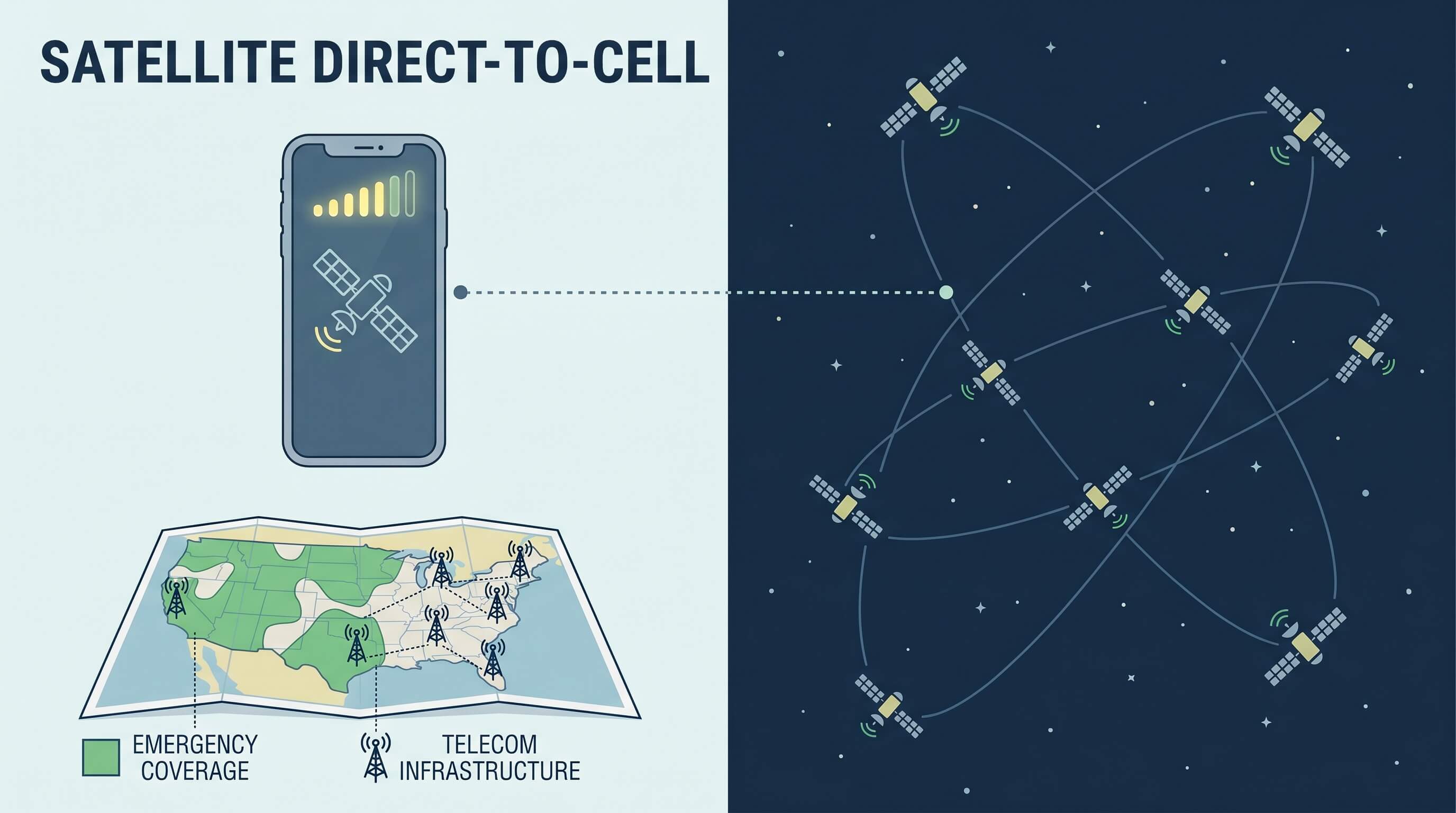
Satellite direct-to-cell spent its early public phase as a category of dramatic demos. The promise was easy to market: ordinary phones connecting to satellites without special hardware. That promise still matters, but the more important shift in 2026 is that direct-to-cell is starting to be treated less as a spectacle and more as infrastructure strategy. Carriers, satellite operators, platform vendors, and regulators are moving from proof-of-concept excitement to harder questions about standards, roaming models, emergency coverage, and where this capability fits in the real mobile stack.
The change is healthy because the market no longer needs another abstract explanation of why coverage gaps exist. It needs to know when satellite links are economically useful, what service levels are realistic, and how terrestrial mobile operators can integrate them without undermining their own network economics. Direct-to-cell is becoming credible not because it replaces the cellular grid, but because it fills specific gaps that terrestrial networks cannot justify solving everywhere with towers alone.
Standards matter more than stunts now
One reason the category is maturing is the growing importance of standards alignment. Proprietary demonstrations can prove that a link is possible, but long-term infrastructure needs deeper interoperability. That is where 3GPP alignment and standard-based mobile integration become strategically important. Carriers want a path that works with existing subscriber identity, device ecosystems, and roaming logic rather than a disconnected novelty service.
When direct-to-cell becomes part of a standards conversation, it stops being just a branding layer on top of a rocket story. It starts to resemble telecom infrastructure. That matters for procurement, handset support, regulatory confidence, and the willingness of operators to treat space-based coverage as a serious part of their resilience and reach planning.
Emergency coverage is the clearest near-term use case
The strongest public value proposition remains emergency and low-availability coverage. When a user is outside terrestrial range, even a narrow messaging link can matter enormously. That is why emergency SOS and similar services have done more to normalize the category than broad claims about replacing mobile broadband. The real proof of value comes when satellite connectivity works during disasters, in remote travel, at sea, or in rural dead zones where building conventional coverage is expensive.
For carriers and governments, this is not only a consumer convenience story. It is a resilience story. A direct-to-cell partner can extend basic reach during outages or in hard-to-serve geography without requiring nationwide tower expansion into economically weak zones. That makes the technology useful even when its throughput is limited.
Roaming economics will shape adoption
One of the less glamorous but more decisive issues is roaming economics. Satellite direct-to-cell will not scale simply because the physics work. It will scale if the commercial model makes sense for operators, users, and wholesale partners. Who owns the customer relationship? How is satellite usage billed? Is it bundled into premium plans, sold as an emergency add-on, charged per event, or hidden inside enterprise contracts? Those questions matter more than many early headlines suggested.
Operators will also evaluate whether satellite coverage strengthens their own brand or weakens their control. A carrier may like the resilience and geographic reach of direct-to-cell while still wanting clear boundaries around pricing, support obligations, and network ownership in the customer’s mind. That makes partner structure and billing design strategically important, not just operational details.
Carrier leverage cuts both ways
Direct-to-cell can improve a carrier’s offering, but it can also rebalance leverage in the value chain. If a satellite operator becomes a visible connectivity layer with its own platform relationships, terrestrial carriers may worry about becoming partially disintermediated at the edge. On the other hand, carriers also gain leverage of their own by using satellite partnerships to close coverage gaps, improve retention in rural markets, and strengthen public-safety positioning.
This tension is why the category increasingly looks like infrastructure strategy. It is not simply about whether the link budget works. It is about who controls distribution, who captures value, and how space-based coverage changes bargaining power across telecom.
Where the hype ends
The hype ends where expectations outrun physics and economics. Direct-to-cell is not about making every remote user feel like they are standing under a dense urban 5G network. Capacity is constrained, service quality varies by scenario, and many early deployments will focus on messaging or narrow-band use before broader voice and data become routine. The strongest products in this category will likely succeed by being explicit about those limits rather than pretending the satellite layer is a universal substitute for terrestrial infrastructure.
That realism is a strength, not a weakness. Infrastructure categories mature when they stop promising everything and start doing a few things dependably. In direct-to-cell, those things include emergency connectivity, remote-area fallback, selected enterprise and government use cases, and broader resilience for operators that want a safety net beyond the tower grid.
The strategic role is now clearer
By 2026, the market is finally getting a clearer picture of what direct-to-cell is for. It is a complement to terrestrial mobile networks, a policy tool for emergency access, a competitive lever for carriers, and a standards-driven integration challenge that could reshape roaming and coverage expectations over time. That is much more valuable than the early spectacle because it gives the technology an actual place in infrastructure planning.
Satellite direct-to-cell is shifting from demo to strategy precisely because the conversation is becoming more disciplined. Standards, billing, service boundaries, handset compatibility, and public-safety value are now more important than showmanship. The next winners will be the companies that treat satellite mobile coverage not as a magical replacement for the cellular network, but as a serious infrastructure layer with clear strengths, real constraints, and growing strategic importance.