Proof of Reserves Is Growing Into a Full Solvency Stack
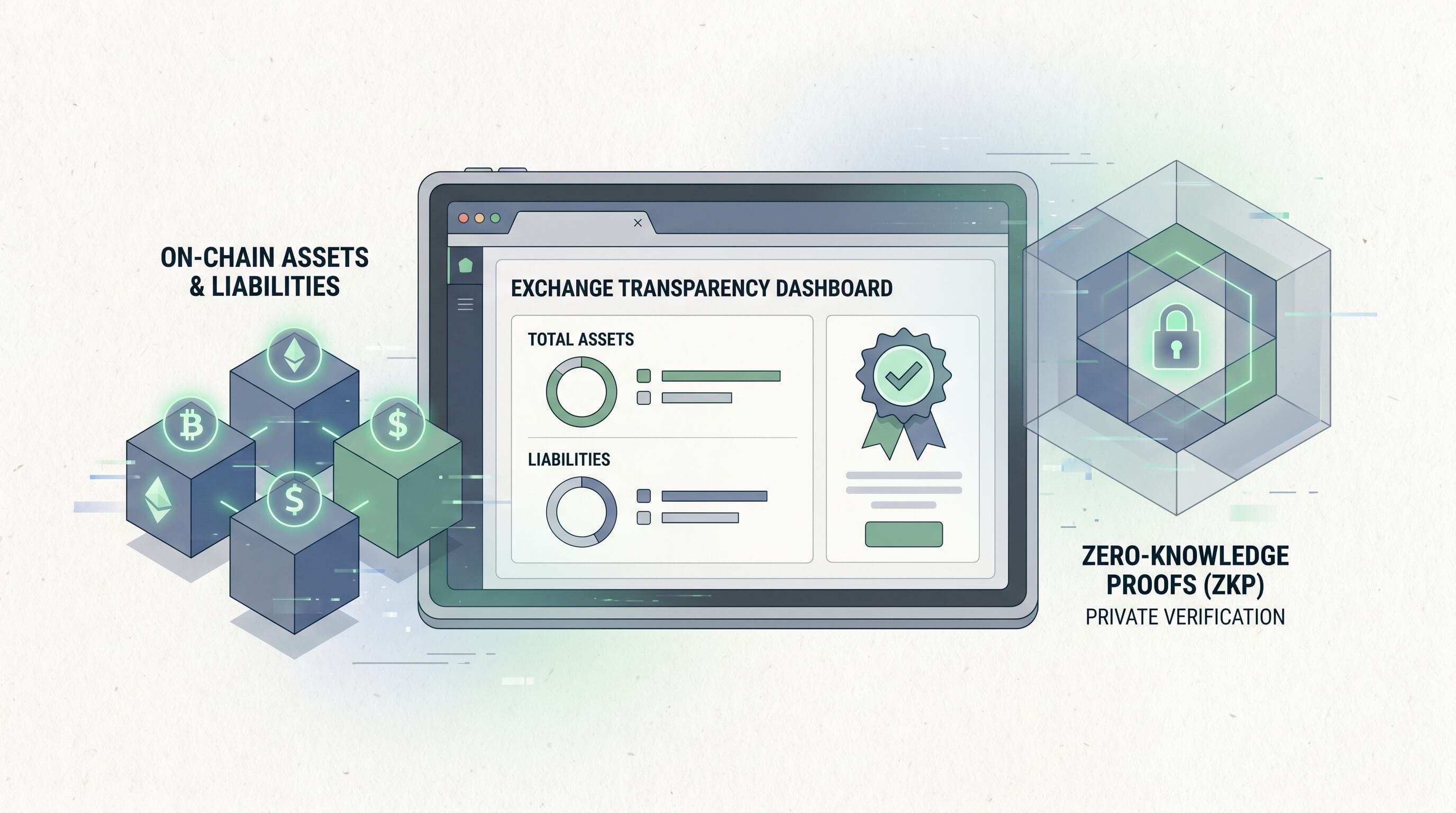
Proof of reserves started as a credibility patch. After a string of trust-shattering failures, exchanges needed a way to show that customer assets existed somewhere on-chain and were not purely fictional balances in a database. In that moment, publishing wallet information and reserve attestations felt like progress. In 2026, that baseline is starting to look incomplete. The market is moving toward something broader: a solvency stack that combines on-chain reserve visibility, liabilities accounting, audit discipline, user-verifiable cryptography, and tighter operational controls.
The thesis is that proof of reserves only becomes meaningful when it is attached to a fuller picture of obligations and risk. Assets matter, but liabilities matter just as much. So do encumbrances, treasury practices, segregation of customer funds, collateral policies, and the ability to verify that reported numbers are not just a carefully staged snapshot. The industry is learning, slowly and sometimes reluctantly, that trust infrastructure is not a PDF and a Merkle tree alone. It is a system.
Why simple reserve snapshots stopped being enough
The first generation of proof-of-reserves reporting solved a narrow problem. It gave users evidence that an exchange controlled certain wallets and could sign messages from them. That was better than blind faith, but it left obvious holes. A platform could show assets without disclosing offsetting liabilities. It could borrow funds near an attestation date. It could publish a reserve ratio that looked healthy while keeping the messy parts of the balance sheet out of view.
Those weaknesses are not theoretical. They are built into the difference between custody evidence and solvency evidence. Solvency requires showing that assets exceed liabilities on an ongoing basis, not just that some assets exist. That distinction is why the conversation now includes recurring attestations, liabilities inclusion proofs, reserve composition, and whether customer assets are segregated from proprietary activity.
Merkle trees were useful, but they were never the destination
Merkle-tree-based reporting remains important because it gives users a privacy-preserving way to confirm that their balances were included in a liabilities set. That is a real technical improvement over opaque statements from management. But Merkle proofs are still only one piece. They do not tell users whether liabilities were understated, whether negative balances were treated sensibly, or whether off-chain obligations sit outside the published dataset.
This is where the next wave gets more interesting. Exchanges and infrastructure firms are increasingly talking about systems that connect customer liability proofs, on-chain reserve tracking, third-party attestations, and cryptographic methods that reduce the need to expose raw internal data. The goal is not perfect transparency in the naive sense. It is credible transparency with enough structure that manipulation becomes harder and easier to detect.
Zero-knowledge proofs fit the moment
Zero-knowledge techniques are attractive here because they let platforms prove meaningful facts without dumping every sensitive detail into public view. In a solvency context, that can mean proving that total assets exceed total liabilities, that certain reserve thresholds are met, or that liabilities were computed according to agreed rules without revealing every customer account. This is much closer to the kind of privacy-preserving accountability the crypto industry actually needs.
The interesting point is not that zero-knowledge proofs are magically replacing audits. They are not. The point is that they can narrow the gap between public verifiability and operational secrecy. That matters because exchanges do have legitimate reasons not to expose every internal wallet structure or every user balance. The challenge is to avoid turning privacy into a blanket excuse for opacity. Properly used, cryptographic proofs can help thread that needle.
Regulation is pushing the market toward boring discipline
Another reason this topic matters now is that transparency expectations are being pulled closer to conventional financial oversight. Frameworks in the US, Europe, and other major markets are moving the industry toward more formal reserve rules, disclosure standards, anti-money-laundering controls, and governance requirements. Whatever one thinks of the policy details, the direction is clear. Large custodial platforms are being pushed to behave less like experimental crypto startups and more like financial institutions with auditable obligations.
That shift changes incentives. A flashy reserve dashboard is still useful for marketing, but regulators, institutional clients, and sophisticated users want repeatable controls. They want evidence that reserve assets are high quality, that liabilities accounting is sound, that customer funds are not commingled casually, and that executives can be held accountable for misrepresentation. In other words, they want process, not just proof theater.
Why solvency is operational, not just cryptographic
A full solvency stack includes things that are not especially glamorous in crypto circles. Treasury controls matter. Access management matters. Reconciliation frequency matters. Independent review matters. Insurance and user protection funds matter, but only if their structure is clear and their trigger conditions are credible. Incident response matters because a solvent exchange can still fail users operationally if it cannot contain breaches, freeze compromised flows, or communicate accurately during stress.
This is the part of the conversation that makes the industry more mature. Crypto spent years treating trust as a problem that clever cryptography alone could solve. Cryptography is essential, but institutions fail through governance mistakes and operational shortcuts as often as they fail through bad math. A solvency system has to account for that reality.
The market impact goes beyond exchanges
If exchanges move toward stronger solvency tooling, the effects will spill into custody providers, auditors, compliance software vendors, and on-chain analytics firms. It could also change user expectations. Retail users may never inspect a liability proof personally, but they can learn to treat recurring transparency artifacts as table stakes rather than premium features. Institutional clients, meanwhile, are likely to demand deeper evidence before leaving large balances on centralized platforms.
That could create healthier competition. Instead of competing only on fees, listings, and leverage, platforms may need to compete on the quality of their trust infrastructure. The winners will not necessarily be the ones with the prettiest dashboards. They will be the ones whose controls are understandable, repeatable, and difficult to game.
What to look for now
Users and counterparties should ask sharper questions. Does the platform publish only reserve assets, or does it also provide a credible liabilities methodology? Are attestations recurring or one-off? Is there evidence of fund segregation? Are reserve assets easy to value and easy to liquidate, or are they concentrated in riskier tokens? Does the exchange explain how it handles lending, staking, rehypothecation, or internal market-making exposure? If it mentions zero-knowledge proofs, what exactly is being proven?
Those questions matter because crypto trust failures rarely begin with one dramatic lie. They begin with blurred boundaries, vague disclosures, and assumptions that someone else has checked the hard parts. Proof of reserves helped move the industry away from total opacity. The next step is to stop pretending that reserves alone settle the question.
The real direction of travel
The most important thing happening in crypto transparency is not that exchanges are publishing more charts. It is that the market is slowly discovering the shape of credible financial infrastructure. That infrastructure is part cryptography, part accounting, part governance, and part regulation. None of that sounds very crypto-native in the romantic sense. It sounds institutional.
That is exactly why it matters. If centralized crypto platforms want to remain large enough to matter, they need trust systems that survive scrutiny rather than slogans. Proof of reserves was the opening move. A full solvency stack is the part that might actually last.