PC gaming handhelds are becoming a platform battle, not a niche device category
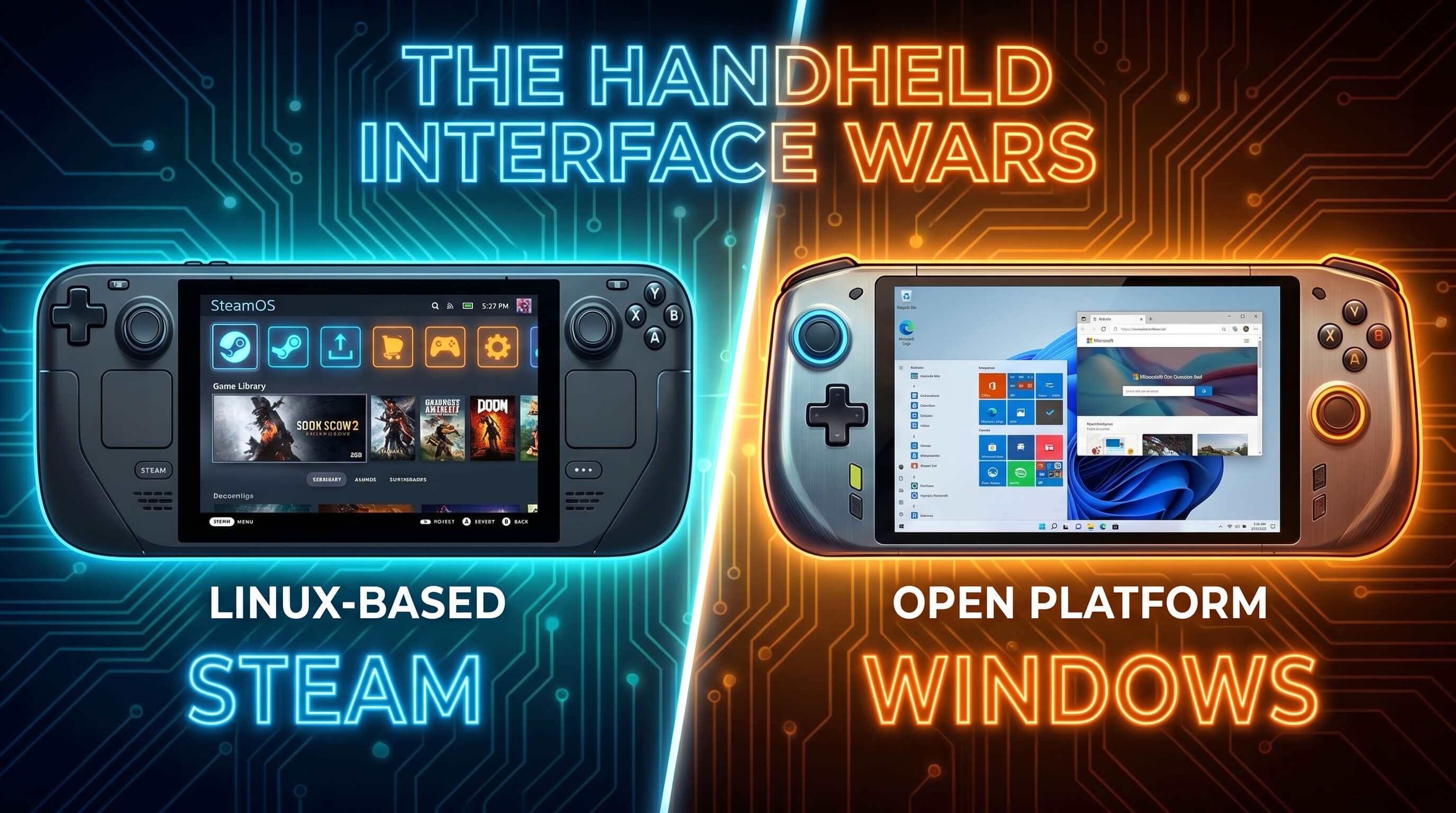
It is easy to describe the rise of PC gaming handhelds as a hardware trend. More chips got efficient enough, more screens got good enough, and more players decided they wanted their Steam libraries somewhere other than a desk. All of that is true. It is also incomplete. By 2026, handheld gaming PCs are no longer interesting only because they exist. They are interesting because they are turning into a platform fight.
The first phase of the market was about proving demand. Valve’s Steam Deck showed that a handheld PC could feel coherent instead of awkward, and that a portable device did not need to chase flagship desktop performance to matter. The second phase is harder. Now the question is not whether people want handheld PCs. It is which software stack will define them, what tradeoffs users will tolerate, and whether the category behaves more like a console ecosystem or a miniature laptop market.
Why Steam Deck mattered beyond sales
The Steam Deck’s deepest contribution was not raw volume. It was design clarity. Valve treated the device as a complete experience, not just as a small computer. SteamOS, suspend-and-resume behavior, input consistency, performance overlays, shader pipeline work, and the growing maturity of Proton helped make the product feel purpose-built for gaming. According to market estimates surfaced in 2026 coverage of the handheld segment, Steam Deck still anchors a large share of the tracked handheld gaming PC market, and Linux usage on Steam has risen in part because the device made that software path viable for ordinary players.
That matters because the category learned an important lesson: handheld success is not purely a silicon contest. A slightly slower device with a better software experience can beat a faster machine that feels like a Windows laptop squeezed into a controller shell.
Why Windows handhelds still have real leverage
At the same time, Windows handhelds keep winning on another axis: compatibility. For many users, especially those who care about Game Pass, launcher sprawl, anti-cheat support, or niche PC titles, full Windows remains the safest answer. ASUS, Lenovo, and others keep pushing devices that offer more raw headroom, broader native compatibility, and easier access to the messy totality of PC gaming.
This is why the category has not collapsed into a single obvious winner. SteamOS offers coherence and efficiency. Windows offers breadth and brute-force familiarity. The tradeoff is painfully clear in daily use. Windows can feel clumsy on a seven- or eight-inch touchscreen, update at the wrong moment, and drain battery faster than players would like. SteamOS feels cleaner, but can still run into edge cases with unsupported anti-cheat or titles that assume Windows-first behavior. Consumers are not choosing only hardware. They are choosing which annoyances they can live with.
The category is now shaped by power, battery, and software restraint
One reason handhelds are more interesting than gaming laptops right now is that they force discipline. On a handheld, software inefficiency is visible immediately. Bad battery behavior, background overhead, driver weirdness, and launcher bloat all become impossible to ignore. That makes the operating system a first-order product decision.
Valve appears to understand this better than most. Reports in 2026 continue to suggest that the company is not rushing a Steam Deck 2 until a meaningful leap in performance-per-watt is available. That restraint is notable. A weaker annual-refresh mentality might sell some units, but it would also risk turning the category into the same exhausting spec churn that already dominates other hardware markets.
Meanwhile, Windows handheld makers are improving quickly. Bigger batteries, better cooling, stronger AMD silicon, and more polished device software keep narrowing the experiential gap. Some vendors are also experimenting with SteamOS variants or at least more console-like shells, which is its own admission that software polish matters as much as teraflops in this format.
Why this is starting to look like a real platform battle
A platform battle is not just a fight over devices. It is a fight over defaults. Who owns storefront behavior, update flow, compatibility layers, cloud sync expectations, input conventions, and the social layer around the library? Handheld PCs now sit in that zone. Valve wants the handheld future to strengthen Steam, Proton, and Linux gaming legitimacy. Microsoft has reason to care because Windows and Game Pass still matter in portable play. Hardware vendors want enough differentiation to avoid becoming interchangeable shells around someone else’s software strategy.
The next few years will likely be shaped less by “the fastest handheld” than by which stack makes portable PC gaming feel least compromised. That includes battery life, suspend reliability, game verification, anti-cheat progress, controller consistency, docked behavior, storefront integration, and price discipline. Hardware alone will not settle it.
What could still slow the market down
Price is the obvious brake. The more component costs rise, the harder it becomes to keep the category accessible without ugly compromises. There is also the risk of fragmentation. If buyers start facing too many slightly different handhelds with inconsistent software support and confusing performance expectations, the category could become enthusiast-only again.
There is also a library problem hiding in plain sight. The promise of portable PC gaming gets weaker whenever major multiplayer titles, launcher dependencies, or badly optimized ports break the illusion of console-like simplicity. The category depends on reducing those friction points, not just on launching stronger chips.
The practical takeaway
If you are buying a handheld gaming PC in 2026, do not start with the spec sheet. Start with your library and your tolerance for operating-system friction. If most of your gaming lives inside Steam and you care about battery life and coherence, the SteamOS path still makes a powerful case. If you want maximum compatibility and do not mind desktop mess on a small screen, Windows handhelds remain compelling.
The bigger story is that portable PC gaming has outgrown the novelty stage. This is no longer a weird side branch of the hardware market. It is becoming a contest over how PC gaming should feel when it leaves the desk. That makes handhelds more strategically important than their size suggests.