Passkeys Are Starting to Change Consumer App Onboarding More Than Password Resets
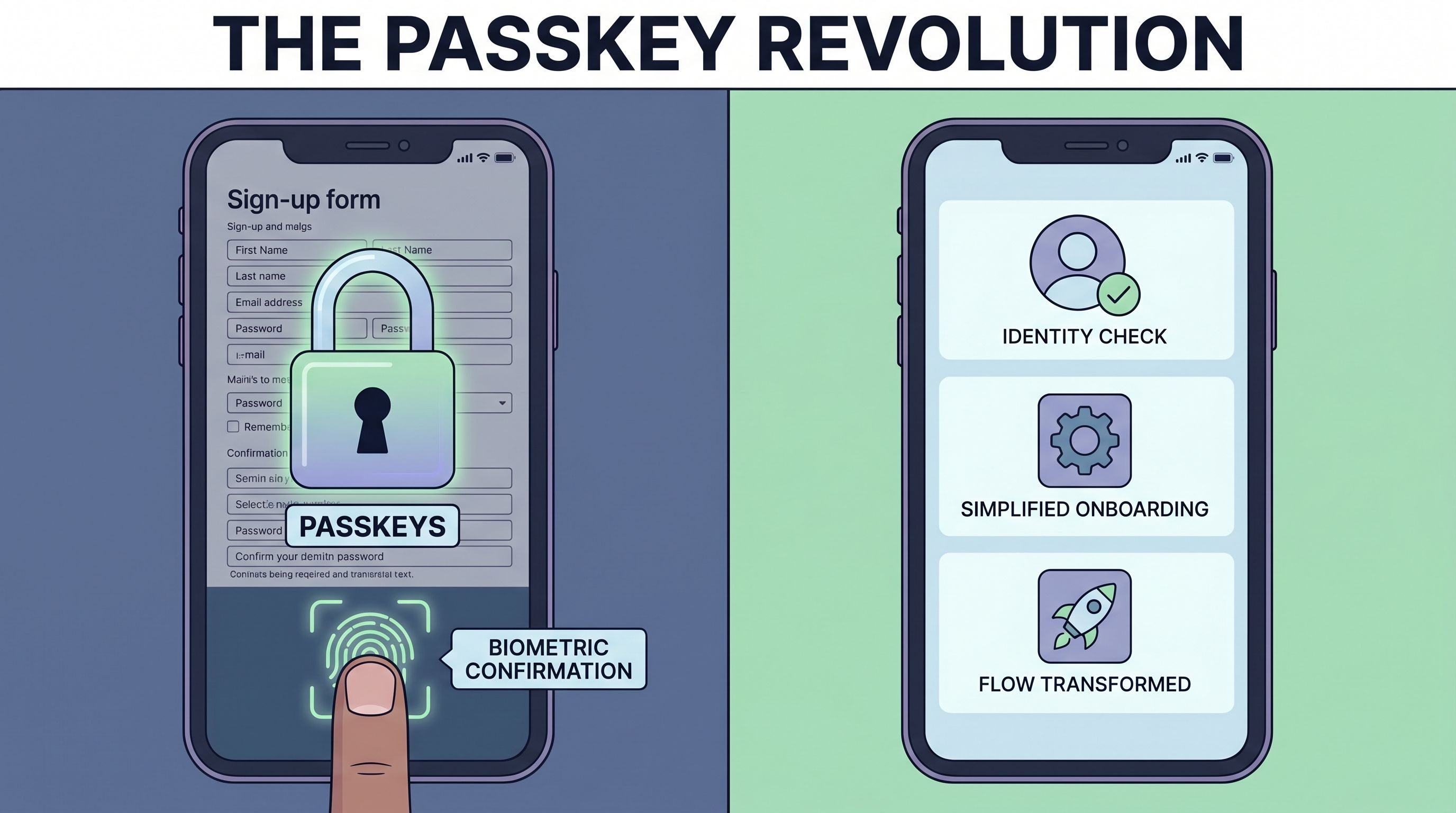
Passkeys are often introduced as a better replacement for passwords, but that framing can undersell where their biggest product impact is showing up first. In many consumer apps, the most meaningful improvement is not the elimination of password resets as a support problem. It is the way passkeys can reduce friction across signup, account recovery, and re-authentication. When implemented well, they make identity feel like a native device action instead of a form to complete and remember.
That matters because onboarding is where product momentum is won or lost. A consumer app can spend heavily to acquire a user and still lose them at the moment of registration if the account flow feels suspicious, tedious, or fragile. Passkeys shift this moment from “create a credential, confirm it, store it, and hope you remember it later” to “confirm you are present on a trusted device.” The security benefits are real, but the immediate commercial value often comes from fewer abandoned signups, fewer broken recovery loops, and less annoying re-auth when users return.
Why onboarding is the first big passkey battleground
Traditional signup flows ask for too much too early. They frequently combine email verification, password creation, password rules, anti-bot checks, and profile setup into a single high-friction sequence. Every extra step invites drop-off. Passkeys can simplify that sequence by moving the trust decision into a familiar device prompt, often backed by biometrics or the phone's secure unlock method.
This changes the emotional tone of onboarding. Instead of asking users to invent and manage another secret, the app asks them to confirm themselves using a system they already trust. That is a subtle but important product shift. The less cognitive load the user feels in the first minute, the more likely they are to complete signup and continue to activation.
Recovery is where passkeys become tangible
Passwordless marketing often focuses on the happy path, but consumer products live or die by edge cases. Recovery is one of the costliest and most frustrating parts of the old model. Forgotten passwords, reused passwords, email delays, spam filtering, SMS fragility, and support escalations all create drag. Passkeys can improve this not by removing every possible failure mode, but by narrowing the number of fragile steps users must navigate.
When ecosystems sync passkeys across a user's devices, returning to an account can feel dramatically smoother. Recovery becomes less about reconstructing a secret from memory and more about proving possession of a trusted device and access to its local authentication controls. That is a better fit for how most users already think about identity.
Re-authentication may be the hidden win
Some of the strongest product gains come after signup. Apps increasingly ask users to re-authenticate for payments, account changes, saved credentials, or sensitive content. Password re-entry is disruptive, especially on mobile. Magic links can be slow. SMS codes are noisy and increasingly distrusted. Passkeys turn those moments into quick system confirmations that feel more like consent than interruption.
This matters because re-auth points often sit directly in revenue or security-critical journeys. If the user abandons a checkout, skips a settings change, or postpones account recovery because the authentication step feels annoying, the app loses value immediately. By making these moments faster and more legible, passkeys can improve both conversion and trust.
The UX challenge is not solved automatically
Passkeys are not a magic layer that fixes poor product design. Confusing prompts, weak fallback paths, unclear terminology, and inconsistent platform behavior can still create abandonment. Some users do not know what a passkey is, some fear they are locking themselves to one device, and some encounter edge cases when crossing ecosystems. If the app simply drops a passkey prompt without explaining the value and fallback, it can replace one form of friction with another.
That means product teams need to design the surrounding experience carefully. They should explain the action in plain language, make fallback options visible without centering them, and keep recovery coherent across mobile and web surfaces. The winning pattern is usually not “force passkeys everywhere immediately.” It is “make passkeys the easiest path, then support the user gracefully if they cannot take it.”
Implementation choices shape the business outcome
There is also a strategic sequencing question. Some apps benefit from introducing passkeys at account creation. Others get more traction by offering them after first login, during a trust-building moment such as enabling payments or saving preferences. The best choice depends on audience familiarity, platform mix, and how expensive failed recovery currently is.
Teams should watch metrics beyond password reset volume. Track signup completion, activation rate, successful return logins, re-auth completion in sensitive flows, support contacts per authentication event, and cross-device continuation. The product value of passkeys becomes clearer when measured as flow efficiency rather than only as security modernization.
Why consumer apps care now
Consumer apps are under pressure to remove friction without weakening security. That balance has become harder as phishing rises, SMS reliability varies, and users carry accounts across multiple devices. Passkeys are attractive because they align security with a faster interaction model. They make the secure path feel simpler instead of more burdensome, which is rare in identity design.
They also fit a broader shift in user expectations. People increasingly expect onboarding to feel immediate and device-native. A prompt tied to Face ID, fingerprint, or screen unlock feels more contemporary than a password creation page full of requirements. That perception alone can make a product feel more polished and trustworthy.
Actionable guidance for product teams
If a consumer app is exploring passkeys, the first step is to identify the highest-friction identity moments. These are often signup on mobile, recovery after reinstall, and re-auth during checkout or settings changes. Start there. Design the passkey flow as a conversion tool, not just a compliance or security initiative.
Second, write clear copy. Avoid assuming users know the term “passkey.” Explain what is happening in device language they already understand. Third, build robust fallback paths and test them ruthlessly across iOS, Android, and web. Finally, measure flow completion and user confidence, not just credential type adoption.
The deeper shift
Passkeys matter because they are changing how consumer apps think about identity. The old model treated authentication as a barrier to get through. The new model can make it feel like a lightweight confirmation built into the device the user already trusts. That shift is especially powerful at the beginning and the return moments of the product journey.
So yes, passkeys can reduce password resets. But the more interesting story is that they can reshape onboarding, recovery, and re-authentication into smoother, more native experiences. For consumer apps chasing both growth and trust, that may be the bigger transformation.