Ozempic's Second Act: Researchers Are Finding GLP-1 Drugs Reshape the Brain
Semaglutide — sold as Ozempic for diabetes and Wegovy for weight loss — was already one of the most consequential drug classes in decades when researchers started noticing something unexpected in the clinical data. Patients on GLP-1 receptor agonists were reporting reduced cravings for alcohol and cigarettes. A subset showed improvements in depression and anxiety. And in several large observational studies, people taking the drugs appeared to have lower rates of Alzheimer's disease and Parkinson's disease diagnosis over follow-up periods.
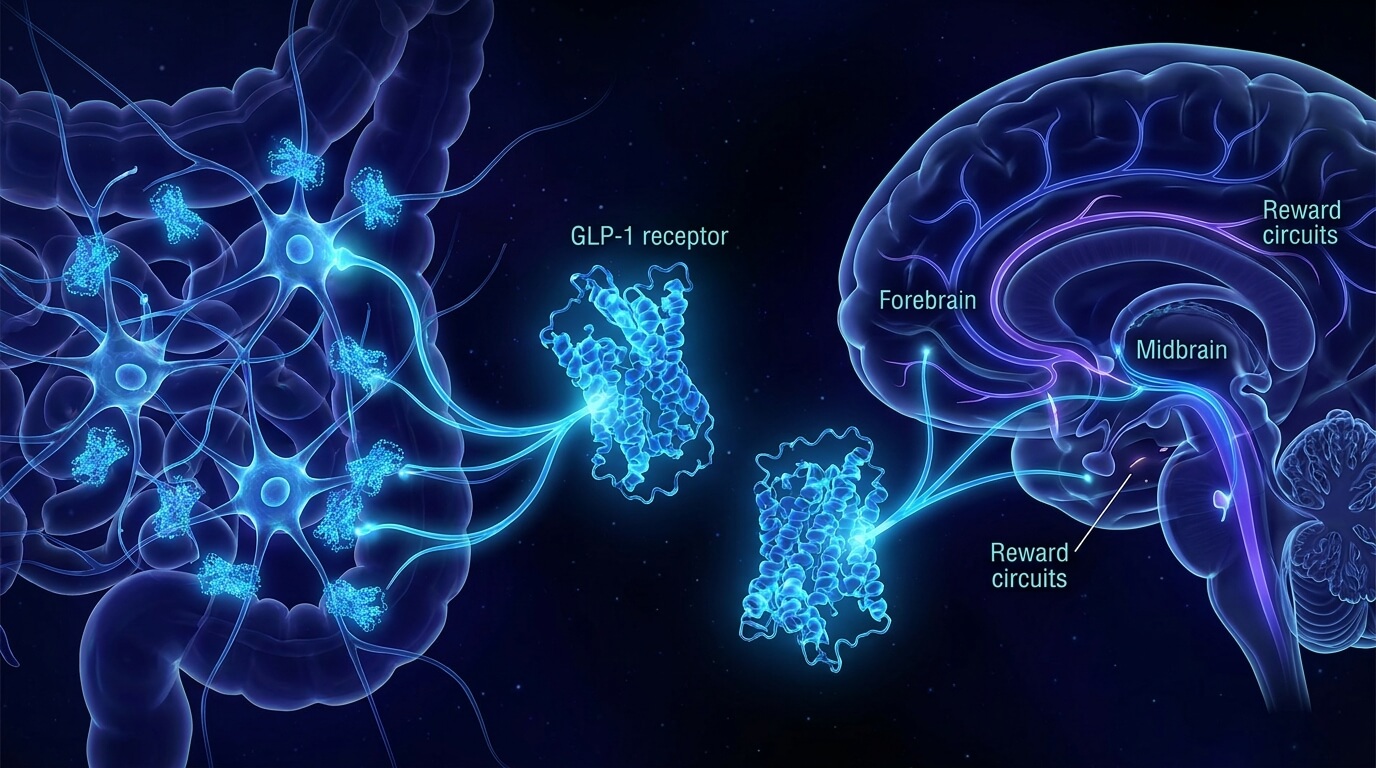
The weight loss mechanism is partly understood: GLP-1 (glucagon-like peptide-1) is a hormone naturally released after eating that signals satiety, slows gastric emptying, and reduces appetite. GLP-1 receptor agonists mimic this signal at much higher potency and duration. But GLP-1 receptors aren't only in the gut and pancreas. They're also expressed throughout the brain — in the hypothalamus, brainstem, and notably in the dopaminergic reward circuits of the ventral tegmental area and nucleus accumbens.
The Addiction Signal
The most striking early finding is the apparent effect on addiction. A 2024 observational study published in Nature Medicine analyzed electronic health records of over 220,000 patients and found that people taking semaglutide had significantly lower rates of alcohol use disorder diagnosis compared to matched controls taking other diabetes medications. Similar signals have appeared for tobacco, opioid use disorder, and even compulsive gambling.
The leading hypothesis is that GLP-1 agonists dampen dopamine release in the reward circuit — reducing the hedonic "high" associated not just with food but with other reward-seeking behaviors. This would explain reduced cravings across different addictive substances simultaneously. Animal studies have shown direct reductions in voluntary alcohol consumption when GLP-1 agonists are administered, with the effect reversible when the drug is stopped.
Novo Nordisk, which makes semaglutide, is now running Phase 3 trials specifically for alcohol use disorder. Eli Lilly, whose tirzepatide (Mounjaro/Zepbound) acts on both GLP-1 and GIP receptors, has similar programs in development. If these trials succeed, the approved indications for this drug class could expand dramatically beyond their current metabolic focus.
Neurodegeneration: Early Signals, High Uncertainty
The Alzheimer's and Parkinson's signals are more preliminary but have attracted serious scientific attention. Multiple large observational studies — using Danish health registry data, UK Biobank data, and US insurance claims databases — have consistently found lower rates of these diagnoses among people who took GLP-1 agonists for diabetes compared to people who took other diabetes drugs.
In a 2024 study using Danish national registry data, patients who had taken semaglutide or liraglutide had roughly 40-70% lower incidence of Parkinson's disease diagnosis over a median 5-year follow-up than matched controls. A separate analysis of US claims data found similar associations for Alzheimer's disease.
The mechanisms proposed are speculative but not implausible. GLP-1 receptors in the brain may reduce neuroinflammation, a key contributor to neurodegeneration. The drugs also reduce systemic inflammation and improve insulin sensitivity, both of which are implicated in Alzheimer's pathophysiology. Some researchers propose a direct neuroprotective effect through the dopaminergic pathways affected in Parkinson's.
The critical caveat: observational studies cannot establish causation. People who take GLP-1 drugs for diabetes may differ from those who take other diabetes drugs in ways the statistical adjustments don't fully capture — in diet, socioeconomic status, access to care, or other factors that independently affect dementia and Parkinson's risk. The associations are suggestive, not confirmed.
Novo Nordisk is running a dedicated Phase 3 trial (EVOKE) testing semaglutide against Alzheimer's progression. Results are expected in 2026-2027. A separate trial (SPARK) tests liraglutide for Parkinson's disease. These randomized controlled trials will provide the first real evidence on whether the observational signals hold.
Mental Health Effects
Depression and anxiety signals are the most complicated. Early trial data and patient reports suggested improvements in mood alongside weight loss. But in 2024, the FDA added a label update requiring monitoring for depression and suicidal ideation after adverse event reports — a cautionary flag even though the causal relationship remains unclear.
The picture appears to be nuanced: for many patients, the drug's metabolic benefits (weight loss, reduced pain, better mobility) drive genuine mood improvements. For a subset, there may be direct effects through reward circuitry. A small minority appears to experience mood deterioration. Research is ongoing to identify which patients fall into which category before these drugs are positioned for primary psychiatric indications.
What This Means
GLP-1 receptor agonists are already reshaping medicine's approach to obesity and type 2 diabetes. If the emerging neuroscience holds up under clinical trial scrutiny, the drug class could become one of the most broadly prescribed in history — treating not just metabolic disease but potentially addiction, neurodegenerative disease, and aspects of psychiatric illness.
The commercial implications are enormous. Novo Nordisk and Eli Lilly are already among the most valuable pharmaceutical companies in the world primarily on the strength of their GLP-1 portfolios. New indications would extend that dominance significantly. The research implications are equally large: understanding why these drugs affect the brain could open new windows into the neurobiology of reward, addiction, and neurodegeneration that have resisted decades of investigation.
What was discovered somewhat by accident in a diabetes drug may be teaching us something fundamental about how appetite, reward, and brain health are connected — and how a single molecular pathway can influence systems across the body we are only beginning to map.