Why mmWave Presence Sensing Is Turning the Smart Home Into Ambient Computing
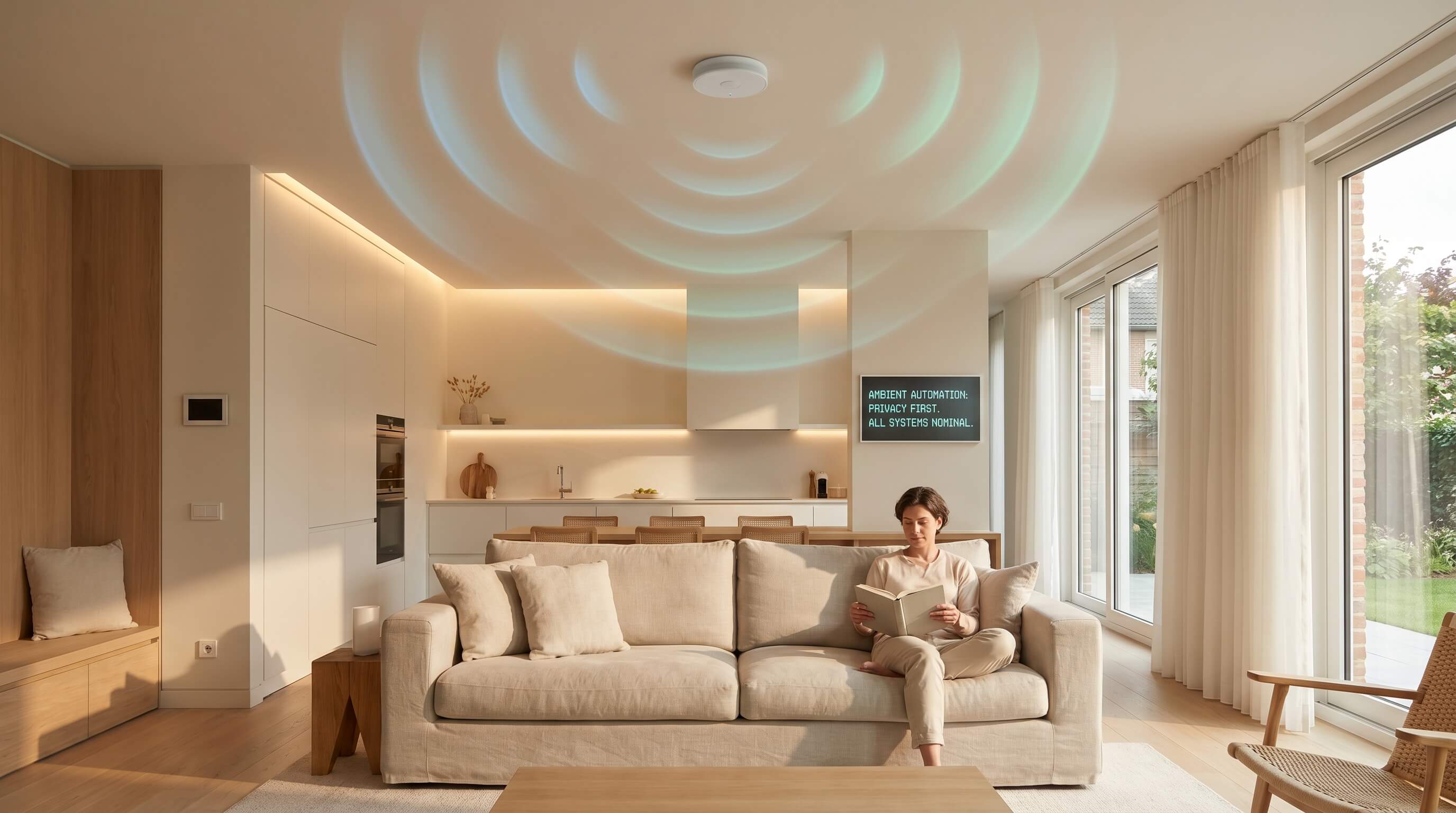
mmWave presence sensing is quietly becoming one of the most important upgrades in the modern smart home, because it fixes a problem that has held automation back for years: most homes still do not really know whether someone is there. With radar-based sensing, the home can detect subtle motion, sustained presence, and in some products even position within a room, which starts to turn automation from clumsy reaction into something closer to ambient computing.
That shift matters more than another app-controlled gadget. A smart home built on PIR motion sensors is good at noticing entrances and exits, but bad at understanding lived-in stillness. Sit on a couch reading, work at a desk, or fall asleep in a chair, and many older automations assume the room is empty. mmWave changes that by detecting micro-movements like breathing or slight posture changes, all without pointing a camera at the room.
Why PIR and cameras left a gap
For years, home automation has been split between two imperfect options. PIR sensors are cheap, efficient, and privacy friendly, but they mainly detect motion changes and often miss stationary people. Cameras are much richer sensors, yet they raise obvious privacy concerns and can feel invasive in bedrooms, living rooms, and family spaces. That left smart homes in an awkward middle state, technically automated but often context-blind.
mmWave radar sits in that gap. It emits radio waves and measures reflections to infer whether someone is present, moving, or occupying a zone. In practice, that means lights can stay on while you work quietly, climate control can respond to actual occupancy instead of a schedule, and routines can become room-aware without requiring constant video analysis. It is not magic, but it is a meaningful improvement in how a home models human presence.
Why products like the Aqara FP2 got attention
Devices such as the Aqara FP2 helped make this category legible to mainstream smart home users because they framed radar sensing as a practical automation layer, not just a spec-sheet novelty. The FP2 uses mmWave radar for zone positioning, allowing users to divide a room into virtual areas that can trigger different automations. A sofa corner can behave differently from a desk, and a hallway edge can behave differently from a bed area, all from a single sensor.
That matters because ambient computing is not only about knowing that a person exists somewhere in the home. It is about understanding enough context to make the environment behave appropriately. Some mmWave products have also marketed fall detection features, showing how the same sensing stack can extend beyond convenience into safety and assisted living use cases. For families caring for older relatives, that expands the value proposition well beyond smart lighting.
The privacy tradeoff is better, not nonexistent
Radar sensing deserves attention partly because it offers a more comfortable privacy bargain than cameras. It does not capture faces, clothing, or the visual details of a room. For many households, that is a major psychological and practical difference. A presence sensor in a bedroom or nursery feels very different from a camera feed, even if both are technically gathering environmental data.
Still, privacy is not automatic. A home that can infer occupancy patterns, sleep timing, or falls is learning intimate behavioral information. The tradeoff is therefore relative: mmWave is often less invasive than cameras and far more capable than PIR, but it still benefits from local processing, transparent controls, and careful placement. The best implementations will minimize cloud dependency and let users understand exactly what is being inferred.
From scenes and triggers to quiet adaptation
The deeper significance of mmWave is that it helps move the smart home away from explicit command and brittle trigger chains. Instead of asking users to constantly tap switches, speak to assistants, or tolerate lights turning off at the wrong moment, radar-based presence makes the environment more continuous. Lighting can dim when a room becomes restful, speakers can lower volume when no one is near a zone, and heating can focus on occupied spaces instead of the whole house.
This is what ambient computing has always promised: technology that recedes into the background because it is better at sensing context. The smart home has often overpromised here. Many systems were really remote control with a thin automation layer on top. mmWave does not solve every problem, but it does give the home a better sensory foundation.
What still limits the category
The category is still early enough to be imperfect. Placement matters, room geometry matters, and false positives or over-sensitive detection can still frustrate users. Pets, fans, reflective surfaces, and multi-person households complicate interpretation. Zone setup can also be fiddly. In other words, mmWave is not a universal replacement for every other sensor, and the best smart homes will still combine radar with contact sensors, light sensors, temperature data, and good automation design.
But the direction is clear. The smart home gets more useful when it knows the difference between motion and presence, between an empty room and a quiet one, and between surveillance and sensing. That is why mmWave presence sensing matters now. It is not just another connectivity feature. It is a step toward homes that respond with less friction and more discretion.
What to do if you are buying in now
If you want to experiment with mmWave today, start with one high-value room, usually a living room, office, or bedroom where PIR sensors often fail. Look for local platform support, clear zone tools, and privacy documentation before you buy. Then design automations around comfort, not gimmicks: keep lights stable during stillness, tune HVAC to real occupancy, and use fall detection or alerting only where it adds obvious value. The smartest setup is usually the quietest one, where the house simply behaves as if it has learned some manners.