Matter Promised to End Smart Home Fragmentation. Four Years Later, You Still Need the App
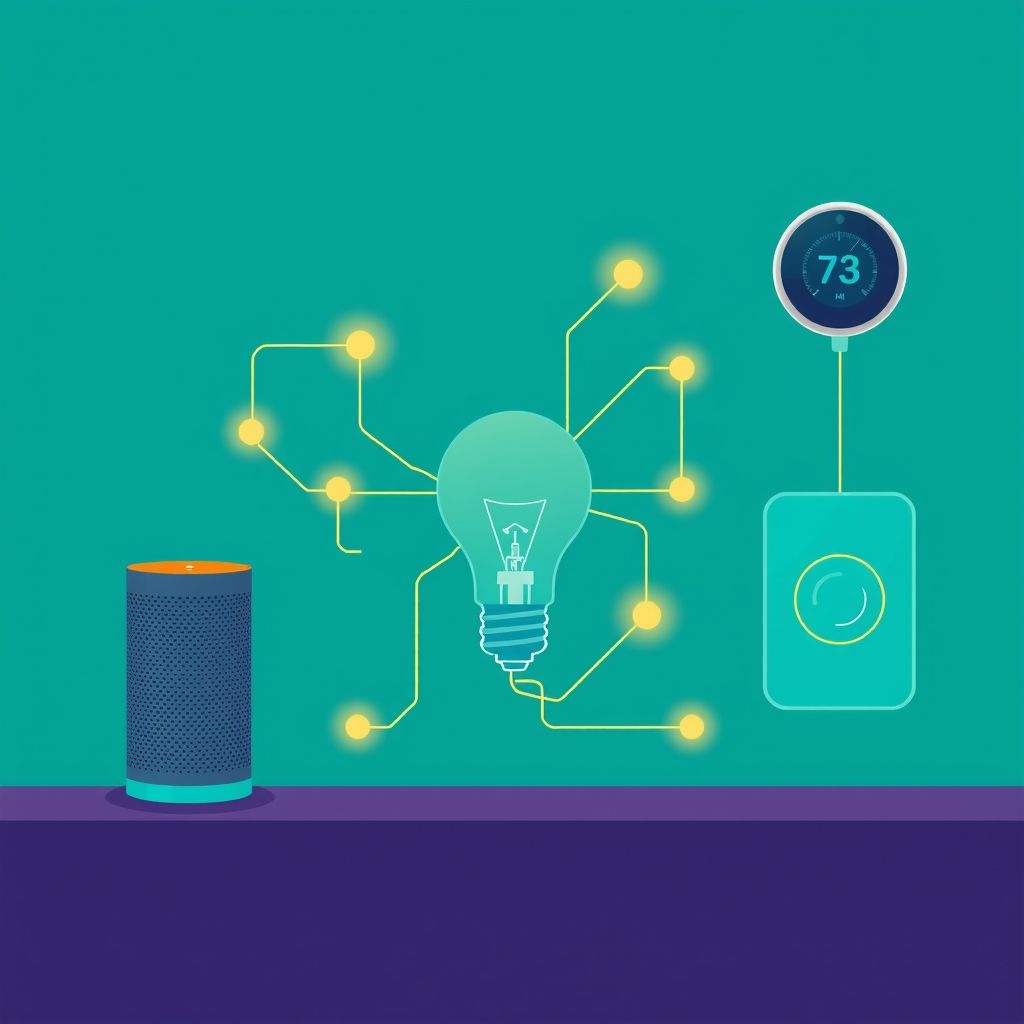
Matter 1.0 shipped in October 2022 backed by Apple, Google, Amazon, and Samsung, with a pitch simple enough to fit on a slide: buy any Matter-certified device, pair it with any Matter-compatible hub, and it just works — no more choosing a smart home ecosystem and getting locked into it. Four point releases later, the standard has added robot vacuums, major appliances, energy management devices, and finally camera support. Real-world interoperability has improved. It has not delivered on the original promise, and the reason is structural, not a matter of time.
The data model gap
Matter defines a shared language for basic device functions: turn a light on and off, set a thermostat temperature, lock a door, report a sensor reading. What it does not standardize is the long tail of features that differentiate one vendor's product from another's — a security camera's person-detection zones, a robot vacuum's room-mapping and no-go zones, a thermostat's adaptive scheduling algorithm. Those live in the manufacturer's own app and cloud service, accessible over Matter only to the extent the vendor chooses to expose them through the standard's generic clusters.
This isn't an oversight; it's a tradeoff the standard's authors made deliberately to keep the spec tractable and to avoid freezing fast-moving product categories into a committee-designed feature set. The effect, though, is that Matter functions as a baseline interoperability layer sitting underneath each vendor's differentiated app, rather than a replacement for it. A Matter-certified Aqara camera will show up in Apple Home and respond to basic commands, but motion zone configuration, cloud recording, and AI-based package detection still require the Aqara app. The "ditch the app" promise quietly became "keep the app, but now your lights also show up somewhere else too."
Thread's border router problem
Matter runs over two transports: Wi-Fi for higher-bandwidth devices and Thread, a low-power mesh protocol, for battery-operated sensors and locks. Thread needs a border router to bridge into your home network, and that's where a second fragmentation problem shows up. Apple HomePods, Google Nest hubs, Amazon Echo devices, and standalone routers from Eero and others can all act as Thread border routers — but running more than one on the same network has produced a steady stream of pairing failures, credential-sharing bugs, and mesh topology conflicts reported across smart home forums and reviewed extensively by outlets like The Verge and Ars Technica through 2025 and 2026.
The practical advice that smart home reviewers now give — disable all but one Thread border router, or accept intermittent device dropouts — is the opposite of what a universal standard is supposed to require of its users. Multi-admin, the Matter feature that's supposed to let a single device be controlled from multiple ecosystems simultaneously (your lock responding to both Apple Home and Google Home, for instance), remains the single most commonly cited source of pairing instability in 2026 product reviews, more than three years after the feature was specified.
Certification lag leaves smaller brands behind
Full Matter certification through the Connectivity Standards Alliance carries real cost and lead time, which has concentrated early, high-quality implementations among large manufacturers — Aqara, Eve, Nanoleaf, and the big hub vendors — while a long tail of budget smart home brands either ship uncertified "Matter-ish" firmware with partial compliance or skip the standard and keep selling exclusively through their own app and cloud account, the exact pre-Matter model the standard was created to end. For a category where price-sensitive budget devices make up a large share of unit volume, that gap matters more than the headline adoption numbers from premium brands suggest.
What actually improved
It would be inaccurate to call Matter a failure. Basic multi-vendor interoperability for lights, plugs, and sensors genuinely works better in 2026 than it did in 2022, and switching your primary smart home hub — from, say, Amazon Alexa to Apple Home — no longer means re-buying your entire device fleet, which was the normal outcome before Matter existed. That's a real, valuable change for anyone who has lived through a hub migration. Energy management device support, added in Matter 1.3, has also enabled genuinely new cross-vendor use cases like utility demand-response programs that work regardless of which smart plug brand a household owns.
Takeaways
If you're buying smart home devices today: check Matter certification as a baseline requirement, but budget for keeping the vendor app installed for any device whose advanced features matter to you — camera analytics, robot vacuum mapping, and thermostat learning algorithms are not yet meaningfully portable across ecosystems regardless of Matter branding on the box.
If you're building a multi-vendor smart home network: pick one Thread border router platform and stick to it. Running Apple, Google, and Amazon border routers simultaneously on the same Thread mesh remains the single biggest source of reported pairing and reliability problems in 2026, and the fix is topology discipline, not a firmware update that hasn't shipped yet.
If you're evaluating the standard as an industry trend: track Matter's cluster additions (cameras in 1.4, what comes next) as the real signal of where the "full app replacement" promise might eventually land, rather than adoption percentage figures, which measure certification, not capability parity.