Machine Identities Are Becoming the Real Enterprise Authentication Problem
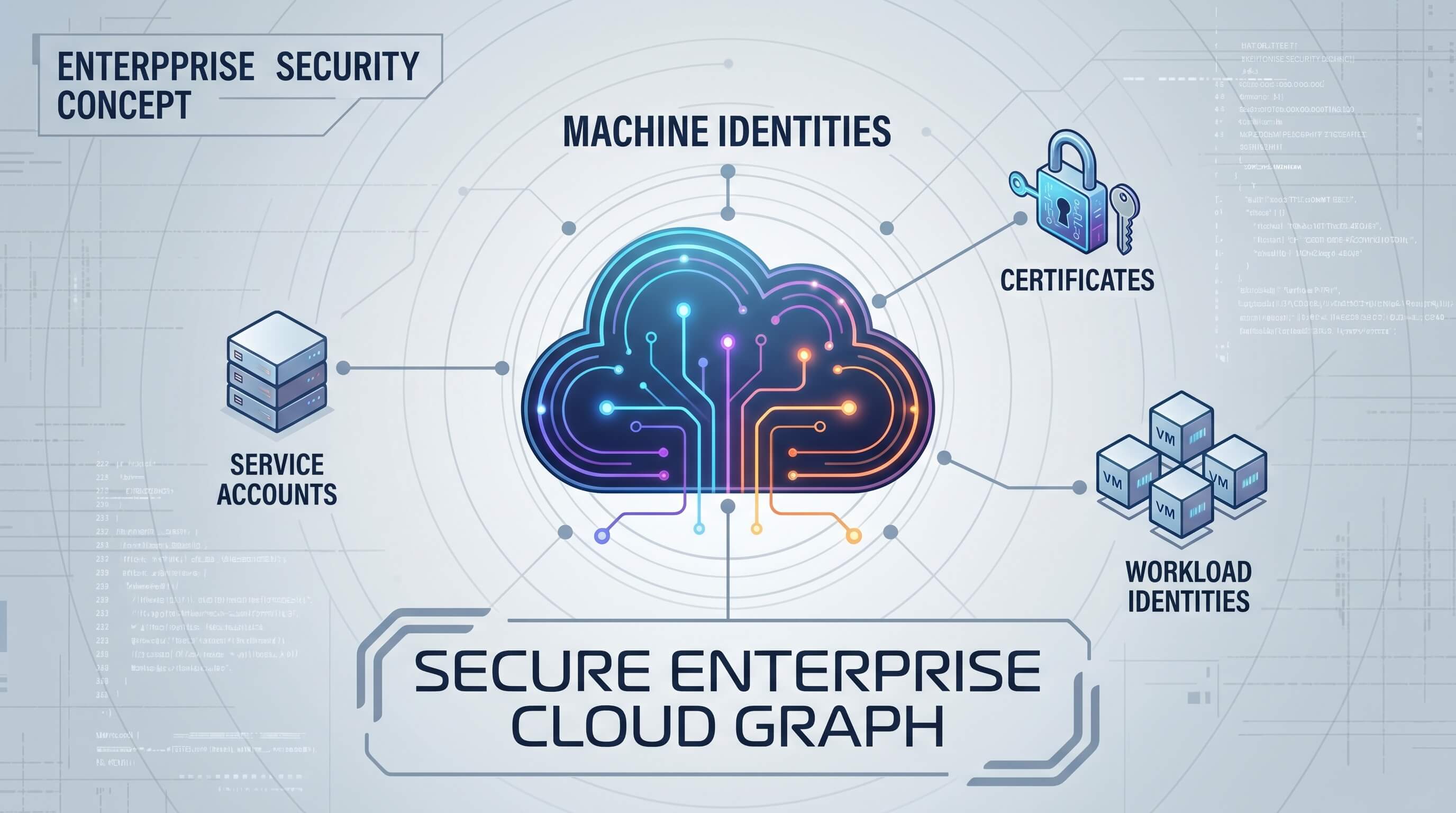
Machine identities have quietly become one of the hardest authentication problems in the enterprise. Human login security has improved through stronger MFA, better awareness, and tighter conditional access, but the number of non-human identities has exploded across cloud platforms, CI/CD pipelines, Kubernetes clusters, SaaS integrations, APIs, and internal automation. Certificates, service accounts, OAuth tokens, API keys, workload identities, and signed artifacts now authenticate a huge share of critical actions. In many organizations, these machine credentials outnumber employees by several orders of magnitude.
That scale changes the security model. Human authentication is visible, episodic, and increasingly governed by mature controls. Machine authentication is continuous, distributed, and often buried inside infrastructure choices made by different teams at different times. The real enterprise risk is no longer just whether users can log in safely. It is whether every workload, service, job, and software component can prove what it is, get only the access it needs, and rotate trust without breaking production. Enterprises that still treat machine identity as a side issue are protecting the front door while leaving the internal badge system in chaos.
Why machine identity grew faster than governance
Most security programs were built around employees, admins, and third parties using interactive accounts. Even when privileged access management matured, the underlying assumption was still human. Cloud-native architecture broke that assumption. Modern applications are composed of microservices calling other services. Containers start and stop in seconds. Build systems sign code, pull dependencies, publish images, and deploy to multiple environments automatically. Every connection in that chain depends on some form of machine identity.
The problem is not simply volume. It is fragmentation. One team may rely on cloud IAM roles, another on long-lived service accounts, another on certificates issued by an internal PKI, and another on secrets stored in a vault but rarely rotated. Security leaders then inherit a sprawl of trust models with uneven ownership. Nobody has a full inventory, revocation is inconsistent, and incident responders struggle to answer basic questions like which workloads were allowed to call a sensitive system last week.
Authentication without visibility becomes an attack surface
Machine credentials are attractive because they often run with elevated privileges and limited scrutiny. A compromised workload token, leaked signing key, or overprivileged service account can let an attacker move quietly through build pipelines, cloud control planes, storage layers, or production services. The blast radius is often larger than a single employee account because machine identities are designed for automation at speed.
Visibility is the missing control in many environments. Security teams may log user authentication events in detail while treating service-to-service authentication as noisy infrastructure telemetry. That is a mistake. If an organization cannot map which identities exist, what they authenticate to, how they are issued, how long they live, and who owns them, then authentication itself becomes opaque. Opaque trust relationships are fertile ground for persistence and lateral movement.
Why legacy credential habits do not survive cloud-native systems
Many enterprise environments still carry legacy habits into modern architecture. Teams create a service account once, attach broad permissions, and keep it running because rotating it feels risky. Certificates are issued with long validity windows because renewal outages are feared more than compromise. Build pipelines accumulate tokens for convenience. Temporary infrastructure ends up backed by permanent trust. These practices made a kind of operational sense in slower environments, but they are brittle in systems that change hourly.
Cloud-native systems need identity that is short-lived, contextual, and automatable. A workload should authenticate through an identity tied to runtime attributes, platform attestation, or narrowly scoped federation, not a static secret copied through multiple tools. The more an enterprise depends on static machine credentials, the more it accumulates silent failure points. The issue is not only theft. It is also confusion. Old credentials stay active, ownership changes, and nobody is certain which automation can be safely disabled.
Machine identity is now a supply chain security issue
The enterprise authentication conversation has expanded beyond production access. Machine identity now shapes software supply chain trust as well. Build runners, package registries, artifact signing systems, deployment bots, and policy engines all need identities that can be verified. If attackers can impersonate the build system, mint a malicious artifact, or abuse an automation token with release permissions, they can compromise software before it reaches production.
This is why machine identity should be discussed alongside provenance, attestation, and code signing rather than as a separate infrastructure topic. The question is not just who can access a server. It is which machine process is authorized to create, sign, publish, approve, and deploy software. A modern authentication strategy has to cover runtime and supply chain together, because attackers do not respect that organizational boundary.
What a better control model looks like
Enterprises do not need one magical platform to solve this. They need a tighter operating model. First, every machine identity should have an owner, a defined purpose, and a bounded lifetime. If no team can explain why an identity exists, it should not exist. Second, prefer ephemeral credentials over long-lived secrets wherever the platform allows it. Short-lived tokens, workload federation, automated certificate issuance, and managed identities reduce the amount of standing trust in the environment.
Third, authorization should become more contextual. A machine identity should not only present valid credentials. It should also be constrained by environment, workload type, service account binding, network path, or deployment stage when possible. Fourth, logging and detection need to treat machine authentication as a first-class signal. Unusual token issuance, certificate spikes, unexpected service-to-service paths, and dormant identities becoming active again should all trigger scrutiny.
Practical steps security teams can take now
- Build an inventory: enumerate service accounts, certificates, workload identities, signing keys, and automation tokens across cloud, Kubernetes, CI/CD, and major SaaS platforms.
- Classify by risk: identify which identities can reach production data, modify infrastructure, sign artifacts, or bypass approval paths.
- Reduce standing privilege: replace broad permanent permissions with scoped roles and expiring credentials where possible.
- Automate rotation: move certificate renewal, token refresh, and key replacement into tested workflows instead of manual maintenance windows.
- Link identity to ownership: every credential should map to a team and service, not to an abandoned project or generic shared label.
- Instrument the trust graph: monitor which machines authenticate to which systems so responders can trace abuse quickly.
- Review the build pipeline: treat CI/CD identities, signing services, and deployment bots as high-value authentication assets.
The enterprise auth problem has changed shape
For years, enterprise authentication strategy centered on making human login harder to phish and easier to govern. That work still matters, but it no longer defines the whole battlefield. The larger trust challenge now sits inside the machines that run software, move data, and make operational decisions on behalf of humans. As infrastructure becomes more automated, every unmanaged machine identity becomes a quiet exception to the security model.
The organizations that respond well will stop treating machine identities as plumbing and start treating them as core authentication infrastructure. They will inventory them, shorten their lifetimes, bind them to context, watch them closely, and remove them aggressively when their purpose ends. That is the practical path forward. Enterprise auth is no longer only about who signs in. It is about whether the machines acting in your environment can be trusted at all.