Machine identities are becoming the next big security mess
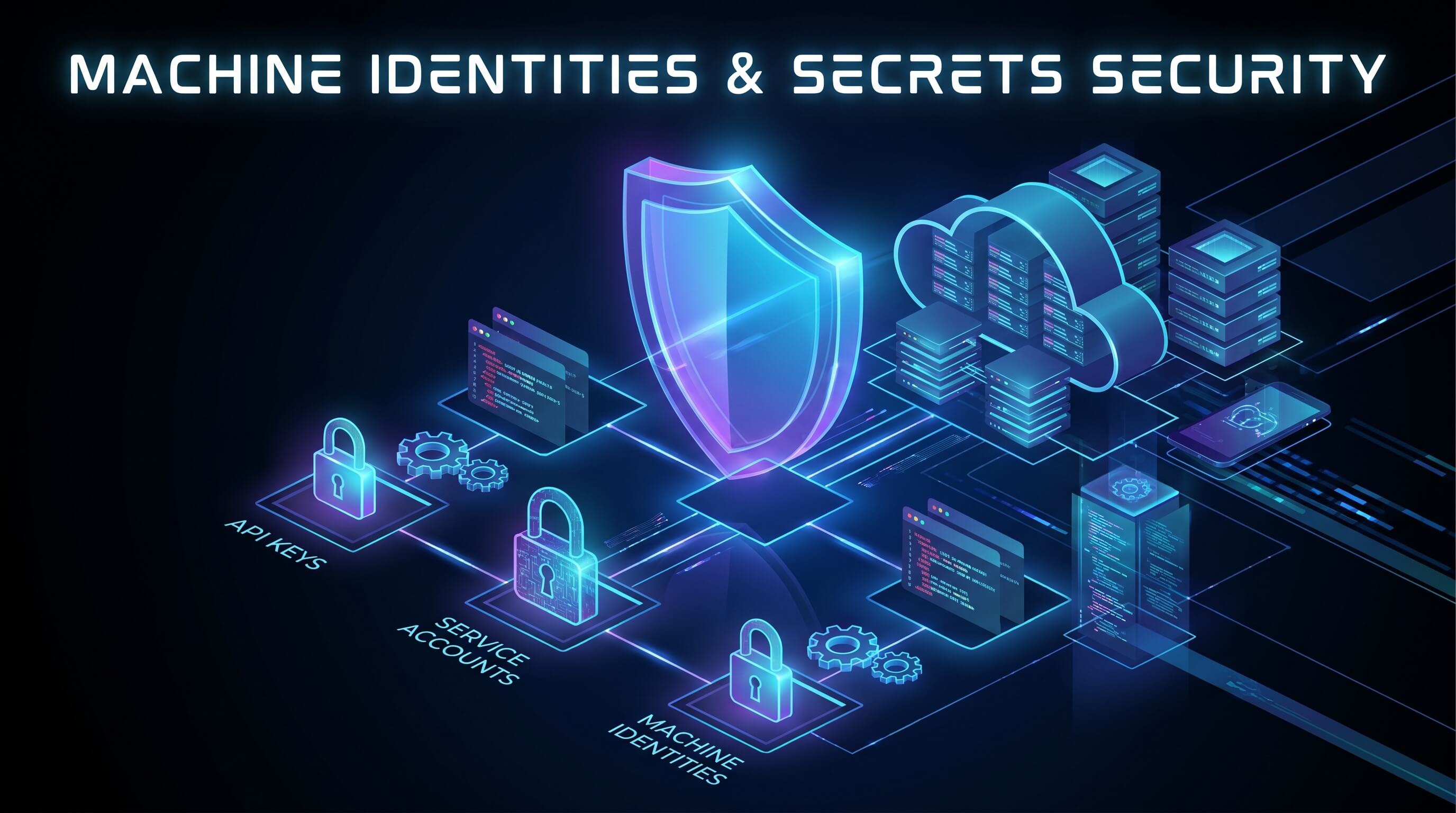
Security teams spent the last decade drilling users on passwords, multifactor authentication, phishing, and privileged access. That work mattered, but it also created a blind spot. The identities multiplying fastest inside modern systems are no longer human. They are service accounts, API keys, tokens, containers, build runners, automation scripts, bots, and increasingly AI agents.
This is the machine identity problem, and it is becoming one of the messiest attack surfaces in enterprise security. The reason is not mysterious. Modern software is assembled from APIs, cloud services, CI pipelines, infrastructure-as-code, and model-connected tools. Every piece wants credentials. Every integration spawns more tokens. Every shortcut that gets code shipped faster can leave another secret somewhere it should not be.
Non-human identities now dominate the environment
In many organizations, non-human identities outnumber human users by orders of magnitude. That changes the logic of identity security. Traditional IAM systems were built around employees and contractors with defined lifecycles. Machines behave differently. They are created automatically, cloned, embedded in workflows, forgotten in old projects, and granted broad access because narrowing permissions takes time.
The result is identity debt. Security teams often cannot answer basic questions quickly enough: which systems have standing credentials, who owns them, how long they live, what they can access, and whether they are still needed. That uncertainty is exactly what attackers exploit.
Secrets sprawl is the operational symptom
If machine identity is the strategic problem, secrets sprawl is the operational symptom. GitGuardian’s 2026 report is a blunt snapshot of how serious it has become. The company tracked 29 million new secrets detected in public GitHub activity in 2025, with AI-related service credentials among the fastest-growing categories. It also found that AI-assisted commits can leak credentials at significantly higher rates than broader baseline commit activity.
The ugly part is not just the creation velocity. It is the persistence. According to GitGuardian, many exposed secrets remain valid for years. That means the problem is not only accidental exposure. It is failure to rotate, revoke, and redesign how credentials are issued in the first place.
AI makes the problem worse before it makes it better
There is a cruel irony here. AI coding assistants and agents can help teams move faster, but they also accelerate identity sprawl. They generate integrations more quickly, encourage experimentation with new services, and introduce configuration files that may carry sensitive values. GitGuardian’s findings around secrets exposed in MCP configuration files are a useful warning. As AI tooling spreads, new convenience layers often bring new credential leakage paths.
AI can eventually help with remediation, anomaly detection, and policy enforcement. But right now, many organizations are in the earlier stage where AI expands the number of systems acting on behalf of the business faster than security teams can govern them.
Why old playbooks are not enough
You cannot solve this with annual awareness training. Machines do not attend workshops. The fixes have to be architectural. Secrets need shorter lifetimes. Static credentials need to be replaced with dynamic issuance where possible. Access needs to be scoped more narrowly. Ownership needs to be explicit. Pipelines need scanning and enforcement before code reaches production, not after an incident report lands.
This is also why identity has become the practical perimeter. In cloud-native systems, the attacker does not always need to break in through a firewall when a valid token is sitting in a repo, a chat export, or an abandoned runner. If a secret opens the door, the old distinction between insider and outsider gets blurry very quickly.
What good looks like
A more mature program starts with inventory. You cannot manage machine identities you cannot see. That inventory has to include cloud accounts, service principals, API keys, CI runners, containers, ephemeral workloads, and AI-connected tools. From there, the next steps are rotation, least privilege, environment separation, and policy-backed issuance. Secrets scanning should cover repositories, collaboration tools, developer endpoints, and configuration artifacts, not just main branches in Git.
Practical teams also reduce the number of long-lived secrets wherever possible. Workload identity, short-lived tokens, just-in-time access, and vault-backed delivery all help. None of those controls are new ideas, but too many organizations still treat them as advanced options rather than standard hygiene.
Why this matters right now
The urgency comes from the interaction between scale and invisibility. Human accounts are annoying but visible. Machine identities are often quiet, numerous, and deeply embedded. They accumulate in the background until one becomes the easiest route into production data or cloud control planes. Because the exposure is distributed, companies can feel secure while carrying a large amount of hidden risk.
The next few years of enterprise security will be heavily shaped by whether organizations treat non-human identity as a first-class problem or keep trying to squeeze it into human-centric controls. The companies that adapt fastest will not just buy another dashboard. They will change how software gets permission to act at every stage of the stack.
The takeaway
Security leaders should stop thinking of machine identity as a niche IAM subtopic. It is becoming central to cloud security, software supply chain defense, and AI governance. If your company can tell you exactly how many employees have privileged access but cannot tell you how many active tokens, service accounts, and automation identities touch production, your risk picture is incomplete.
That gap is fixable, but only if teams treat secrets sprawl and machine identity as design problems, not cleanup chores. The future of enterprise security will depend less on whether every user chooses a strong password and more on whether the machines acting for the business are visible, limited, and replaceable.