LPCAMM2 Could Bring Upgradeable Memory Back to Thin Laptops
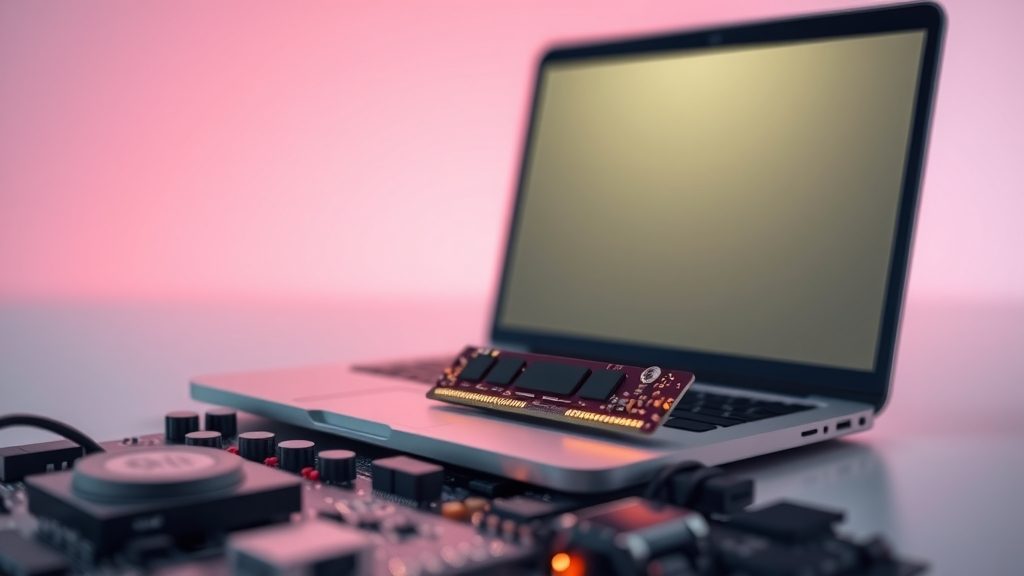
For years, thin laptops have forced buyers into an uncomfortable tradeoff. If you wanted sleek design, power efficiency, and high-bandwidth memory, you usually had to accept soldered RAM. If you wanted upgradeability, you often had to step up to thicker designs or older memory approaches. LPCAMM2 is important because it offers a realistic route out of that compromise.
The thesis is simple: LPCAMM2 could return meaningful memory upgradeability to thin laptops without dragging the category backward on speed or board efficiency. Micron has positioned LPCAMM2 as a modular LPDDR5X form factor capable of up to 9600MT/s, using a single 128-bit module design. Coverage from Tom's Hardware has underscored why that matters: CAMM2 and LPCAMM2 create the possibility of slimmer systems that still allow memory replacement or capacity changes, which has been largely missing from mainstream ultraportables.
Why soldered memory became normal
Manufacturers did not move to soldered LPDDR memory only to make upgrades harder. LPDDR delivers real advantages in power efficiency, compact board layout, and signal integrity. In a market obsessed with battery life and thin chassis design, those benefits were compelling. The problem is that the technical win for OEMs became a long-term flexibility loss for buyers.
When memory is soldered, the purchase decision becomes permanent. Users must overbuy upfront or accept a shorter useful life. For IT teams, that means more careful forecasting and more waste when a perfectly good laptop becomes constrained by memory. For repair shops and sustainability advocates, soldered memory also narrows the set of practical fixes.
What makes LPCAMM2 different
LPCAMM2 aims to preserve much of what made LPDDR attractive while restoring modularity. Micron's description of the format is notable for two reasons. First, it supports high-speed LPDDR5X performance, with advertised speeds up to 9600MT/s. Second, the design uses a single 128-bit module, which simplifies the physical implementation compared with traditional paired memory arrangements.
That single-module structure matters for laptop engineering. It can save board space and reduce routing complexity while still allowing a removable component. In practical terms, that gives OEMs a better chance to build thin systems without surrendering serviceability. The form factor is not just about raw speed. It is about fitting fast memory into the industrial design constraints that currently push vendors toward soldered solutions.
Why thin-and-light buyers should care
The biggest beneficiaries could be buyers who keep machines for several years. A student may start with 16GB and later need 32GB. A developer may move from office tasks to local AI tools. A business may standardize on one chassis and vary memory by role. Under the soldered model, those scenarios often require replacing the entire laptop. With LPCAMM2, they could become a routine service event.
There is also a performance planning angle. Because LPDDR has become central to modern laptop responsiveness and efficiency, users have often had to choose between premium memory technology and future flexibility. If LPCAMM2 scales well across vendor designs, that gap shrinks. Buyers may not have to sacrifice fast low-power memory to preserve upgrade paths.
The barriers are not technical alone
LPCAMM2 will not reshape the market automatically. OEM adoption is the real gate. Laptop vendors have supply chain habits, board design roadmaps, and margin structures built around current approaches. Some will embrace modular LPDDR as a differentiator. Others may prefer the simplicity and lock-in advantages of soldered configurations.
Pricing will matter too. Early adoption could appear first in premium or workstation-adjacent devices rather than mass-market ultrabooks. That is typical for new component standards. The key question is whether economies of scale follow. If enough vendors commit, the module ecosystem will improve, service channels will normalize, and upgradeability can become a selling point instead of a niche feature.
Why this matters beyond enthusiasts
It is easy to frame upgradeable memory as an enthusiast concern, but the implications are broader. Enterprises benefit from longer device life and better fleet matching. Schools benefit when devices can be refreshed for new workloads instead of replaced wholesale. Consumers benefit from less forced overspending at checkout.
There is a sustainability case as well. Extending laptop life by even one or two years changes replacement cycles, reduces e-waste pressure, and improves total value extracted from a device. Repairability debates often focus on batteries and storage, but memory remains one of the most common reasons systems feel obsolete long before their processors do.
How to evaluate upcoming LPCAMM2 laptops
Not every implementation will be equally useful. Buyers should look beyond the phrase upgradeable memory and check what the vendor actually permits. Is there one accessible slot? What capacities are supported? Are BIOS updates needed for future modules? Does the chassis allow straightforward service, or is the part technically removable but practically awkward?
It is also worth watching whether vendors pair LPCAMM2 with otherwise repair-friendly design choices. Replaceable memory is valuable, but it matters most when the battery, SSD, thermal system, and service documentation are also reasonable.
Actionable takeaways
- Do not assume every thin laptop will benefit immediately: LPCAMM2's promise depends on broad OEM adoption and real service access.
- Check module support details: Look for maximum capacity, validated speeds, and whether future upgrades are officially supported.
- Favor vendors that treat repairability as a system choice: Memory alone is not enough if the rest of the device is sealed or restrictive.
- For fleet buyers, model lifecycle savings: Upgradeable memory can reduce overprovisioning and extend refresh timelines.
- Watch this standard closely: If LPCAMM2 scales, it may become one of the most important hardware changes in thin laptops in years.
LPCAMM2 is not exciting because it adds another acronym to mobile memory. It is exciting because it could reconnect performance, thin design, and user choice. That would be a real improvement in a category that has spent too long telling buyers they cannot have all three.