LPCAMM2 Memory Brings Upgradeable RAM Back to Thin Laptops
The Soldered RAM Problem Is Getting a Real Fix
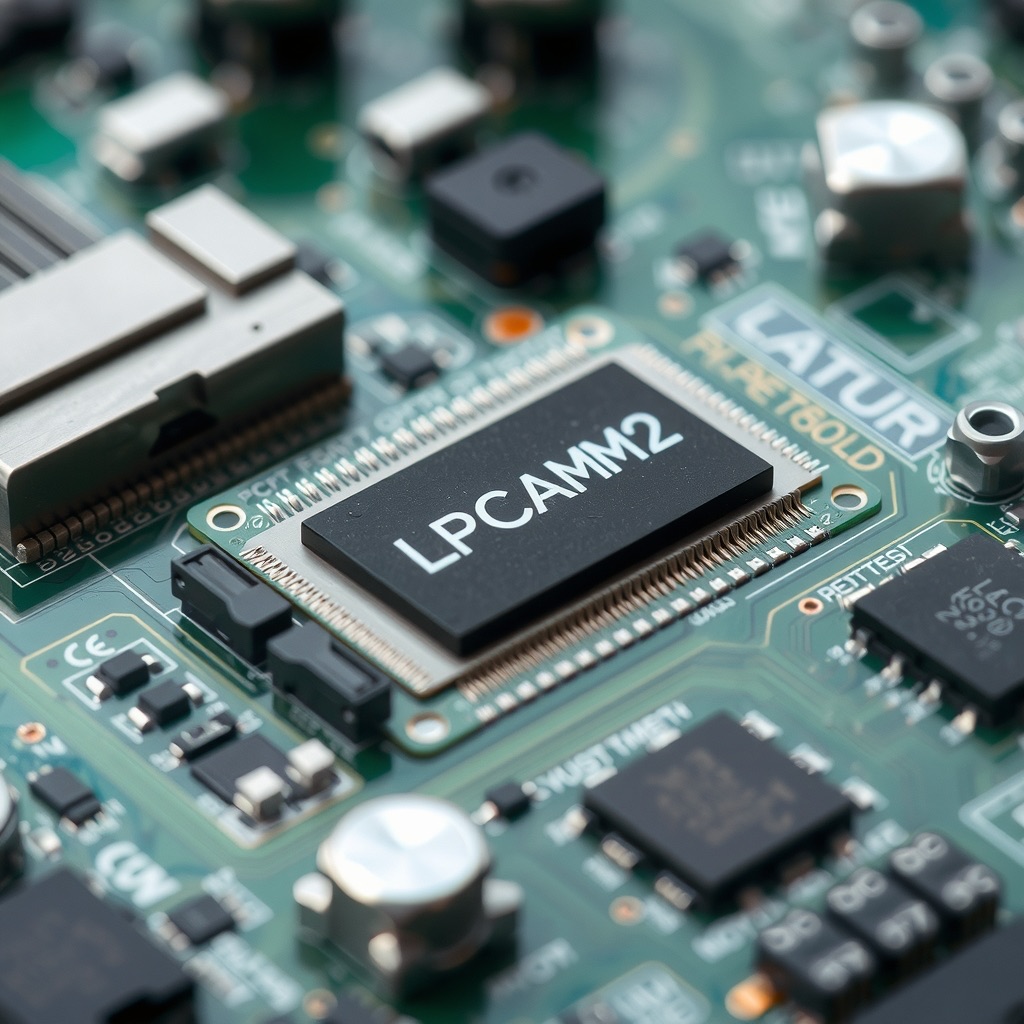
For the better part of a decade, buying a thin laptop meant accepting one hard trade-off: your RAM was soldered directly to the motherboard, and whatever capacity you chose at checkout was what you were stuck with for the life of the machine. No upgrades. No expanding memory when you needed more headroom for a new workflow. Just planned obsolescence baked into the hardware. LPCAMM2 changes that. It is a compact, removable memory module standard that delivers the low-power performance of soldered LPDDR5X memory in a socketed form factor small enough to fit inside slim ultrabooks.
What LPCAMM2 Actually Is
LPCAMM2 stands for Low Power Compression Attached Memory Module 2. It is a JEDEC-standardized specification (JESD318) that defines a new physical module and edge-connector interface for LPDDR5X memory chips. Unlike traditional SO-DIMM (Small Outline Dual Inline Memory Module) slots found in thicker laptops, LPCAMM2 uses a single-sided, angled-connector design that drastically reduces the board space required. The module connects via a compression connector — meaning the module is pressed firmly against the socket rather than sliding in parallel. This reduces the footprint by approximately 64% compared to an equivalent SO-DIMM module while keeping the memory chips close enough to the CPU to maintain the signal integrity required for high-speed LPDDR5X operation.
The key distinction from plain soldered LPDDR5X is physical removability. Soldered RAM is bonded directly to the PCB with no socket — rework requires professional reballing equipment and often voids warranties. LPCAMM2 is designed to be removed with a screwdriver, exactly like an SSD or a replaceable battery used to be.
Why Soldered RAM Became the Norm
The industry shift toward soldered memory started around 2012-2013 as laptop makers chased thinner chassis and longer battery life. LPDDR (Low Power Double Data Rate) memory, when soldered directly to the board, allows chips to be placed closer to the processor, reducing signal path length and enabling higher clock speeds with less power draw. It also lets manufacturers control board height more precisely, which mattered enormously as laptops dropped from 18mm to 14mm thick. SO-DIMM slots, by contrast, require a tall physical connector and a module that sits at a fixed height — both incompatible with the ultrathin designs consumers were demanding.
The cost for users has been steep. A laptop purchased with 16GB of RAM in 2019 cannot be upgraded when 32GB becomes the practical minimum for modern development environments or AI-assisted workflows. When RAM fails — which does happen — the entire motherboard must be replaced rather than just the memory. This inflates repair costs, reduces device longevity, and generates unnecessary e-waste. A 2023 iFixit study found that non-upgradeable memory was among the top three reasons users replaced laptops prematurely.
Technical Specifications
LPCAMM2 modules support LPDDR5X memory running at speeds up to 8533 MT/s (megatransfers per second), which is on par with — and in some configurations faster than — the soldered LPDDR5X found in premium thin-and-light laptops today. The modules are available in capacities starting at 16GB and scaling up, with dual-die configurations enabling 32GB and 64GB modules on a single module PCB.
The edge connector uses a compression-fit design with a relatively small pin count compared to SO-DIMM, which uses 262 pins in its DDR5 form. This consolidation is possible because LPDDR5X uses fewer voltage rails and a different channel architecture than standard DDR5 used in desktops and traditional laptops. The module operates at 1.1V, consistent with LPDDR5X specifications, keeping power consumption and heat output low — critical for fanless or single-fan ultra-thin designs.
Physically, a single LPCAMM2 module measures roughly 22mm × 60mm in footprint, compared to the 69.6mm × 30mm of a standard SO-DIMM. The height above the board is also lower, which is the dimension that matters most when designing thin chassis.
Early Adopters: Dell, Lenovo, and the Framework Question
Dell was the first major OEM to ship a laptop with LPCAMM2 support, debuting the standard in the Dell XPS 15 (2024) and XPS 16 (2024) alongside Intel Core Ultra (Meteor Lake) processors. Lenovo followed with LPCAMM2 slots in select ThinkPad X1 Carbon and ThinkPad P-series configurations. Both companies explicitly marketed the upgradeability as a feature — a noticeable shift in messaging from the previous decade's race-to-the-thinnest posture.
Framework Laptop, the company that built its business on modular and repairable hardware, has discussed LPCAMM2 compatibility in community forums and roadmap conversations. While no Framework product has shipped with LPCAMM2 at the time of writing, the standard aligns directly with Framework's philosophy and the technical infrastructure (socketed, screwdriver-accessible memory) is consistent with what they already deliver.
Intel has been a significant backer of LPCAMM2, supporting it in Core Ultra platforms and publishing reference designs. AMD's support is expected as the standard matures, but AMD-based LPCAMM2 laptops are not yet widely available as of mid-2024.
LPCAMM2 and the Right to Repair Movement
The Right to Repair movement has spent years pushing back against the soldering trend in laptops. Regulatory pressure in the EU and several US states has resulted in laws requiring manufacturers to provide repair access and spare parts for consumer electronics. LPCAMM2 gives manufacturers a technically credible path to complying with repairability requirements without sacrificing the thin, power-efficient designs consumers expect.
iFixit and repair advocacy groups have endorsed LPCAMM2 as a meaningful step forward. The module can be replaced by an end user with basic tools — no heat guns, no BGA rework stations, no specialized training. This puts RAM replacement back in the same category as SSD replacement, which remains one of the most accessible DIY laptop upgrades even today.
From a longevity standpoint, a laptop with LPCAMM2 memory can theoretically have its RAM doubled mid-life as software requirements grow, extending useful device lifespan by two to four years in scenarios where memory was previously the bottleneck. This has measurable environmental impact: manufacturing a new laptop produces roughly 80% of its lifetime carbon footprint before it ever ships.
LPCAMM2 vs SO-DIMM: Key Differences
- Size: LPCAMM2 is approximately 64% smaller in board footprint than DDR5 SO-DIMM, enabling use in chassis under 15mm thick.
- Speed: LPCAMM2 supports LPDDR5X up to 8533 MT/s; SO-DIMM DDR5 tops out around 5600-6400 MT/s in laptop configurations, though with higher bandwidth per channel for some workloads.
- Power: LPCAMM2 runs at 1.1V versus the 1.1V of DDR5 SO-DIMM — similar on paper, but LPDDR5X's architecture is optimized for mobile power states and achieves lower idle consumption.
- Channel architecture: LPDDR5X uses a different channel-and-burst structure than DDR5. LPCAMM2 modules expose this directly, meaning LPCAMM2 and SO-DIMM slots are not interchangeable — a laptop must be designed for one or the other at the platform level.
- Availability: SO-DIMM has a vast ecosystem of modules from dozens of vendors at commodity prices. LPCAMM2 modules are currently sourced from Samsung, Micron, and a smaller set of partners, keeping prices higher than SO-DIMM equivalents.
Limitations and Honest Caveats
LPCAMM2 is not a silver bullet. Several real constraints limit its immediate impact:
- Platform lock-in: Each LPCAMM2 implementation requires the CPU, memory controller, and PCB to be co-designed. You cannot retrofit LPCAMM2 into a laptop that shipped without it.
- Module pricing: Early LPCAMM2 modules carry a significant premium over SO-DIMM. A 32GB LPCAMM2 module from Samsung launched at prices roughly 40-60% higher than an equivalent DDR5 SO-DIMM kit. As production scales, this gap is expected to narrow.
- Single module limitation: Current LPCAMM2 implementations typically support only one module per system (vs two SO-DIMMs in traditional setups), which limits maximum capacity in some configurations and removes the dual-channel advantage of two separate SO-DIMMs.
- Not universal: Thin laptops below roughly 13mm in chassis depth may still require soldered memory for thermal and mechanical reasons. LPCAMM2 solves the problem for a meaningful tier of thin-and-light laptops, but not every ultra-compact form factor.
- Ecosystem maturity: Module interoperability across laptop brands has not been fully tested at scale. A Samsung LPCAMM2 module may technically meet the JEDEC spec but require firmware validation on a specific platform before it is confirmed compatible.
What to Look for When Buying Your Next Laptop
If upgradeability matters to you — and it should, given software memory requirements are only growing — here is what to check before purchasing:
- Look for explicit LPCAMM2 or upgradeable RAM mentions in the official specifications sheet, not just in marketing copy. Dell and Lenovo have been specific about this in their XPS and ThinkPad spec pages.
- Confirm the slot count and maximum supported capacity. A single LPCAMM2 slot supporting up to 64GB gives meaningful upgrade headroom; one supporting only 32GB is more constrained.
- Check whether the manufacturer sells replacement modules directly or if third-party modules are validated. iFixit's repairability scores and the manufacturer's own repair documentation are good indicators.
- If you are comparing an LPCAMM2 laptop against a soldered-RAM alternative, factor in the long-term cost: paying a 20-30% premium for LPCAMM2 upgradeability is often cheaper than buying a second laptop three years later.
- Avoid purchasing a soldered-RAM thin laptop at the top memory tier available — if you cannot upgrade later, you are paying a premium for configuration flexibility you lose the moment you check out.
LPCAMM2 represents the first technically credible answer to the soldered-RAM problem that does not require users to accept a thicker, heavier machine. It is shipping in real products today, backed by Intel, and gaining momentum with OEMs who recognize that repairability is becoming a purchasing criterion, not just a niche concern. The ecosystem still needs time to mature — module prices need to fall, AMD support needs to arrive, and interoperability needs to be validated at scale. But the direction is clear, and the standard is real. The next time you buy a laptop, it is worth asking whether you can upgrade the RAM later. For the first time in a decade, that question has a meaningful answer.