LPCAMM2 Brings Upgradeable RAM Back to Thin Laptops — and Changes How Long Your Machine Will Last
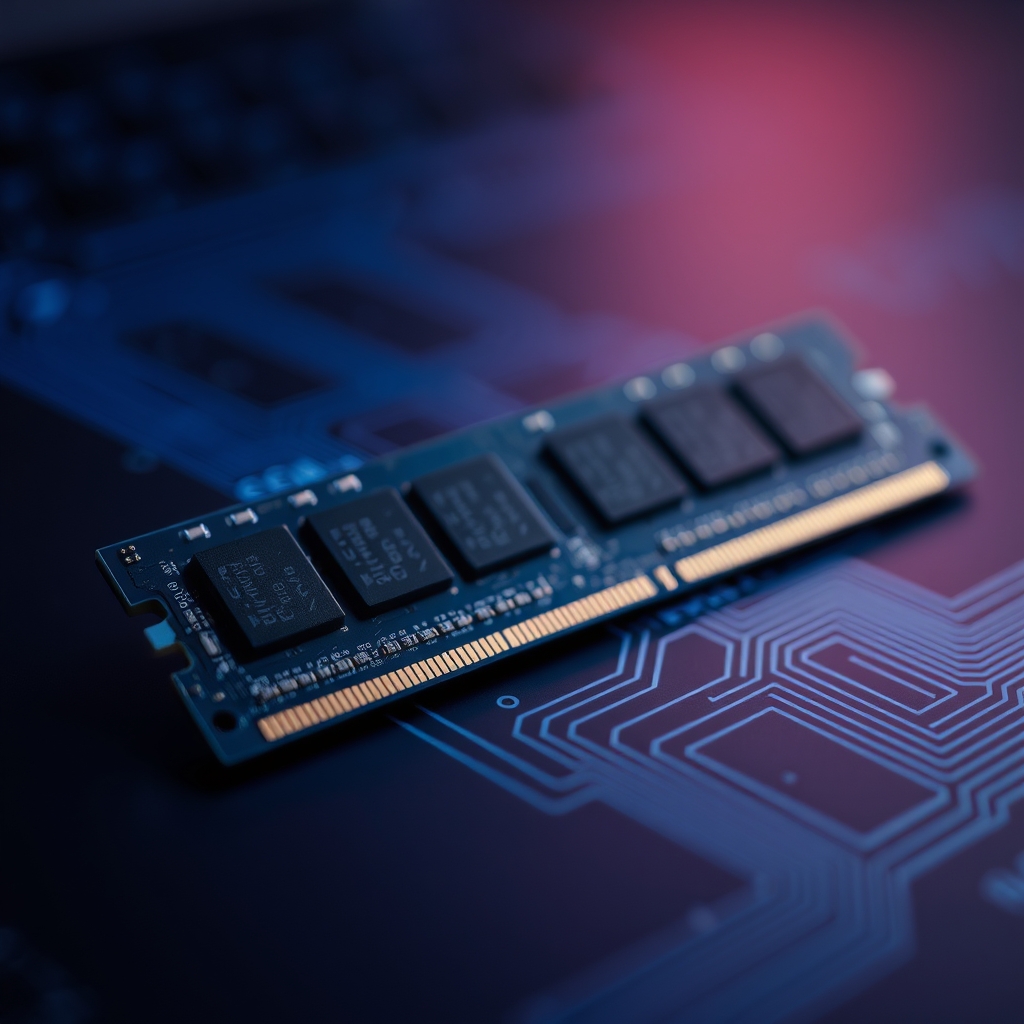
For the past decade, buying a thin-and-light laptop meant accepting a fundamental trade-off: you got a sleek, portable machine, but the RAM was soldered directly to the motherboard, permanently fixed at purchase time. If you needed more memory later, you were out of luck. LPCAMM2 (Low Power Compression Attached Memory Module 2) changes that equation entirely, and the first commercial implementations are already shipping in laptops you can buy today.
Introduced as a JEDEC standard (JESD318) in 2023 and first deployed in Lenovo's ThinkPad X1 Carbon Gen 12 in early 2024, LPCAMM2 delivers the low-power, high-bandwidth characteristics of LPDDR5X memory in a removable, upgradeable module format. The result: laptops that sip less power than traditional SO-DIMM designs, perform faster than older DDR5 implementations, and can have their RAM replaced or upgraded after purchase — a combination that was previously impossible in the ultraportable category.
What LPCAMM2 Actually Is (and How It Differs from SO-DIMM)
Traditional laptop RAM comes in SO-DIMM form factor — small dual inline memory modules that slot into dedicated sockets on the motherboard. SO-DIMMs use standard DDR memory types (DDR4, DDR5), which are designed primarily for desktop efficiency targets. They work fine but consume more power and occupy significant board space.
When laptop makers started chasing ultra-thin designs — sub-14mm chassis, fanless configurations, extended battery life — they switched to LPDDR (Low Power Double Data Rate) memory, which draws substantially less current. The problem: LPDDR was always designed to be soldered directly to the PCB in BGA (Ball Grid Array) packages. There was no socket standard for it. So upgrades became impossible by design.
LPCAMM2 solves this with a compression-mount connector — a mechanism that uses mechanical pressure rather than solder to create reliable electrical contacts. The module snaps into place with a bracket and screw, making removal and reinsertion straightforward. Crucially, it uses LPDDR5X memory chips, the same silicon found in soldered configurations, so the power and performance characteristics are identical to what you'd get from a soldered design.
Performance and Power Numbers
The performance case for LPCAMM2 is strong. LPDDR5X at 8533 MT/s (megatransfers per second) — the speed used in current LPCAMM2 modules — delivers roughly 68 GB/s of peak bandwidth. Compare that to DDR5-5600 SO-DIMMs, which top out around 44 GB/s per channel. For workloads that are memory-bandwidth-constrained (video editing, large language model inference on-device, 3D rendering), this is a meaningful difference.
On power consumption, LPDDR5X operates at 1.05V compared to DDR5's 1.1V nominal voltage. More importantly, LPDDR5X's architecture includes more aggressive power-down states between operations. In practice, Lenovo reported roughly 15% lower memory power draw in the ThinkPad X1 Carbon Gen 12 compared to equivalent DDR5 SO-DIMM configurations — a non-trivial contribution to battery life in a thin laptop where the memory subsystem can account for 10-15% of total system power.
The modules currently ship in capacities of 32GB and 64GB. A 64GB LPCAMM2 module from Crucial or Kingston runs approximately $150-200 USD as of mid-2025, comparable to equivalent DDR5 SO-DIMM pricing. The higher-capacity options (128GB modules) are in development and expected to become available as LPDDR5X die stacking matures.
Which Laptops Support LPCAMM2 Right Now
Adoption has been faster than many analysts expected. As of mid-2025, the following platforms support LPCAMM2:
- Lenovo ThinkPad X1 Carbon Gen 12 and Gen 13 — the first commercial deployments, using Intel Core Ultra (Meteor Lake) processors
- Dell XPS 13 Plus (2025 model) — Dell adopted LPCAMM2 across its premium XPS line starting with the 2025 refresh
- Dell Latitude 7000 series (2025) — enterprise focus with emphasis on serviceability
- HP EliteBook 1000 G12 series — HP's business ultrabook line with LPCAMM2 as a standard configuration option
- Framework Laptop 16 (AMD version, 2025 expansion) — Framework, the modular laptop company, added LPCAMM2 support as an upgrade path for its existing platform
Notably absent: Apple. Apple Silicon Macs use unified memory architecture where RAM is integrated into the M-series SoC package itself — a fundamentally different design choice that prioritizes bandwidth and power density over repairability. LPCAMM2 is not compatible with Apple's approach, and there's no indication Apple plans to adopt a socketed memory standard.
What This Means for Repairability and Right-to-Repair
The repairability implications extend beyond simple RAM upgrades. When RAM is soldered to the motherboard and fails, the entire motherboard typically requires replacement — a repair that costs $400-800 on premium ultrabooks and is often economically unviable on machines more than 2-3 years old. With LPCAMM2, a RAM failure becomes a $100-200 module swap.
iFixit, which tracks repairability scores for consumer electronics, has been vocal about LPCAMM2 as a positive development. The Lenovo ThinkPad X1 Carbon Gen 12 received a notably higher repairability score than its predecessor partly due to the LPCAMM2 socket. European Right to Repair legislation (EU Regulation 2024/1991, effective March 2026 for laptops) specifically calls out memory upgradeability as a criterion — LPCAMM2-equipped laptops will likely fare better under these compliance evaluations.
Longevity is the other angle. A laptop purchased with 16GB of RAM in 2024 might feel constrained by 2027 as AI-assisted applications, browser workloads, and software complexity grow. With a soldered design, you're stuck. With LPCAMM2, you can upgrade from 32GB to 64GB for around $150, potentially extending the useful life of the machine by 2-3 years. Over a typical corporate refresh cycle of 4-5 years, this matters.
The Engineering Trade-offs
LPCAMM2 isn't without compromises. The compression connector and bracket mechanism add a small amount of thickness compared to a soldered BGA package — estimates from Lenovo's engineering team put this at approximately 0.8-1.2mm of additional z-height impact on board stack design. For sub-12mm ultrabooks chasing absolute thinness, this remains a constraint.
There's also a signal integrity consideration. LPDDR5X at 8533 MT/s pushes the limits of what a connector-based interface can do cleanly. JEDEC specified tight impedance matching requirements in the JESD318 standard, and motherboard designers must route traces carefully to avoid signal degradation. Early third-party modules from less rigorous manufacturers have shown compatibility issues in some platforms — a problem that should diminish as the ecosystem matures.
Finally, LPCAMM2 modules are not interchangeable with SO-DIMMs. If you own a laptop with a SO-DIMM socket, you cannot upgrade to LPCAMM2 without a new motherboard. The standards are parallel, not successive — LPCAMM2 is for thin-and-light platforms, while SO-DIMM continues in thicker laptops, workstations, and desktop systems.
Actionable Takeaways
- If you're buying a thin laptop in 2025-2026, actively look for LPCAMM2 support. It's now appearing in ThinkPads, Dell XPS, HP EliteBook, and Framework systems. Prioritize it if you plan to keep the machine more than 3 years.
- Start with 32GB if budget is tight. LPCAMM2 makes upgrading to 64GB later a reasonable option rather than a permanent compromise.
- For enterprise IT departments, LPCAMM2 systems reduce total cost of ownership by enabling RAM upgrades and simplifying memory-failure repairs without full board replacements.
- Don't assume Apple will adopt it. If you're in the Apple ecosystem, unified memory remains soldered. The trade-off is genuine bandwidth advantages and thermal integration — different philosophy, different result.
- Check for the JESD318 logo or explicit LPCAMM2 callout in laptop specifications. Some manufacturers are unclear about whether their "upgradeable RAM" is SO-DIMM or LPCAMM2 — the distinction matters for power consumption and performance.
LPCAMM2 represents the memory industry acknowledging that soldering everything in pursuit of thinness created real problems for consumers, enterprises, and the environment. The standard isn't perfect and adoption is still in early phases, but the direction is clear: the next generation of thin laptops doesn't have to mean throw-away laptops.