Local-First Architecture: Delivering Offline Speed and Data Ownership in Modern Applications
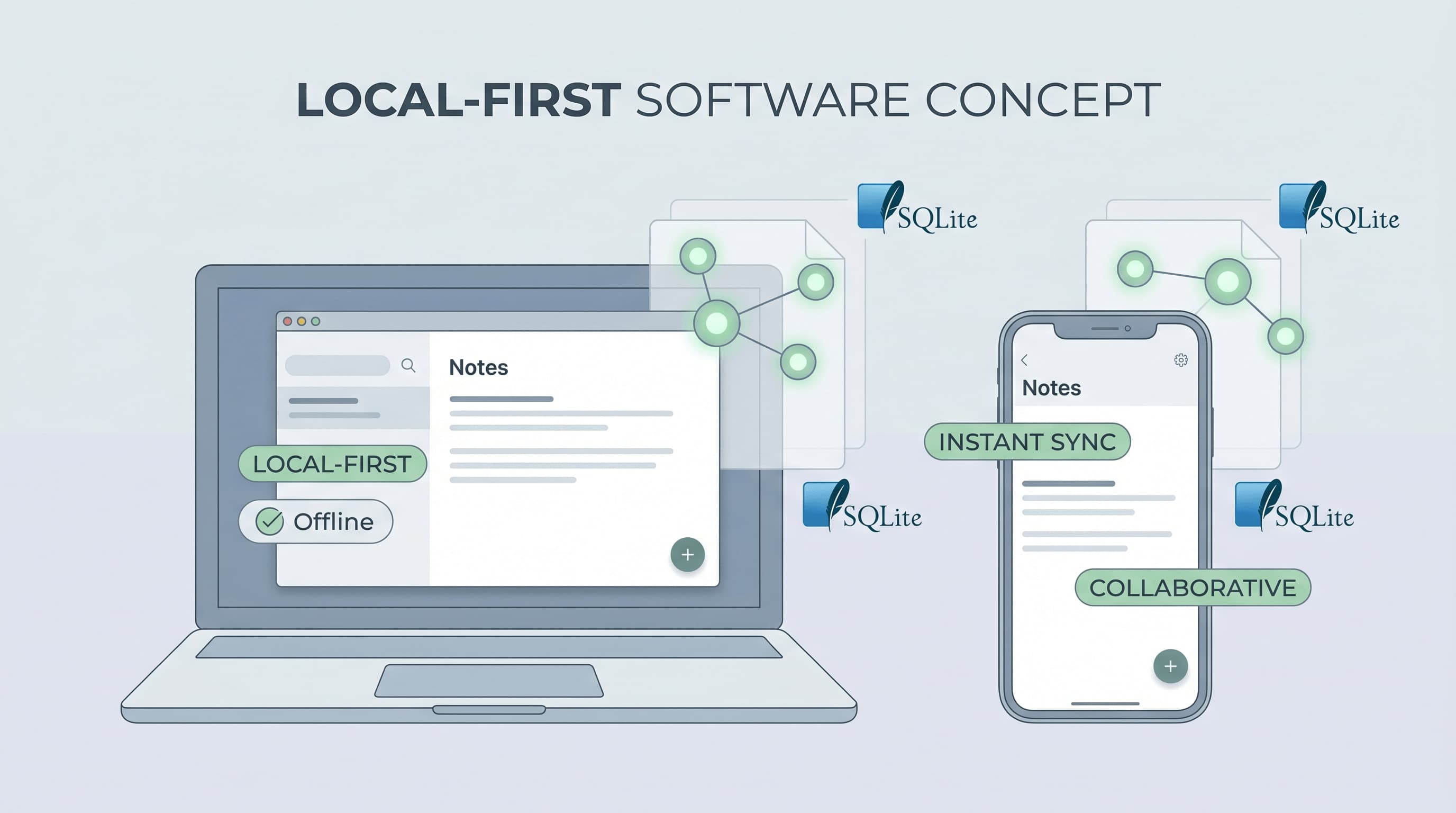
Local-First Architecture: Delivering Offline Speed and Data Ownership in Modern Applications
The landscape of software development is undergoing a fundamental shift, driven by evolving user expectations for instant responsiveness, seamless offline functionality, and unequivocal control over their data. For too long, the prevailing cloud-centric paradigm, while excellent for collaboration and centralized management, has often introduced undesirable latencies, network dependencies, and a subtle erosion of user data ownership. This has led to a growing dissatisfaction with applications that feel sluggish or cease to function without a persistent internet connection, pushing developers and architects to reconsider the foundational principles of application design.
This re-evaluation culminates in the practical adoption of local-first architecture, moving it from a theoretical manifesto to a tangible product strategy. Pioneered in concept by researchers like Ink & Switch, who articulated the desire to combine the best aspects of traditional local software (speed, ownership) with the collaborative power of cloud applications, local-first is now proving its viability. It offers a robust answer to the demand for applications that are inherently fast, resilient to network outages, and empower users with true data sovereignty, all while facilitating sophisticated multi-user collaboration without the fragile, server-dependent sync mechanisms of the past.
User Expectations Drive a Paradigm Shift
Modern users expect an immediate response from their applications. A click should register instantly, a character typed should appear without delay, and work should continue uninterrupted, regardless of network availability. Traditional cloud applications, where the server is the ultimate source of truth, inherently struggle with this. Every significant interaction often requires a round trip to a remote server, introducing latency that degrades user experience, especially in regions with poor connectivity or on mobile devices. Beyond speed, there's a growing demand for data ownership. Users want their data to reside on their devices, under their control, rather than solely existing in a remote cloud silo where access might be contingent on a service provider's terms or network status.
The local-first approach directly addresses these pain points by prioritizing the client-side experience. In a local-first application, the primary copy of the data resides on the user's device. This local replica is not merely a cache; it is the authoritative source of truth for the user's interactions, enabling instant feedback and full functionality even when completely offline. This architectural choice fundamentally redefines the relationship between the user, their data, and the application, shifting power back to the individual and ensuring an always-on, always-responsive experience.
Technical Foundations: SQLite and CRDTs Enable Practicality
The theoretical elegance of local-first computing has long been understood, but its practical implementation has historically faced significant challenges, particularly concerning data synchronization and conflict resolution. The advent of robust, embedded databases like SQLite and sophisticated merge logic technologies such as Conflict-free Replicated Data Types (CRDTs) has transformed this landscape. SQLite, with its lightweight footprint and powerful transactional capabilities, provides an ideal local data store for client-side applications across various platforms, from desktop to mobile. It allows applications to manage complex data structures locally with the same reliability and query power typically associated with server-side databases.
CRDTs are perhaps the most critical enabler for collaborative local-first applications. These data structures are designed to be merged automatically and deterministically, regardless of the order in which changes are applied, and without requiring a central coordinator. This property is crucial for achieving eventual consistency in a distributed system where multiple users might be editing the same data concurrently, often while offline. Instead of relying on complex, often error-prone server-side conflict resolution, CRDTs allow client applications to independently make changes and then confidently merge them with changes from other replicas, ensuring data integrity and consistency across all devices without fragile sync protocols.
Beyond Monolithic Platforms: A Simpler Replication Layer
Early attempts at distributed, collaborative software often aimed for "everything-platforms" that tried to solve every aspect of data management and synchronization. However, the current evolution of local-first architecture emphasizes a more pragmatic, modular approach. ElectricSQL's recent work on Electric Next exemplifies this shift. Instead of building a new "everything-platform," they focused on rebuilding their sync engine around a simpler HTTP API that syncs specific "shapes" of data from an existing Postgres database. This reflects a recognition that robust, efficient replication can be achieved with a focused, simpler layer, rather than requiring a complete overhaul of the entire data infrastructure.
This approach allows developers to leverage existing, proven backend databases like Postgres while still benefiting from the local-first paradigm on the client side. The sync layer becomes an intelligent conduit, pushing and pulling only the necessary data segments, and handling the CRDT-based merging logic. This separation of concerns simplifies development, reduces the burden on the backend, and makes local-first integration more accessible for a wider range of applications. It demonstrates that adopting local-first doesn't necessitate abandoning familiar server technologies but rather augmenting them with intelligent client-side capabilities.
Real-World Applications and Use Cases
The practical implications of local-first architecture are far-reaching, transforming user experiences across diverse application categories:
Collaborative Editors and Note-Taking Applications
For applications like collaborative document editors or advanced note-taking tools, local-first design offers unparalleled responsiveness. Users can type, format, and organize notes instantly, even if their internet connection drops. When connectivity is restored, changes are seamlessly synchronized with other devices or collaborators using CRDTs, ensuring that everyone sees the latest, merged version without manual intervention or data loss. This eliminates the frustrating lag often experienced in purely cloud-based editors and provides a robust foundation for continuous productivity.
Field Software and Mobile Productivity Tools
Applications designed for field workers—whether for inspections, data collection, or inventory management—are prime candidates for local-first. Imagine a technician in a remote area without cellular service needing to complete a detailed report. A local-first application allows them to work uninterrupted, capturing all necessary data offline. Once they return to an area with connectivity, the collected data automatically syncs to the central system. Similarly, mobile productivity tools benefit immensely, ensuring users can access, edit, and create content on the go, regardless of network conditions, providing a truly reliable mobile experience.
Beyond the Niche: Strategic Advantages
While not every SaaS application needs to be local-first, its advantages are compelling for any application where user experience hinges on speed, reliability, and data control. It’s particularly valuable for applications handling critical data, enabling users to maintain full operational capability even during network outages or server downtime. This architectural choice is a strategic investment in user satisfaction and application resilience, moving beyond mere feature parity to offer a fundamentally superior user experience.
Actionable Takeaways for Developers and Architects
Embracing a local-first strategy involves a shift in mindset and a careful selection of technologies. Here are key considerations for those looking to implement this architecture:
Prioritize Client-Side Data Management
Design your application with the assumption that the client's local data store is the primary source of truth for the user. Leverage embedded databases like SQLite for robust, performant local data persistence. This ensures instant UI feedback and full offline functionality.
Integrate Robust Synchronization and Merging Logic
Invest in or utilize libraries that provide sophisticated synchronization capabilities. For collaborative features, CRDTs are a powerful choice for handling concurrent edits and automatic merging without complex server-side coordination. Understand the principles of eventual consistency and design your data models accordingly.
Decouple Backend from Frontend Responsiveness
While a backend is still crucial for shared data, authentication, and long-term storage, design it to serve as a replication target rather than the sole arbiter of truth. Focus on building an efficient, focused sync layer (like ElectricSQL's approach) that can push and pull data shapes, rather than a monolithic "everything-platform."
Design for Offline-First from the Outset
Consider network intermittency and complete offline scenarios during the initial design phase. This includes UI feedback for sync status, conflict resolution strategies, and how users will interact with potentially stale data. Retrofitting offline capabilities is significantly more challenging.
Evaluate Existing Local-First Frameworks and Libraries
The ecosystem for local-first development is maturing rapidly. Explore existing frameworks, libraries, and tools that abstract away much of the complexity of CRDTs, synchronization, and embedded databases. This can significantly accelerate development and reduce the burden of building these complex systems from scratch.
Focus on User Control and Data Sovereignty
Frame your architectural decisions around empowering users with control over their data. This not only aligns with growing user expectations but also builds trust and provides a competitive advantage in a market increasingly sensitive to data privacy and ownership.