Kernel-Level Anti-Cheat Is Reshaping the PC Gaming Social Contract
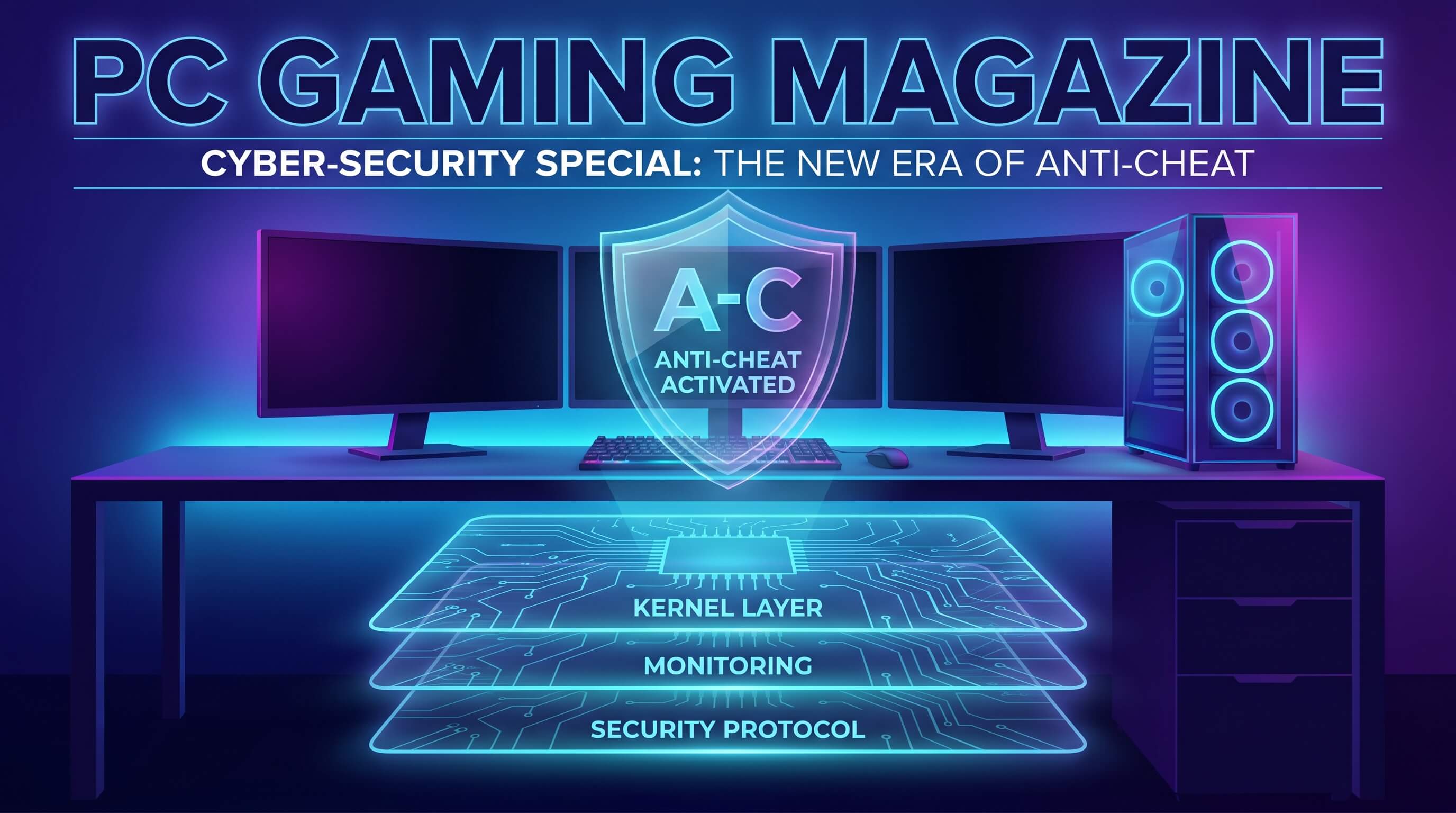
PC gaming has always asked players to tolerate a certain amount of mess. Drivers misbehave, launchers multiply, settings menus become minor science projects, and competitive games live in a permanent arms race against cheaters. But one compromise has become especially consequential: more publishers now want deep operating-system access in the name of fair play. Kernel-level anti-cheat has turned from a niche technical choice into a broader question about trust, privacy, and what players owe a game just to participate.
That is why the anti-cheat debate matters beyond a few angry forum threads. In 2026, it is no longer just about whether cheating is bad, which most players agree on. It is about whether the modern multiplayer stack is implicitly redefining the PC as managed territory, where deeply privileged software is treated as the cost of admission for competitive play.
Why user-mode anti-cheat stopped feeling sufficient
Publishers did not adopt kernel-level anti-cheat because they enjoy controversy. They did it because cheat developers moved deeper into the system. Electronic Arts said this directly when explaining EA anticheat: if cheats operate in kernel space, user-mode protections become too easy to evade. Riot made the same case with Vanguard. The logic is simple and uncomfortable. If the cheating ecosystem escalates into the kernel, anti-cheat vendors feel pressured to follow.
From a competitive integrity perspective, that reasoning is hard to dismiss. A ranked multiplayer game loses credibility when players believe the ladder is full of wallhacks, aim assists, or automation that the developer cannot reliably detect. Serious anti-cheat is not cosmetic. It protects matchmaking trust, esports legitimacy, and in some cases cross-play fairness between PC and console players.
That is the strongest argument for kernel-level systems. They are not intrusive for the sake of intrusion. They are an answer to a threat model that has moved below the level where conventional monitoring can see clearly.
The tradeoff is not theoretical
Still, the concerns are not paranoia. Kernel access is a meaningful level of privilege. Software running there can see and affect parts of the system ordinary applications cannot. Even if a publisher has no intention of abusing that power, players are still being asked to trust that the software is secure, stable, well maintained, and narrowly scoped.
That trust burden got easier to understand after the 2024 CrowdStrike outage, which reminded the broader computing world what can happen when privileged Windows software goes wrong. Anti-cheat is not the same category as enterprise endpoint security, but the lesson transfers: deep system access magnifies both protective power and failure impact.
This is why design details matter. EA emphasized that its anti-cheat runs only while protected games are active and shuts down when the game closes. Riot’s Vanguard became a lightning rod partly because its always-on behavior made the software feel less like a session-specific protection layer and more like a standing resident of the PC. Players notice that difference, because it maps directly onto a basic social question: are you protecting the match, or colonizing the machine?
PC gaming is drifting toward a managed-device model
The deeper issue is cultural. The PC has traditionally been the most open mainstream gaming platform. That openness is part of its appeal. Players mod games, run overlays, tweak hardware, dual-boot operating systems, and build strange software stacks that would never pass console certification. Kernel-level anti-cheat pushes against that culture by treating openness as attack surface.
In effect, modern competitive games increasingly prefer a PC that behaves more like an appliance: predictable boot chain, known drivers, fewer hooks, fewer unsigned oddities, less room for ambiguity. FACEIT’s security requirements and the broader trend toward Secure Boot or TPM-aware checks fit this direction. The more money and status flow through ranked ecosystems, the more publishers want controlled environments.
That shift may improve match quality, but it also narrows the range of acceptable PC behavior. Linux and Proton users have felt this tension sharply. Even when the technical barrier is not ideological, kernel-heavy anti-cheat often lands as a compatibility tax on players who want flexibility. The result is a version of fairness that can exclude people before a match even starts.
Valve’s lighter approach shows the other side of the problem
Valve’s VAC is a useful contrast because it represents a less invasive philosophy, and also its limitations. User-level anti-cheat is easier to live with, but players in highly competitive ecosystems regularly argue that it is not enough, especially in games where cheating perception becomes a community-wide narrative. Once that perception sets in, even legitimate matches start feeling suspect.
This is the trap for platform owners and publishers. If anti-cheat is too weak, honest players lose faith in the game. If anti-cheat is too invasive, they lose faith in the platform relationship instead. There is no frictionless option. There is only a choice about where the burden lands.
That makes anti-cheat less of a technical utility and more of a product decision. Developers are deciding what kind of trust model their communities must accept, and players are deciding which kinds of risk feel more tolerable: more cheaters, or more privileged software.
Microsoft may force the next design change
One of the most interesting developments is that operating-system vendors are starting to care more explicitly about this balance. Microsoft’s Windows Resiliency Initiative, shaped in part by the broader dangers of privileged third-party code, points toward a future where security products are encouraged to move out of the kernel when possible. Anti-cheat is not the first target of that effort, but it is clearly implicated by the same logic.
If Windows eventually offers stronger built-in mechanisms for verifying system integrity, isolating sensitive paths, and exposing tamper signals without handing third parties full kernel residency, anti-cheat architecture could change meaningfully. Riot developers have already hinted at the possibility that future platform capabilities might allow less persistent anti-cheat designs. That would be good news for players, but it would not end the arms race. It would merely move the battleground again.
The next fight is hardware, not just software
Even today, kernel-level anti-cheat is not a permanent win. Cheat developers adapt. Some are already moving toward external hardware devices, DMA-based approaches, or increasingly sophisticated evasion techniques that avoid obvious local footprints. The pattern is familiar from every security domain: once defenders harden one layer, attackers look for adjacent ones.
That means publishers should be careful not to sell kernel access as a final answer. It is better understood as a costly tactical advantage. It may reduce cheating enough to improve the game dramatically, but it does not eliminate the adversarial dynamic. Overpromising here is dangerous, because it asks players to accept invasive software in exchange for a promise no publisher can fully keep.
What a better social contract would look like
If kernel-level anti-cheat is going to remain part of PC gaming, publishers need to treat it as a trust compact, not a hidden technical implementation detail. That means clear disclosure, visible uninstall behavior, third-party review where possible, and architecture choices that minimize persistence and data access. “Trust us” is not enough when the software sits at one of the most privileged layers of the machine.
Players also need more honesty from the industry. Fair competitive play has a cost. Sometimes that cost is friction, sometimes performance overhead, and sometimes giving up a bit of the PC’s traditional openness. The mistake is pretending otherwise.
The real question for 2026 is not whether kernel-level anti-cheat is good or bad in the abstract. It is whether developers can make it narrow, legible, and proportional enough that players see it as a fair exchange instead of a creeping power grab. If they cannot, then every cheating scandal will be accompanied by a second crisis of confidence, this time aimed at the games themselves.
PC gaming has always been built on freedom plus friction. Anti-cheat is deciding how much of the first we are willing to trade for less of the second.