Infostealers Are Turning Stolen Sessions Into the New Breach Path
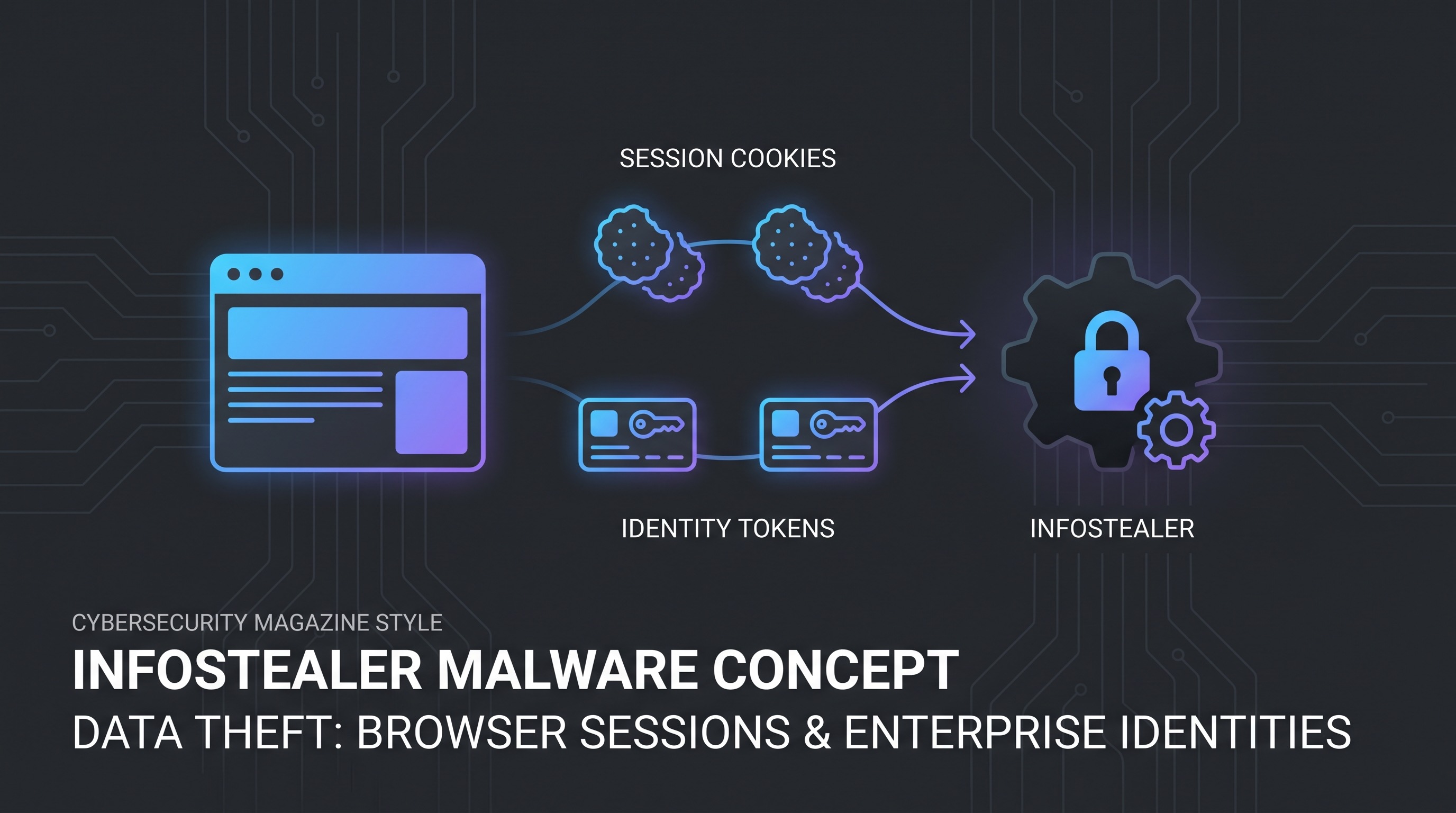
For years, security awareness programs focused on the front door. Use strong passwords. Turn on MFA. Watch for phishing links. Those controls still matter, but the threat landscape has shifted in a way many organizations have not fully absorbed. In 2026, infostealer malware is increasingly valuable not because it captures passwords alone, but because it steals authenticated browser sessions, tokens, and cookies that let attackers step around the login flow entirely. The breach path is moving from credential theft to session theft.
The thesis is uncomfortable but clear: modern identity stacks are strongest at the moment of authentication and much weaker in the minutes, hours, or days that follow. If a user successfully signs in and the browser stores the session artifacts that prove it, an infostealer on the endpoint may not need to defeat MFA at all. It can simply steal the state that says MFA already happened. That turns a compromised laptop into a portable package of trust.
Why session theft is so dangerous
Security teams often talk about identity as the new perimeter. That is true, but it is incomplete. The browser session is increasingly the operational perimeter. Corporate email, SaaS admin consoles, CRM systems, developer platforms, collaboration tools, and internal web apps all rely on persistent authenticated sessions to keep work moving. Users do not re-enter passwords and approve MFA prompts every few minutes because that would be unbearable. The convenience is necessary. It is also exploitable.
When an attacker steals session cookies or related authentication tokens, they may gain immediate access to the target environment without knowing the password and without triggering a new MFA challenge. In practice, that can be more powerful than credential theft. Passwords can be rotated. Sessions can be abused right now. In some environments, stolen sessions also give attackers a quieter way to move, because the activity appears to come from an already trusted user context.
Infostealers have matured into enterprise access brokers
Infostealer malware used to be discussed mostly in the context of consumer fraud, saved browser passwords, and underground credential dumps. That framing now undersells the threat. The current wave is increasingly tied to enterprise identity exposure. Attackers know that a single browser profile may contain access to SSO portals, cloud consoles, finance systems, development tools, and messaging platforms. One successful infection can hand over an entire working environment.
That is why infostealers are such an effective initial-access layer for larger criminal operations. The malware does the harvesting. Broker markets and downstream attackers do the monetization. A session tied to an enterprise identity provider can be worth far more than a standalone password because it collapses multiple trust boundaries at once.
MFA is still necessary, but it no longer closes the story
This is the part many organizations struggle to communicate without undermining user trust in MFA. Multi-factor authentication remains essential. It blocks huge volumes of commodity credential abuse and raises the cost of phishing. The problem is that MFA protects the login event, not every downstream artifact created after the login succeeds. If those artifacts are portable, attackers can inherit the outcome of MFA without reproducing the challenge.
That means organizations need to stop treating MFA as a finish line. It is one control in a longer chain that includes endpoint hygiene, session protection, token scoping, anomaly detection, device trust, and rapid response to suspected session compromise. A clean login does not mean a clean session forever.
The browser has become the soft center
Most modern work now happens in the browser, which makes it both indispensable and under-defended. Browsers store cookies, autofill data, tokens, local storage, extension state, and traces of sensitive workflows. Employees use them for company apps, personal apps, and often both on the same device. Remote and hybrid work blur the line further, especially on unmanaged or lightly managed endpoints.
That mix gives infostealers a rich target. Once malware lands on the endpoint through a malicious download, fake update, drive-by site, cracked software, or social engineering lure, the browser becomes a vault of immediately useful data. Attackers do not need perfect persistence if they can grab valuable sessions quickly and sell or use them within hours.
Why defenders need to think in session lifecycle terms
Defending against this class of threat means understanding the lifecycle of a session, not just the strength of authentication. How long do high-value sessions persist? What events force reauthentication? Are refresh tokens or long-lived cookies too permissive? Can the organization bind sessions more tightly to devices, network context, or hardware-backed credentials? Can suspicious session reuse be detected quickly enough to matter?
These questions push identity and endpoint teams closer together. A session that looks valid at the application layer may still be suspicious if the underlying endpoint shows signs of compromise. Conversely, an EDR alert may deserve higher priority if it lands on a machine holding privileged SaaS sessions. The organizations handling this well are the ones correlating those signals rather than treating identity and endpoint security as separate programs.
Mitigation is becoming more architectural
There are promising technical responses. Hardware-backed credential binding, shorter-lived tokens, stronger conditional access, secure enterprise browsers, browser isolation, and better detection of token reuse can all reduce the value of stolen artifacts. Google’s device-bound session work is one sign that platform vendors understand the problem. But none of these defenses is a single silver bullet, and many are uneven across apps and operating systems.
That is why architecture matters more than awareness slogans. Security teams should prioritize privileged session protection, reduce unnecessary persistence, limit token scope, monitor for impossible travel and unusual reuse, and tighten controls around unmanaged devices. They should also assume that users will continue signing into many critical systems through the browser, because that is how work gets done. The answer is not to wish the browser away. It is to defend it like critical infrastructure.
What leaders should change now
First, revisit incident response playbooks. If a device is suspected of infostealer infection, does the organization only reset the password, or does it also revoke sessions and tokens across key apps? Second, map where your highest-value browser sessions live. Third, review policies on browser extension risk, unmanaged devices, and local storage of sensitive data. Fourth, make sure employees understand that a malicious download can compromise accounts even if they never typed a password into a fake page.
Those are practical moves, not theoretical ones. Session theft shrinks the window defenders have to react. In some cases the attacker can move from theft to access almost immediately. That makes containment speed as important as prevention.
The bigger shift
Infostealers are succeeding because they exploit a structural truth about modern security: authenticated state is valuable. As companies centralize identity and push work into browser-based apps, the contents of a live session become as sensitive as the credentials that created it. Attackers have figured that out quickly. Many defenders are still catching up.
The next generation of identity security will be defined by how well organizations protect the session after the user gets in. Passwords were never the whole story, and in 2026 they are even less so. The new breach path is what happens after the login succeeds.