Home Battery Storage Demand Is Spiking as AI Data Centers Strain the Grid
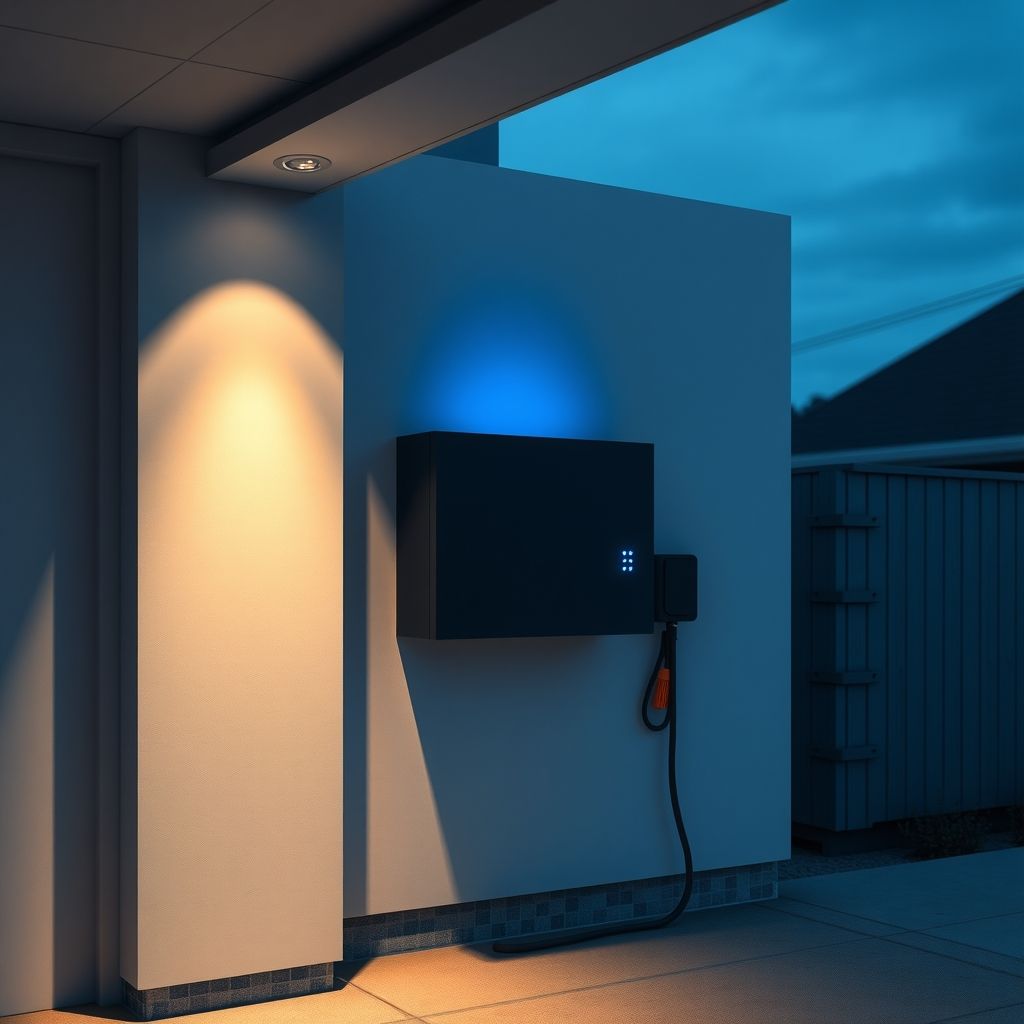
US homeowners installed a record 673 megawatts of home battery storage in the first quarter of 2026 alone, according to Energy Information Administration data — pushing residential storage capacity to 1.3 gigawatt-hours, an 86 percent jump from the same period a year earlier. The driver isn't primarily rooftop solar economics anymore. It's AI data centers eating into the grid capacity homeowners used to take for granted.
Utilities are responding to data-center load growth by raising rates and, in some cases, cutting power to residential customers during peak demand. Dominion Energy in Virginia — home to the densest concentration of data centers in the world — proposed its first base-rate increase since 1992, citing infrastructure costs tied directly to data-center buildout. Analysts expect AI facilities to triple their share of US electricity consumption, from 4.4 percent in 2023 to roughly 12 percent by 2028. For homeowners watching their utility bills climb and their service become less reliable, a battery in the garage has gone from a backup-power luxury to a hedge against a grid that increasingly treats them as a lower priority than the server farm down the road.
Tesla still leads unit volume with the Powerwall 3 and Megapack line, but the competitive field has widened considerably. Base Power, a Texas-based startup that installs and operates home batteries as a subscription rather than a one-time purchase, raised $1 billion this year at a $13 billion valuation — a figure that would have seemed absurd for a hardware company two years ago. The pitch: homeowners get a battery installed for a flat monthly fee instead of a $10,000-15,000 upfront cost, and Base Power dispatches the aggregated capacity back to the grid during peak events, splitting the revenue. It's the same virtual-power-plant model utilities have talked about for a decade, except now there's enough installed capacity and enough price volatility to make the economics work at scale.
On hardware specifics: Tesla's Powerwall 3 holds 13.5 kWh and lists around $9,200 before installation, with most installs landing between $13,000 and $16,000 after labor and permitting. Anker's SOLIX X1 takes a different approach — a modular architecture that starts around 6 kWh and scales up to roughly 86 kWh by adding battery cabinets, aimed at buyers who want to start small and expand rather than commit to a fixed size upfront. EcoFlow's PowerOcean line sits in between, pitched at households that already own EcoFlow portable power stations and want a stationary system that can share the same app and monitoring. None of these differences matter much for basic backup power; they matter a great deal if you're trying to size a system around a specific VPP program's minimum enrollment capacity, which is usually 5 kWh or more of dispatchable storage.
That scale is real: according to Yale E360, the amount of US home battery capacity enrolled in virtual power plant programs jumped 153 percent in 2025. A VPP doesn't need every participating battery to be enormous — it needs enough of them, networked, to shave a few hundred megawatts off peak demand during the handful of hours each year when the grid is tightest. That's precisely when wholesale electricity prices spike, which is why utilities are willing to pay homeowners (or companies like Base Power) for the right to draw on their batteries instead of building new peaking plants.
The quarter-over-quarter data tells a messier story than a clean growth curve, though. Some trackers reported a 27 percent year-over-year drop in a subsequent quarter, measured in a different unit (megawatt-hours sold at retail versus installed capacity), which likely reflects inventory and financing cycles rather than a reversal in underlying demand — installers front-loaded Q1 purchases ahead of anticipated tariff and interconnection-fee changes, then saw a lull. The point isn't that every quarter will set a record; it's that the baseline has shifted. Battery attachment rates with new solar installs, now above 60 percent in several Western states, aren't going back to the 20-30 percent range common five years ago.
For a homeowner actually deciding whether to buy, the calculation has three variables that matter more than brand loyalty. First, check whether your utility offers a demand-response or VPP enrollment program — in states like California, Texas, and parts of the Northeast, the payback period on a battery can shrink by two to four years if you're willing to let the utility (or an aggregator like Base Power or Sunrun's Virtual Power Plant program) draw on your stored capacity during peak events, typically 20-40 hours a year. Second, size for outage protection, not solar self-consumption — a 10-13 kWh battery covers essential loads (refrigerator, Wi-Fi, a few outlets) for 12-24 hours, which is what most outages actually require, rather than paying for a 20+ kWh system sized to go fully off-grid. Third, read the warranty terms on cycle count, not just years — a battery rated for 6,000 cycles at 80 percent retained capacity will outlast one rated for 10 years but only 3,500 cycles if you're using it daily for arbitrage or VPP participation rather than occasional backup.
The subscription model Base Power is pushing changes the math entirely, and it's worth watching whether Tesla, Sunrun, and traditional installers respond with their own leasing structures. If battery-as-a-service becomes the default the way solar leasing did a decade ago, the hardware brand will matter less than who owns the dispatch contract — and that's the part of this market actually worth tracking in 2027.