HBM4 and Advanced Packaging Are Becoming the Real AI Chip Bottleneck
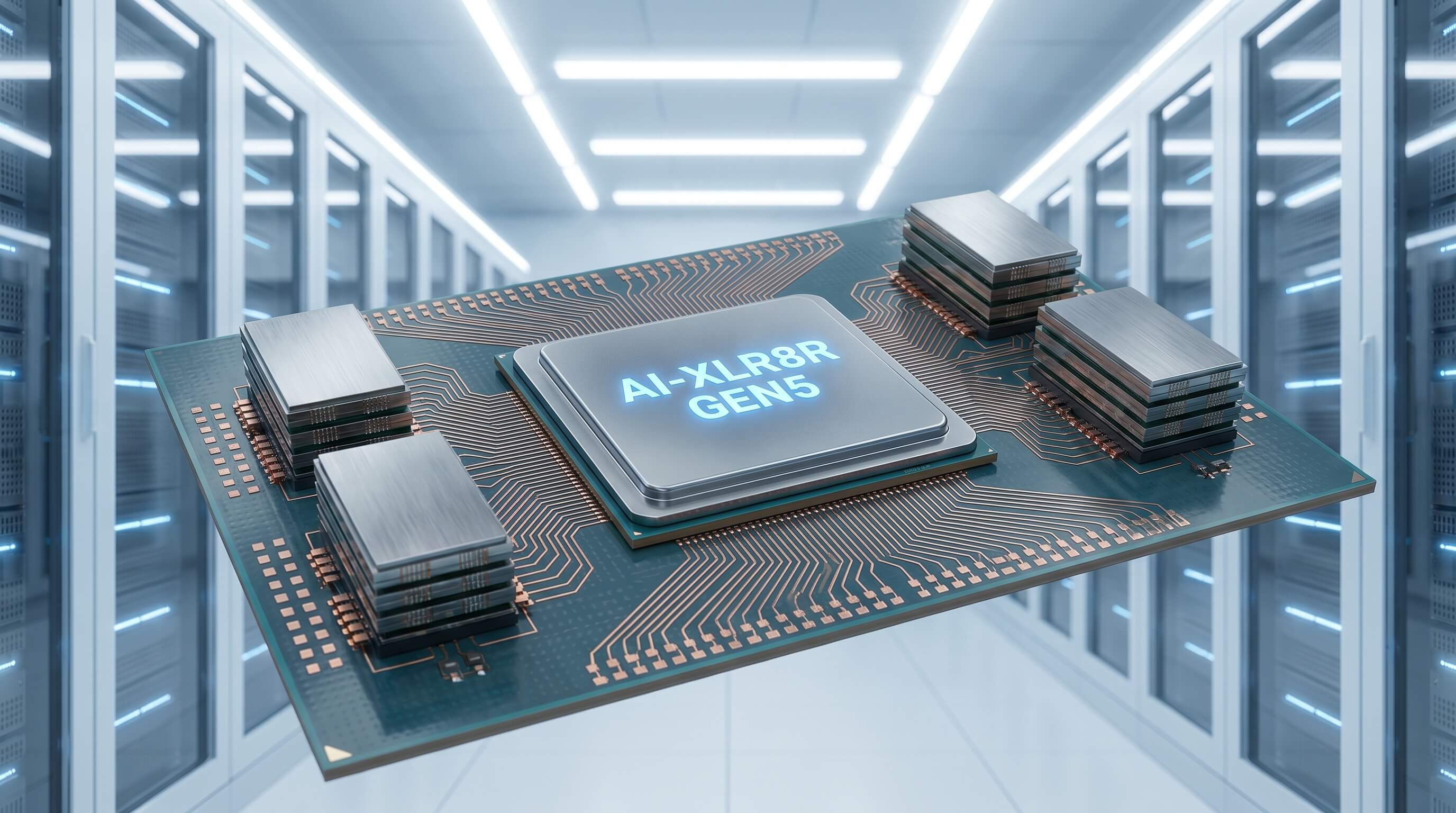
The center of gravity in AI hardware is shifting. For the last two years, the default story was that more powerful GPUs would keep driving the market forward if chip designers could just add enough compute. That is no longer the whole picture. The harder problem now is feeding those accelerators with enough bandwidth and packaging them at scale. HBM4, not core compute alone, is becoming the new strategic choke point, and advanced packaging is the reason.
JEDEC finalized the HBM4 standard in April 2025, giving the industry a clear path to the next generation of high bandwidth memory. The headline numbers are impressive: a 2048-bit interface, up to 64GB per stack, and more than 2 TB/s of bandwidth per stack. Those gains matter because modern AI accelerators are increasingly memory-bound in real workloads. Training and inference performance depend not just on matrix math throughput, but on how quickly models, activations, and context data can move. HBM4 promises a step change in that flow. But its arrival also makes the packaging challenge much more severe.
HBM4 raises the bar for the whole package
HBM has never been a simple component swap. It is a system-level design choice that pulls together logic die, stacked memory, interconnect, thermals, and substrate engineering. HBM4 pushes this further because its wider interface and higher throughput increase the importance of short, dense, precisely manufactured connections between compute die and memory stacks. That is why the bottleneck is no longer just the memory chips themselves. It is the full advanced package.
To use HBM4 effectively, chipmakers need sophisticated 2.5D packaging, large silicon interposers or equivalent bridges, high-yield assembly, and tight thermal management. Every one of those steps is capital intensive and capacity constrained. If GPU demand rises faster than packaging capacity, the market does not get more AI systems, even if front-end wafer production improves. The package becomes the product bottleneck.
Why packaging, not just silicon, is now the scarcity layer
The economics are telling. Advanced packaging costs have become a much larger share of total accelerator cost than many buyers expected. Interposers are expensive. Yield losses compound across large multi-die packages. Testing becomes more involved. Thermal design gets tougher as compute and memory sit closer together at higher power densities. When the industry talks about AI infrastructure shortages, it increasingly means shortages in the ability to assemble these complex modules, not just shortages in transistor supply.
This is where CoWoS capacity constraints matter so much. TSMC's chip-on-wafer-on-substrate process became a strategic term in mainstream tech discussion because it sits at the heart of leading AI packages. Even as capacity expands, demand has stayed intense enough that packaging lead times and allocation decisions can shape product roadmaps. That changes competitive dynamics. The companies with better access to advanced packaging lines may ship more systems than rivals with similar chip designs.
HBM4 makes memory strategy inseparable from manufacturing strategy
One important consequence of HBM4 is that memory planning can no longer sit downstream from chip design. If an accelerator roadmap assumes six, eight, or more HBM4 stacks around a compute complex, then package size, reticle strategy, interposer area, thermals, and test flow all need to be solved early. A design that looks great in architecture slides may still be commercially weak if it depends on packaging capacity that does not exist in enough volume.
This is why the winners in the next AI hardware cycle may not simply be the firms with the fastest silicon. They may be the firms that co-design compute, memory hierarchy, and packaging for manufacturability. HBM4's theoretical bandwidth only turns into revenue if the package can be built reliably, cooled efficiently, and delivered in meaningful numbers.
The supply chain impact is broader than foundries
There is also a second-order effect. HBM4 demand pulls on the whole ecosystem: memory suppliers, substrate vendors, bonding equipment makers, thermal materials providers, and outsourced semiconductor assembly partners. A shortage or quality issue in any one layer can slow the final accelerator. That makes AI infrastructure more sensitive to packaging ecosystem health than many software investors or enterprise buyers appreciate.
It also means governments and hyperscalers may rethink what semiconductor resilience really means. Securing access to leading-edge logic wafers is not enough if packaging lines and memory stack supply stay tight. Industrial policy that ignores advanced packaging risks missing the part of the value chain where deployment actually stalls.
The strategic takeaway for buyers and builders
For cloud operators and enterprise buyers, the practical lesson is simple: stop evaluating AI hardware roadmaps as if FLOPS alone determine availability. Packaging readiness, HBM sourcing, and thermal envelope are now first-order questions. For semiconductor companies, the lesson is sharper: invest earlier in packaging partnerships, design for manufacturable memory integration, and reduce dependence on a single bottlenecked packaging path where possible.
HBM4 is still a genuine advance. Up to 64GB per stack and over 2 TB/s per stack will help unlock larger models, faster training clusters, and more capable inference systems. But those gains will not arrive smoothly. They will arrive through a constrained industrial pipeline where interposers, CoWoS capacity, and high-yield assembly determine who can turn a paper launch into deployed systems.
The actionable move now is to treat packaging as a board-level agenda, not a back-end detail. If you build AI chips, secure packaging capacity and co-optimize the design before tape-out. If you buy AI infrastructure, ask vendors about package architecture, HBM sourcing, and delivery risk, not just benchmark charts. In the HBM4 era, the real moat may be the ability to package memory and compute together at scale.