Glass Core Substrates Are Moving Chip Packaging Into the AI Bottleneck
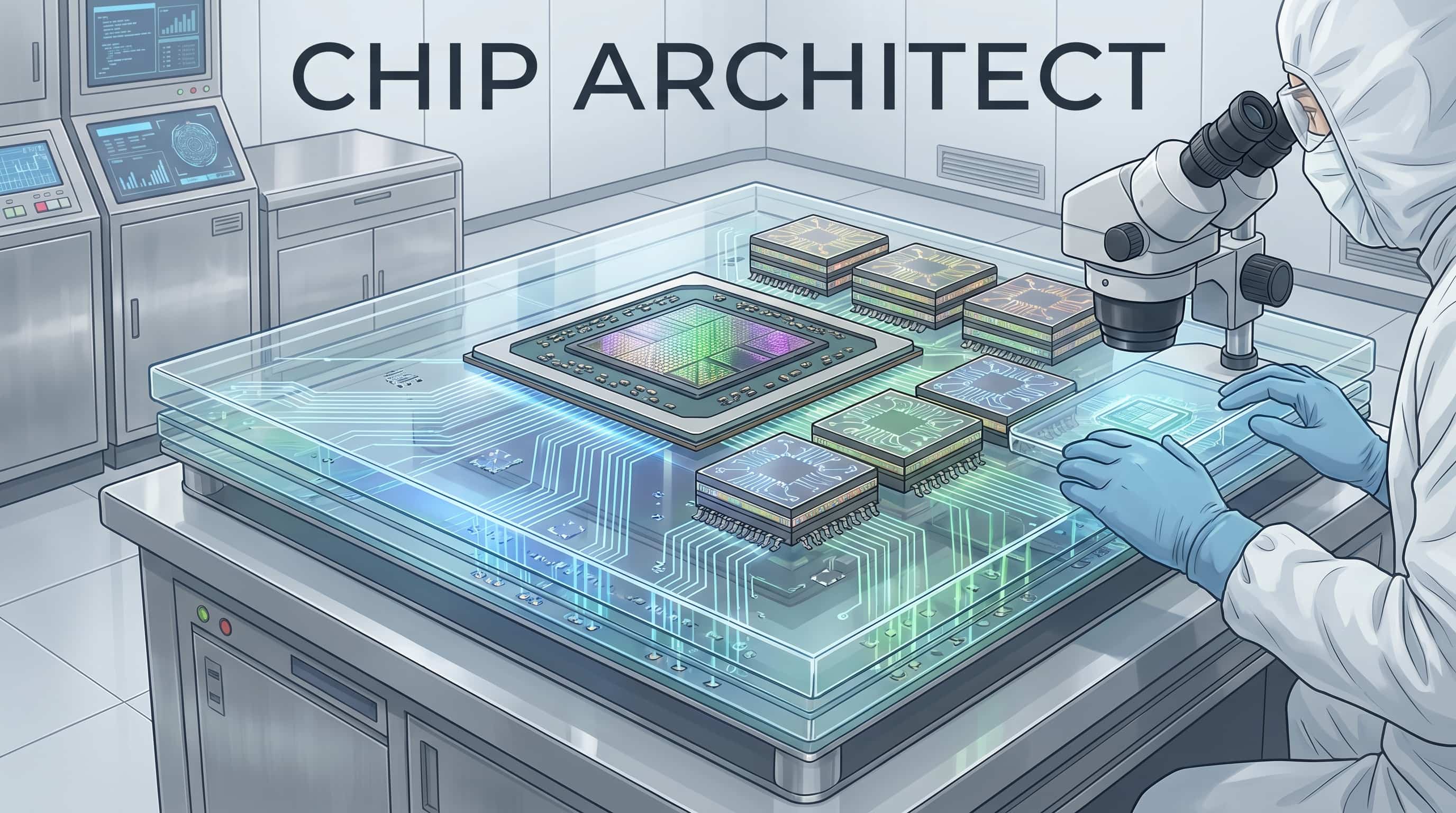
For years, the semiconductor industry told a story centered on the transistor. Shrink the process node, add more compute, and the rest of the system would keep up. That story now feels incomplete. In the AI era, some of the hardest problems no longer sit only inside the chip. They sit underneath it.
That is why glass core substrates have become one of the more interesting hardware conversations of 2026. They sound esoteric compared with a new GPU launch or a fresh CPU architecture, but they address a practical bottleneck: how to package larger, denser, hotter collections of compute and memory without running into signal integrity, warpage, power delivery, and manufacturing limits. In other words, packaging is turning into strategy, and glass is becoming one of the materials people think might extend that strategy further.
Why packaging suddenly matters so much
The biggest AI chips are no longer tidy single dies doing one job in isolation. They are increasingly multi-die systems tied to stacks of High Bandwidth Memory, connected by extremely dense interconnects, and expected to move enormous amounts of data with minimal latency. That pushes stress downward into the substrate, which is the layer that routes signals, supports the package structurally, and has to stay stable under heat and complexity.
Traditional organic substrates are not disappearing tomorrow, but they are under pressure. As packages get larger, they become harder to keep flat during manufacturing and operation. Warpage complicates yields, assembly, and long-term reliability. At the same time, faster signaling and tighter pitch requirements raise the bar on electrical performance. The more AI accelerators turn into system-level packages, the more every supporting layer matters.
What glass changes
Glass core substrates are attractive because they promise better dimensional stability than organic materials. That matters when manufacturers are trying to align very dense wiring, multiple chiplets, and advanced memory structures across large packages. A flatter, more stable base can support finer features and reduce some of the mechanical headaches that appear as packages scale up.
There is also an electrical story. Glass offers useful insulation properties and can help reduce crosstalk and signal loss in dense, high-speed designs. The details vary by implementation, but the broad point is straightforward: if the package has to carry more data between more elements, then the quality of that path becomes part of the performance envelope. Packaging stops being passive support and becomes an active enabler.
This is one reason Intel has pushed the topic so publicly. Its advanced packaging roadmap has emphasized glass as a way to support larger packages and denser interconnect structures for future AI and high-performance computing systems. Reports around AMD, NVIDIA supply-chain planning, and substrate makers such as Absolics suggest that Intel is not alone in seeing this as a likely direction of travel.
Why AI is accelerating the need
AI workloads amplify every weakness in packaging because they are memory-hungry, power-hungry, and increasingly parallel. The performance race is not only about how many cores a vendor can place on silicon. It is also about how close they can move memory, how reliably they can route signals, how much heat they can manage, and how large they can scale the package before economics or physics push back.
That makes glass substrates interesting even if they do not become universal. They do not need to replace every package in the market to matter. If they unlock the next tier of accelerator size or memory bandwidth for data center AI parts, that is enough to reshape supplier roadmaps and capital spending. In semiconductors, niche solutions at the high end often create the template for broader adoption later.
The real story is about system design, not material hype
There is a temptation to turn any new semiconductor material into a miracle narrative. That would be a mistake here. Glass core substrates are not magic. They come with manufacturing challenges, ecosystem dependencies, cost tradeoffs, and qualification work. Yield curves still matter. Tooling still matters. Vendor coordination still matters. It is possible for the technology to be directionally right and still take years to mature commercially.
But the fact that the industry is investing this energy at all tells us something important. Chip progress is no longer defined only by what happens at the node level. It is increasingly defined by co-design across dies, memory, interconnects, power, and packaging. Glass substrates are best understood as part of that broader shift toward system engineering.
What this means for the hardware market
For buyers, the immediate impact will be indirect. Few customers shop for a server by asking which substrate material sits inside the accelerator package. What they notice instead is performance per watt, memory bandwidth, thermal limits, product cadence, and availability. If glass helps vendors ship larger and more capable AI packages, it will show up in those metrics before it shows up in marketing copy.
For the industry, though, the implication is larger. The center of innovation is moving outward from the transistor to the package and the platform. That is where bottlenecks are now accumulating. In that sense, glass core substrates are not just a materials story. They are evidence that advanced packaging has become one of the most important competitive fronts in modern computing.
When a technology stack matures, the hidden layers start to decide who wins. In AI hardware, those hidden layers increasingly sit beneath the die. That is why a boring-sounding substrate conversation is becoming one of the more revealing stories in the entire semiconductor market.