Gas turbines are now the bottleneck for AI data centers, not chips
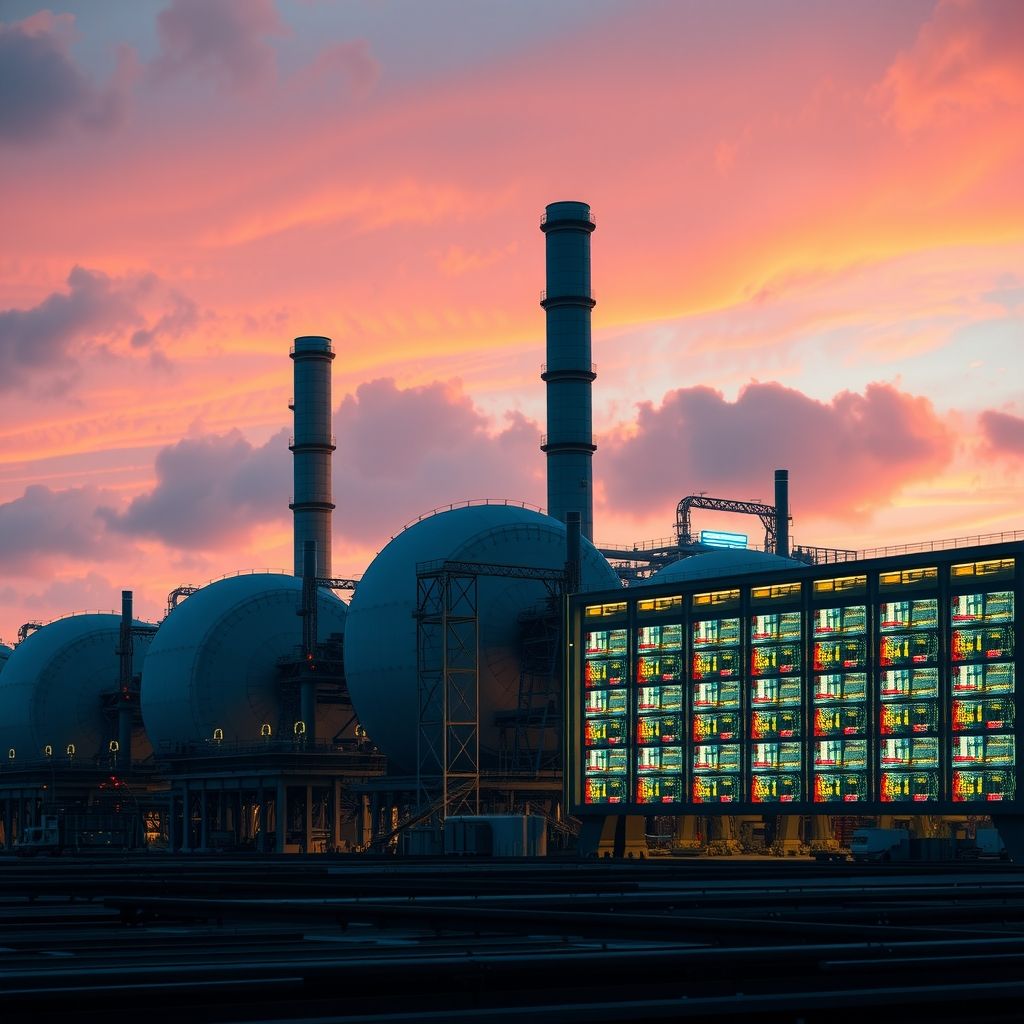
For the past two years, the binding constraint on AI infrastructure was GPUs. That constraint has largely eased — Nvidia, AMD, and a growing field of custom silicon vendors have scaled supply. The new bottleneck is upstream of the chip entirely: getting enough electricity to the building. Gas turbine manufacturers are now quoting lead times of five to six years for their most efficient models, and turbine prices have risen roughly 195% since 2019.
This matters because gas turbines have become the default answer to a problem the public grid increasingly can't solve on AI's timeline. In the most in-demand US markets — Virginia's Data Center Alley, parts of Texas, and the Pacific Northwest — utility interconnection queues now run four to seven years. A hyperscaler that needs 300 megawatts online in 18 months cannot wait for a regional transmission upgrade that was already backlogged before the AI buildout started. Gas turbines, sited on-property and permitted faster than new transmission infrastructure, became the workaround.
Why the grid can't keep pace
The shortfall isn't just generation capacity — it's the physical hardware needed to move power once it's generated. High-voltage transformers and switchgear, both built by a small number of manufacturers with years-long order books, are now as scarce as the turbines themselves. Utilities report multi-year waits for equipment that used to ship in months. Combined with permitting timelines for new transmission lines that routinely exceed a decade in contested jurisdictions, the grid's physical capacity to deliver power is now the slower-moving constraint, not the willingness of utilities to build it.
2026 has seen a wave of large natural gas project approvals specifically tied to data center demand, including major buildouts in Texas and Pennsylvania. This is a direct reversal of the prior decade's trajectory, where gas generation was expected to decline as renewables scaled. AI demand has made new gas capacity commercially viable again, and state regulators — eager for the tax revenue and jobs data centers bring — have largely accommodated it.
Data centers are becoming grid stakeholders, not just customers
The practical response from hyperscalers has shifted from "buy power" to "build and co-invest in power." Companies are now financing transmission upgrades directly, deploying on-site battery storage to smooth demand spikes, and in some cases building dedicated gas plants adjacent to their facilities rather than waiting for utility-scale connections. This is a meaningful change in how these companies relate to energy infrastructure — from passive ratepayers to co-investors who share both the upside (faster power) and the risk (stranded assets if AI demand growth slows).
Small modular reactors remain part of the longer-term conversation, but SMR timelines — realistically deployment in the early 2030s at scale — don't solve the 2026-2028 gap that turbine and transformer lead times have created. Gas is the only technology that can be sited and commissioned fast enough to meet current demand, which is why the approvals wave has concentrated there rather than in nuclear or renewables.
What this means for the industry
The turbine and transformer backlog effectively caps how fast new AI capacity can come online through 2028, regardless of chip supply or capital availability. This creates a structural advantage for companies that locked in turbine orders and transmission commitments early — positions that are now largely unavailable to new entrants. It also means power availability, not chip allocation, is becoming the primary variable in where the next wave of AI infrastructure gets built: expect siting decisions to increasingly follow existing gas infrastructure and favorable interconnection queues rather than proximity to talent or customers.
For enterprises evaluating AI infrastructure partners or colocation providers, power delivery timelines are now a more reliable predictor of actual capacity availability than announced GPU counts. Ask providers directly about their turbine order dates and interconnection queue position — those two numbers, more than any benchmark, indicate whether promised capacity will actually materialize on schedule.