GaN Chargers and USB-C Power Banks Are Becoming Laptop-First Travel Gear
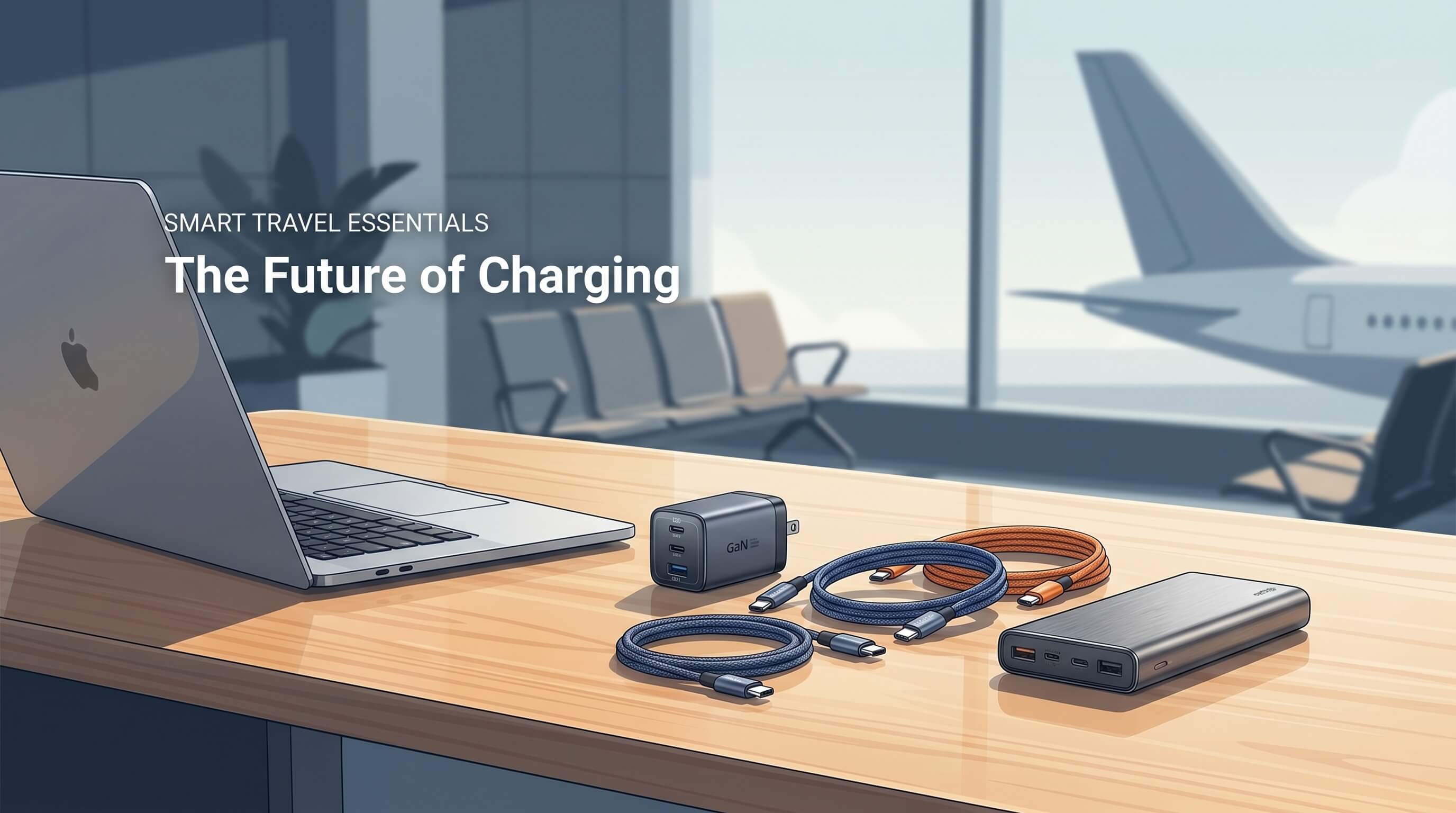
GaN chargers and USB-C power banks are no longer just phone accessories that happen to help in a pinch. They are becoming laptop-first travel gear, and that changes how frequent travelers, remote workers, and conference attendees should think about their entire bag. The real story is not that chargers are smaller. It is that power for a laptop, phone, earbuds, tablet, and camera is starting to collapse into one USB-C system that is practical enough to trust on the road.
That matters because the old travel kit was messy by design. A laptop charger lived in one pocket, a phone brick in another, a power bank mostly existed for emergencies, and cable choice was an afterthought until something charged painfully slowly. With GaN and higher-output USB-C Power Delivery, the travel kit is becoming more intentional. Travelers can now build around one 65W to 100W wall charger, one high-quality USB-C cable set, and one power bank that can meaningfully support laptop work instead of merely topping off a phone.
Why GaN matters more on trips than at a desk
Gallium nitride chargers are useful everywhere, but travel is where the benefit is easiest to feel. GaN designs usually run smaller than older silicon chargers at the same power level, and many fit two or three ports into a brick that used to charge only one device. That means less weight, fewer outlets occupied, and fewer trade-offs in airports, trains, hotel rooms, and coworking spaces.
The practical gain is not just size. It is density. A 65W or 100W GaN charger can often handle a laptop plus a phone at the same time, which removes the need to pack separate chargers for each device. If you travel with a MacBook Air, Dell XPS 13, Surface Laptop, or many modern 14-inch USB-C laptops, one compact charger can cover most of your day-to-day charging needs.
A realistic example: the two-device work trip
Imagine a traveler carrying a 14-inch USB-C laptop and a phone for a two-day conference. Five years ago, the safe packing list usually included the original laptop charger, a phone charger, a backup cable, and a small emergency battery. Today that same traveler can often use a dual-port 65W GaN charger for overnight charging, then carry a 20,000mAh or 25,000mAh USB-C power bank that outputs 65W or more for the afternoon when the wall outlet disappears. That is fewer bricks, fewer cables, and much less uncertainty.
USB-C power banks are crossing from backup to workflow tool
The bigger shift is happening with power banks. The old mental model was simple: power banks were for phones, maybe tablets, and only in emergencies. Laptop charging demanded a wall. That assumption is breaking because more power banks now offer 65W, 100W, or even higher USB-C output, which is enough to run or recharge many ultraportables during normal work.
This does not mean every power bank can replace a wall charger for every laptop. A 16-inch workstation-class laptop under sustained load can still drain faster than a travel battery can refill it. But for common travel workloads like browser-heavy work, writing, video calls, presentation prep, and light photo editing, a strong USB-C power bank can buy several extra hours or take a laptop from nearly empty back into safe territory.
That changes behavior. A traveler who once hunted for outlets during a layover can now keep working at the gate. A consultant can finish slides in a rideshare on the way to a client meeting. A student can survive an afternoon of classes when every library outlet is taken. The power bank stops being insurance and becomes part of the operating plan.
What to check before buying a laptop-first travel setup
1. Match wattage to your actual laptop
Many thin-and-light laptops are comfortable at 45W to 65W. Some larger creative or gaming systems want 100W or more, and a few still work best with proprietary chargers. Check what your laptop ships with and whether it supports USB-C charging at full speed or just as a slower fallback. Buying a 30W or 45W power bank because it is cheaper often creates frustration, not savings.
2. Pay attention to output, not just capacity
Travelers often fixate on mAh ratings, but for laptops the output rating matters just as much. A large battery with weak output may barely keep a laptop alive. A 20,000mAh pack with 65W USB-C PD is often more useful for travel work than a higher-capacity pack limited to phone-class charging speeds.
3. Know the airline threshold
Airline rules matter here. Power banks generally belong in carry-on luggage, not checked baggage. Under 100Wh is usually the simplest category for air travel, while 100Wh to 160Wh often triggers airline approval limits. That is why many premium laptop-friendly travel batteries cluster just under the 100Wh mark. They are designed to deliver meaningful laptop runtime without creating avoidable airport friction.
4. Do not cheap out on cables
A high-output charger paired with a low-quality cable is one of the easiest ways to sabotage the whole setup. Travelers should look for USB-C cables rated for the wattage they expect to use, especially if they are charging laptops at 65W to 100W. E-marked cables are worth paying for when the rest of the system is built around reliability.
Where this trend is heading next
USB PD 3.1 is expanding the ceiling for what USB-C can do, and that matters even if many travelers do not need 140W or 240W today. The important point is strategic: USB-C is becoming credible as the default power layer for more demanding computers and accessories. As more laptops, monitors, docks, and batteries converge on the same standard, travel gear becomes less brand-specific and more modular.
That modularity is the real advantage. Travelers can replace one failed cable without replacing the system. They can swap a wall charger for a slimmer one before a short trip. They can carry one battery for a tablet-heavy trip and a larger one for a laptop-heavy trip. The kit becomes adaptable instead of improvised.
Actionable takeaways for travelers
If you travel with a USB-C laptop more than a few times a year, treat power like a system, not a pile of accessories. Start with your laptop’s real wattage needs. Pair it with a reputable GaN charger that has enough headroom for a second device. Add a USB-C power bank with enough output to support actual laptop use, not just phone charging. Then test the full kit at home before a trip, including the exact cables you plan to pack.
The most useful travel upgrade in this category is not the biggest battery or the highest wattage brick. It is a setup you understand and trust. For most travelers, that means one compact GaN charger, one laptop-capable USB-C power bank, two dependable USB-C cables, and fewer proprietary extras in the bag. That is why this category is shifting from nice-to-have gadgetry into serious laptop-first travel gear.