EV Range Anxiety Is Solved — Charging Anxiety Is the New Barrier to EV Adoption
Ask someone in 2019 why they would not buy an electric vehicle and they would tell you: range. The fear of running out of battery miles from a charger, stranded on a highway, was the dominant objection. That fear is now mostly irrational. The 2026 Hyundai Ioniq 9 has a 360-mile EPA range. The Tesla Model S Long Range exceeds 400 miles. Even entry-level EVs from Chevrolet, Volkswagen, and Kia routinely hit 250 miles — more than enough for 95% of daily driving. Range anxiety, as a technical barrier, is solved.
The barrier that replaced it is subtler and harder to fix with a bigger battery: charging anxiety. Not "will I run out of charge?" but rather "when I need to charge on a road trip, will there be a station, will it be working, will it be fast enough, will I wait 45 minutes or 8 minutes, and will my car even be compatible?" This uncertainty — unpredictable, inconsistent, infrastructure-dependent — is what is actually keeping mainstream buyers in gasoline cars in 2026.
The Numbers Behind the Shift
J.D. Power's 2026 EV Consideration Study asked non-EV owners to name their primary barrier. Range was cited by 22% of respondents, down from 47% in 2021. Charging infrastructure concerns came in at 41%, up from 19% in the same period. The J.D. Power EV Experience Index — which surveys actual EV owners — found that charging reliability, not range, is the top driver of owner dissatisfaction, with 28% of DC fast charging sessions failing to complete successfully in 2025.
Those failures are not random. Peak-hours demand at popular highway stops causes overloading. Older chargers from the 2018–2022 installation wave are aging without adequate maintenance. Payment system errors account for 11% of failed sessions. And the geographic distribution of fast chargers remains heavily weighted toward urban cores and major interstate corridors — rural buyers face genuine dead zones.
What "Charging Anxiety" Looks Like In Practice
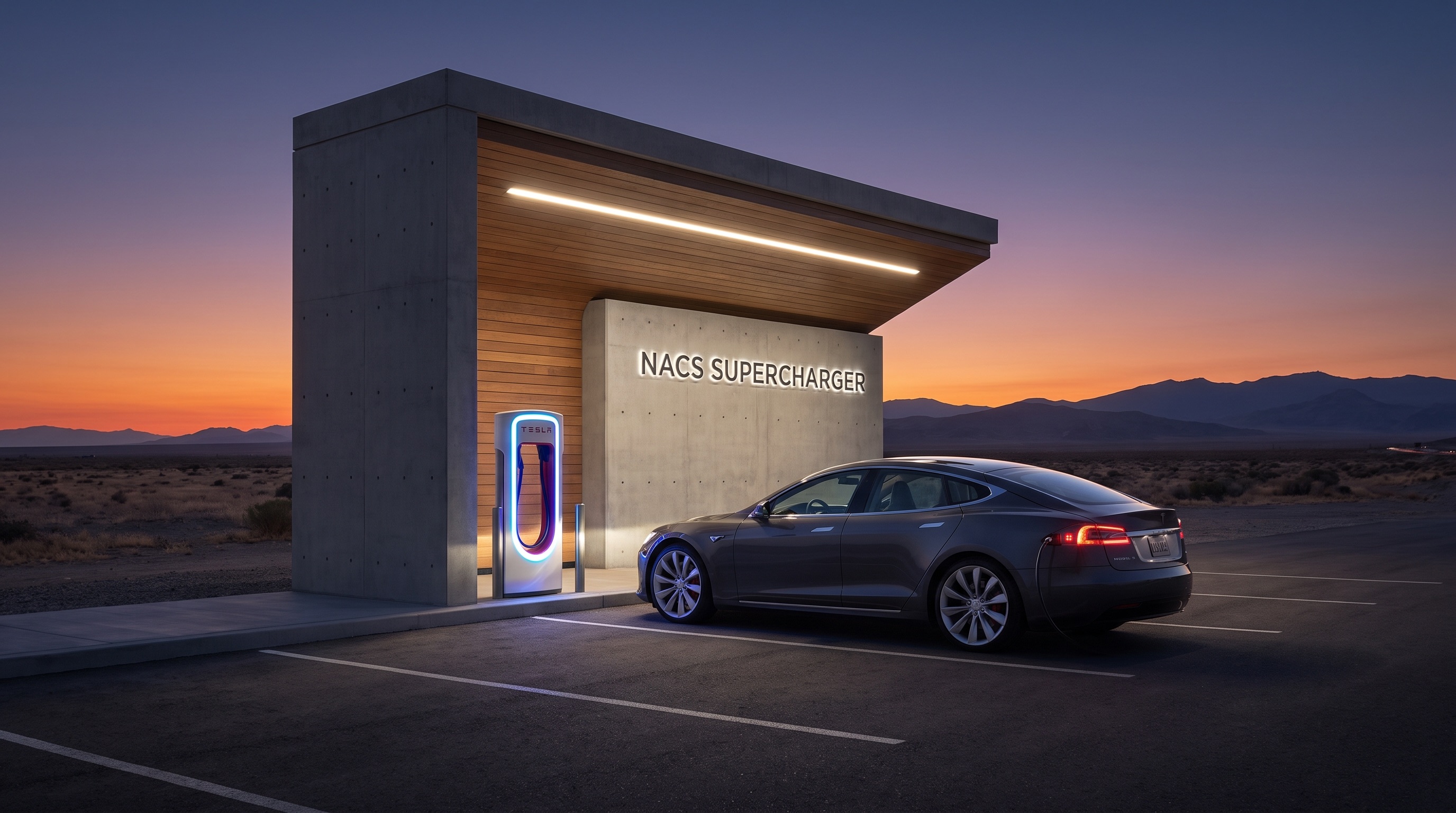
The experience gap between Tesla drivers and everyone else illustrates the problem precisely. Tesla's Supercharger network — 60,000+ stalls globally, 99.9% uptime by the company's own measurements, integrated natively into navigation — eliminates charging anxiety almost entirely. Pull in, plug in, the car tells you when to leave. Non-Tesla EV drivers using third-party networks (Electrify America, EVgo, ChargePoint, BP Pulse) face fragmentation: different apps, different payment systems, different reliability records, and no centralized routing intelligence.
The NACS (North American Charging Standard) adoption — now mandatory for all major OEMs after Ford, GM, Rivian, Volvo, and others committed to the Tesla connector — is closing the hardware compatibility gap. By 2026, most new EVs ship with NACS ports or include NACS adapters. That is progress. But hardware compatibility is table stakes; it does not fix network reliability or the software experience.
The Infrastructure Gap Is Getting Worse Before It Gets Better
The US federal government committed $7.5 billion to EV charging infrastructure under the Infrastructure Investment and Jobs Act. As of mid-2026, roughly $2.1 billion has been deployed through the NEVI program. Installation progress has been slower than projections due to permitting delays, utility interconnection backlogs (adding a 350kW fast charger to a site often requires a transformer upgrade, which can take 12–18 months), and site operator capacity constraints.
The mismatch between EV sales growth (US EV share hit 18% of new vehicle sales in Q1 2026) and charging deployment pace is creating a widening gap in high-demand corridors. Los Angeles, Phoenix, and Miami see consistent weekend charger queuing at major highway stops. The problem will get worse before it gets better — charger deployment is lagging EV fleet growth by roughly 18 months, according to the Department of Energy's Alternative Fuels Data Center.
Who Is Solving This — and How
Tesla's Supercharger network remains the benchmark, and its decision to open to other manufacturers (completed for most major OEMs by early 2026) is the single biggest infrastructure improvement for non-Tesla EV drivers. A Hyundai Ioniq 6 driver can now use a Supercharger with a NACS cable, which means accessing the most reliable network available.
Mercedes and BMW's joint venture, Ionna, has deployed 600 high-power charging sites (350kW+) along US corridors since 2024, with a target of 2,000 sites by 2028. Ionna's reliability metrics (93% uptime) already exceed the industry average of 71% (per ICCT's 2025 charger reliability study). The difference is active monitoring and a 4-hour maintenance response SLA — operational discipline rather than hardware innovation.
Software is the underinvested layer. Apps like PlugShare, ABRP (A Better Routeplanner), and Waze EV integration are improving routing intelligence, showing real-time charger status and estimated wait times. Some 2026 model-year vehicles from BMW, Ford, and Hyundai now pull live charger availability directly into the in-vehicle navigation system — the user experience improvement this delivers is significant.
What Prospective EV Buyers Should Actually Do in 2026
The charging anxiety problem is real but unevenly distributed. For buyers who do 90% of their driving locally and have home charging (Level 2, 240V), EV ownership is already frictionless — you wake up to a full charge every morning and road trip planning is the only logistical challenge. For buyers without home charging (apartment dwellers, renters) or in regions with thin public charging density, the friction is genuine and unresolved.
Before buying an EV in 2026, map your specific charging exposure: identify where you would charge on your two or three most common long-distance routes using PlugShare or ABRP. Check whether Tesla Supercharger access is available for the model you're considering (it now is for most major brands). Prioritize models with native charging network integration and high-power DC acceptance rates — a car that accepts 350kW charges in 18 minutes; one limited to 150kW takes 40.
Actionable Takeaways
Range is no longer the barrier — do not let legacy 2019 thinking drive a 2026 purchase decision. Charging reliability and network access are the real variables. Prioritize EVs with NACS compatibility and access to Tesla's Supercharger network. Evaluate home charging feasibility before purchase — a Level 2 home charger transforms the ownership experience. For route-dependent buyers, use ABRP to simulate your specific long-distance trips before committing. The infrastructure problem is real but improving; buying an EV in 2026 with the expectation of a 2028 charging network is a reasonable bet.