EV Insurance Premiums Are Rising Faster Than Gas-Car Premiums, and Repair Costs Are Why
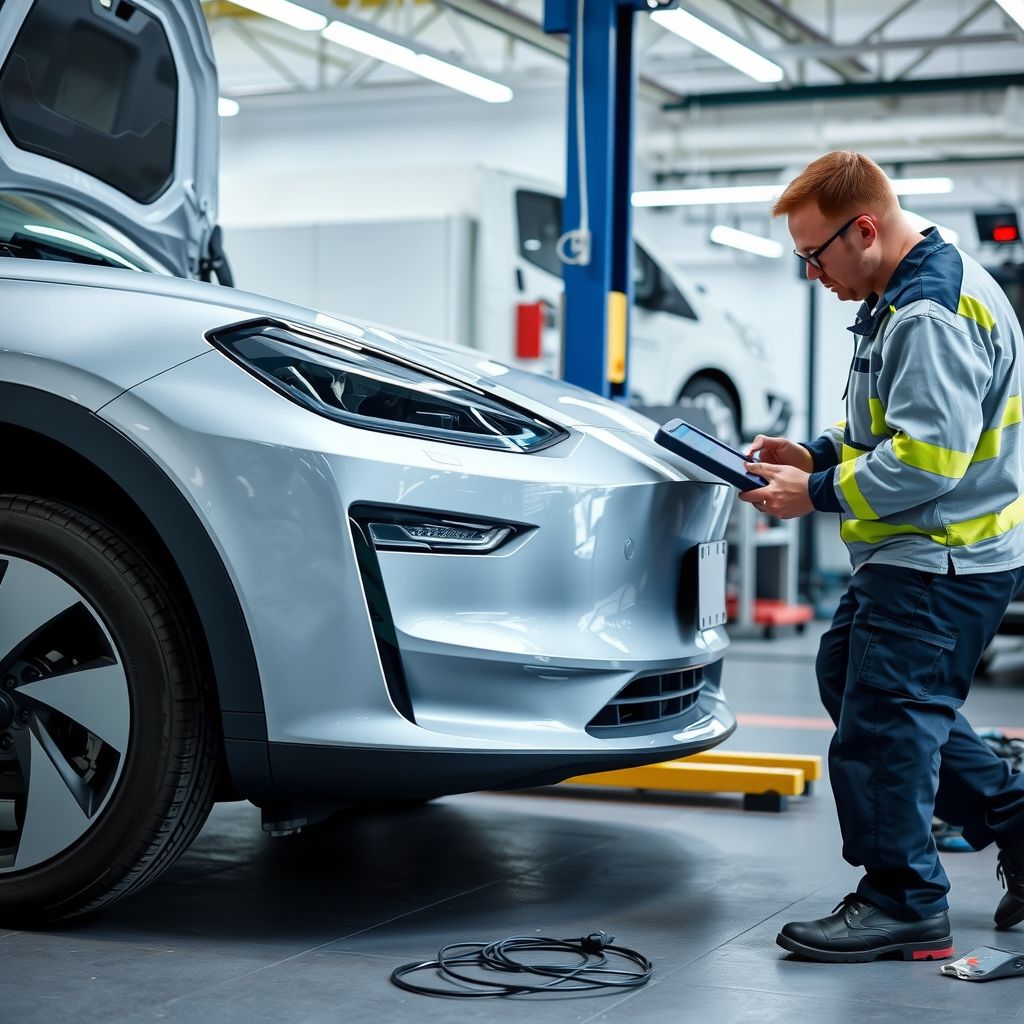
Electric vehicle owners keep running into the same surprise at renewal time: their premium went up more than a comparable gas car's did, despite EVs generally scoring well on safety ratings and having fewer moving parts to fail mechanically. The driving behavior isn't the variable insurers are reacting to. The repair bill is.
The battery pack changes the math on every claim
In a traditional combustion vehicle, a low-speed parking lot collision or a minor rear-end accident is a bumper, a sensor, maybe a quarter panel. In most EVs, the battery pack is a structural element integrated into the floor of the chassis, which means a collision severe enough to intrude on the pack — even moderately — can trigger a full pack inspection, and in many cases a full pack replacement, before the vehicle is cleared as safe to drive again. A damaged battery pack isn't something a body shop patches; it typically has to go back to a certified facility for cell-level inspection, and replacement packs remain among the single most expensive components on any vehicle, EV or otherwise.
This changes the economics of claims that would be routine on a gas car. Insurers increasingly total EVs after accidents that would have been a straightforward repair on an equivalent ICE vehicle, specifically because the diagnostic and replacement cost of a borderline battery pack exceeds the vehicle's post-repair value. A higher total-loss rate on comparatively minor accidents pushes claims severity up, and claims severity is the single biggest input into premium pricing.
ADAS sensors turned a bumper repair into a recalibration job
The second factor compounding this is advanced driver-assistance systems. EVs are disproportionately likely to ship with a dense sensor array — forward cameras, radar, sometimes lidar — mounted in or near the front bumper and windshield. Replacing a bumper on a car with this hardware isn't just a panel swap; every camera and radar unit affected by the repair needs static and dynamic recalibration afterward, performed with specialized equipment, often requiring a trip to a dealer-certified shop rather than an independent body shop. That recalibration step adds labor hours and specialized equipment costs to repairs that used to be same-day jobs.
This isn't unique to EVs in principle — gas cars with the same ADAS packages have the same recalibration requirement — but EVs skew newer on average and carry these systems at a higher rate across the fleet, so the aggregate repair-cost impact lands harder on EV claims data specifically.
Parts scarcity and labor specialization add a third layer
EV-specific parts — battery modules, inverters, specialized high-voltage wiring harnesses — have a thinner aftermarket and fewer certified technicians able to service them safely, since high-voltage work requires certification that most general body shops haven't invested in. That scarcity shows up as longer repair timelines (which drives up rental-car reimbursement costs under most policies) and higher labor rates for the technicians who are certified. Insurers price all of this in, and it isn't a transient problem that resolves as the parts market matures — it resolves on the same multi-year timeline as the EV fleet's own growth, because certified-technician supply and parts-distribution networks scale with vehicle volume, not ahead of it.
What this actually means for an EV owner or buyer
None of this means EVs are unsafe or a bad purchase — it means the insurance cost comparison needs to happen before the purchase, not after the first renewal notice. A few concrete things worth doing:
Get an insurance quote on the specific trim before buying, not the model generally. ADAS sensor packages and battery pack configurations vary meaningfully between trims of the same EV, and that variance shows up directly in quoted premiums.
Ask the insurer specifically about battery pack replacement coverage and total-loss thresholds. Some insurers now offer EV-specific riders that cap battery replacement costs or extend total-loss thresholds; this is worth a direct question rather than assuming standard comprehensive coverage treats it the same as an ICE vehicle.
Factor in repair-network proximity, not just MSRP. A vehicle from a manufacturer with few certified repair centers in your region will have longer claim cycles and higher rental reimbursement exposure regardless of the car's sticker price.
Treat ADAS options as an insurance-cost decision, not just a convenience feature. The more sensors a trim carries, the more expensive a routine fender-bender becomes to fully recalibrate — factor that into which option package actually makes financial sense.
The premium gap between EVs and comparable gas cars will likely narrow over the next several years as certified-technician supply catches up and battery pack repair — rather than full replacement — becomes more standardized. Until then, the gap is a real cost of ownership, not an actuarial overcorrection, and it's worth pricing in before signing, not after the first claim.