EV battery swapping finally works, but only for commercial fleets
Battery swapping for passenger EVs has spent a decade failing to catch on outside a handful of markets. Tesla scrapped its swap pilot in 2015. Most Western automakers never tried. Even NIO, the technology’s biggest champion, has had to subsidize its passenger swap network for years while struggling to make the unit economics work. But in 2026, battery swapping is quietly succeeding — just not for the market everyone originally built it for. It’s commercial fleets, not individual car owners, where the model finally pencils out.
Why passenger swapping struggled
Passenger battery swapping has two structural problems. First, standardization: every automaker wants a different pack shape, chemistry, and mounting system, so a swap station operator either serves one brand or builds an expensive multi-format station. Second, utilization: a swap station is a large capital investment that only pays for itself if it’s swapping batteries constantly, and individual drivers don’t swap on a predictable schedule — they trickle in at random times, leaving stations idle for long stretches.
Fleets solve both problems at once
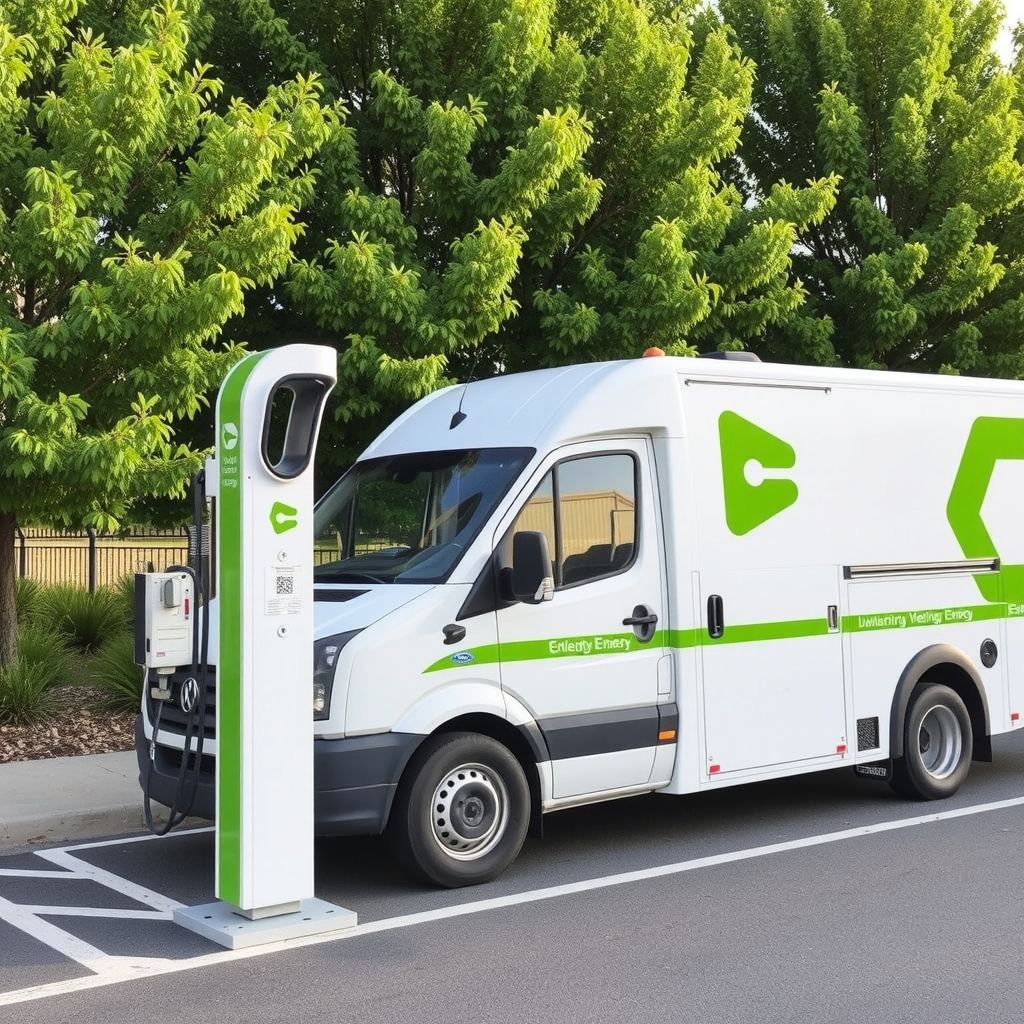
Commercial fleets — delivery vans, logistics trucks, ride-hailing cars — eliminate both issues by construction. A single fleet operator controls the vehicle spec, so there’s no multi-format problem: every truck in a depot uses the same battery pack. And fleet vehicles run fixed routes on predictable schedules, often returning to the same depot multiple times a day, which turns a swap station from a roadside gamble into a scheduled depot operation with near-constant utilization.
CATL, the world’s largest battery maker, has built its 2026 swapping strategy almost entirely around this insight. Its heavy-truck swapping network targets 900 stations by the end of 2026, scaling to roughly 2,000 in 2027 and an eventual target near 10,000, built in partnership with truck makers FAW Jiefang, Dongfeng Commercial Vehicle, and Sinotruk on a standardized battery-block format. In South China, CATL and logistics company DST are running a tighter version of the same model: 31 swap stations today serving a fleet of 5,000 standardized light electric trucks, expanding to 140 stations by the end of 2026. Because DST owns the trucks and CATL supplies the standardized packs, the multi-format problem simply doesn’t exist.
Europe is testing the same logic at a different scale. Octopus Energy and CATL have launched a joint venture, nicknamed Swaptopus, to build truck battery-swap hubs across the UK and the EU, with the first hubs launching in the UK and a target of 30-plus locations across Europe by 2035 — a venture the companies say could eventually support more than 300,000 electric trucks if freight operators standardize around it.
The regulatory piece that made this possible
None of this works without a shared physical standard, which is exactly what passenger swapping never got. China’s GB/T 40032.2-2025 standard for commercial-vehicle battery swapping took effect on November 1, 2025, giving truck makers a single target to build to instead of each negotiating a bespoke format with CATL. Europe and North America have no equivalent standard yet, which is the main reason Swaptopus is starting as a closed-loop venture between two companies rather than an open network any truck maker can join.
What this means for fleet operators evaluating the technology now
If you’re running a delivery or logistics fleet and considering electrification, battery swapping is worth evaluating specifically if your routes return vehicles to a small number of depots on a predictable schedule — the conditions that make the economics work. It’s a poor fit if your fleet runs long-haul routes with irregular depot returns, or if you can’t commit to a single battery-pack standard across your vehicles, since the whole cost advantage disappears the moment you need a multi-format station. For most fleets, the realistic near-term path is standardizing vehicle purchases around a single swap-compatible platform before signing a swap-network contract, not the other way around.