EV battery recycling economics improved in 2026, but the first wave of recyclers didn't survive to see it
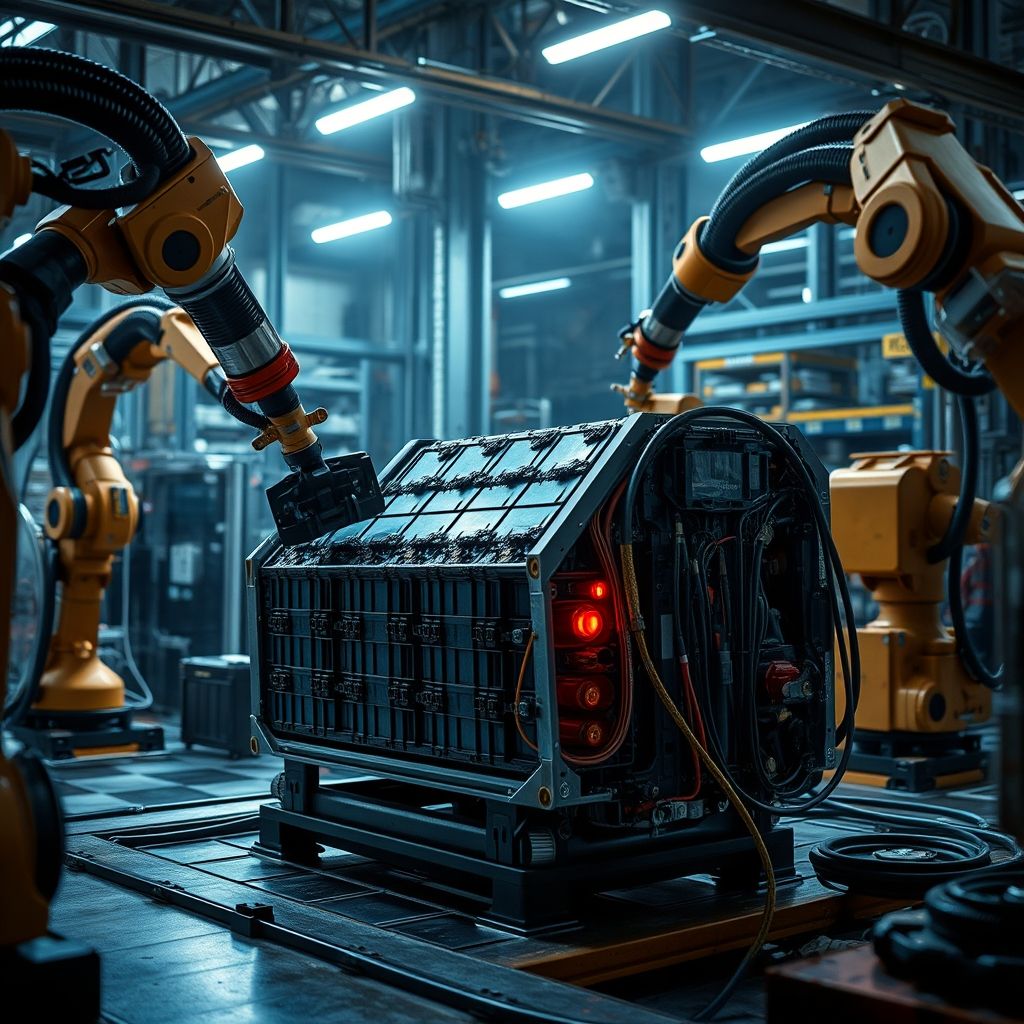
Battery recycling technology has crossed a real threshold in 2026: large-scale hydrometallurgical operations now recover 95% or more of the lithium and cobalt and up to 97% of the nickel in a spent EV battery, and at 20+ tons per day of throughput with full automation, margins reach 35-45%. That's a genuinely profitable industrial process. And yet two of the sector's most prominent independent recyclers didn't make it to see those numbers pay off -- Ascend Elements filed for Chapter 11 protection in April 2026, and Li-Cycle went bankrupt and was acquired by mining giant Glencore. The technology working and the business surviving turned out to be two separate problems.
What Actually Broke the First Wave
The core issue was timing, not chemistry. Recyclers built capacity based on EV adoption forecasts from 2021-2022 that assumed faster fleet growth than actually materialized, and they built that capacity when lithium, cobalt, and nickel prices were near multi-year highs. When those metal prices fell 10-20% through 2024 as supply caught up with slower-than-projected demand, the revenue side of the recycling business model -- selling recovered metals back into the battery supply chain -- collapsed at the same time fixed costs from newly built plants were still being paid down.
Ascend Elements is a useful case study because the company's technology genuinely worked: its Georgia facility became the first U.S. plant to produce 99%+ pure lithium carbonate from recycled batteries at commercial scale in 2025. The bankruptcy filing wasn't a failure of the recycling process -- the company is continuing to operate its facilities and honor existing offtake agreements, including a multi-year contract with commodities trader Trafigura, while it restructures its balance sheet. That's a capital structure problem layered on top of a working technology.
Why Recycling Is Still Structurally Necessary
None of this changes the long-term case for battery recycling -- it just reveals that the case was ahead of the actual volume of batteries reaching end-of-life. Annual battery scrap available for recycling (end-of-life packs plus manufacturing scrap) is projected to rise from roughly 1.4 million tonnes in 2026 to 5-7 million tonnes per year by 2030, as the first large wave of EVs sold in 2018-2021 starts reaching the 8-10 year mark where packs typically get replaced or the vehicle is retired.
Even at 2026 volumes, recycled material already covers an estimated 10-15% of global battery-grade nickel and cobalt demand and 5-10% of lithium demand -- material that would otherwise require new mining. That share will climb mechanically as more batteries age out, independent of what happens to any individual recycling company's balance sheet. The mismatch in 2026 is between when the feedstock volume arrives and when the plants built to process it need revenue to survive.
Who's Actually Positioned to Win
Redwood Materials offers the clearest contrast to the Ascend Elements and Li-Cycle story. Redwood cut 135 jobs (about 10% of its workforce) in 2026 amid the same difficult pricing environment, but it avoided bankruptcy by diversifying beyond pure metal recovery -- the company recently began repurposing 100 used Rivian battery packs as stationary energy storage at Rivian's Illinois factory, turning end-of-life batteries into a second revenue stream (grid storage) rather than relying solely on selling recovered raw metals into a depressed commodity market.
The pattern worth watching: standalone metal-recovery businesses are the most exposed to commodity price swings, while companies that build second-life applications -- stationary storage, industrial backup power -- on top of recycling capacity have a hedge when virgin metal prices drop. Glencore's acquisition of Li-Cycle points the same direction: a mining conglomerate with existing metal trading infrastructure and diversified revenue can absorb a recycling business through a down cycle in a way a pure-play recycler cannot.
What This Means Going Forward
For automakers and battery manufacturers evaluating recycling partners, the practical takeaway is to weight counterparty balance sheet strength as heavily as recovery-rate technology -- a facility with 99% lithium purity is worthless as a supply chain partner if the company operating it goes through a disorderly bankruptcy mid-contract. For investors, the sector's 2026 lesson is that recycling technology maturity and recycling business viability move on different timelines, and the gap between them is exactly where the first wave of pure-play companies got caught. The metals recovery math works. Surviving long enough for battery volumes to catch up to installed capacity is the actual business problem still being solved.