E-ink tablets stopped competing with Kindles. Now they compete with notebooks.
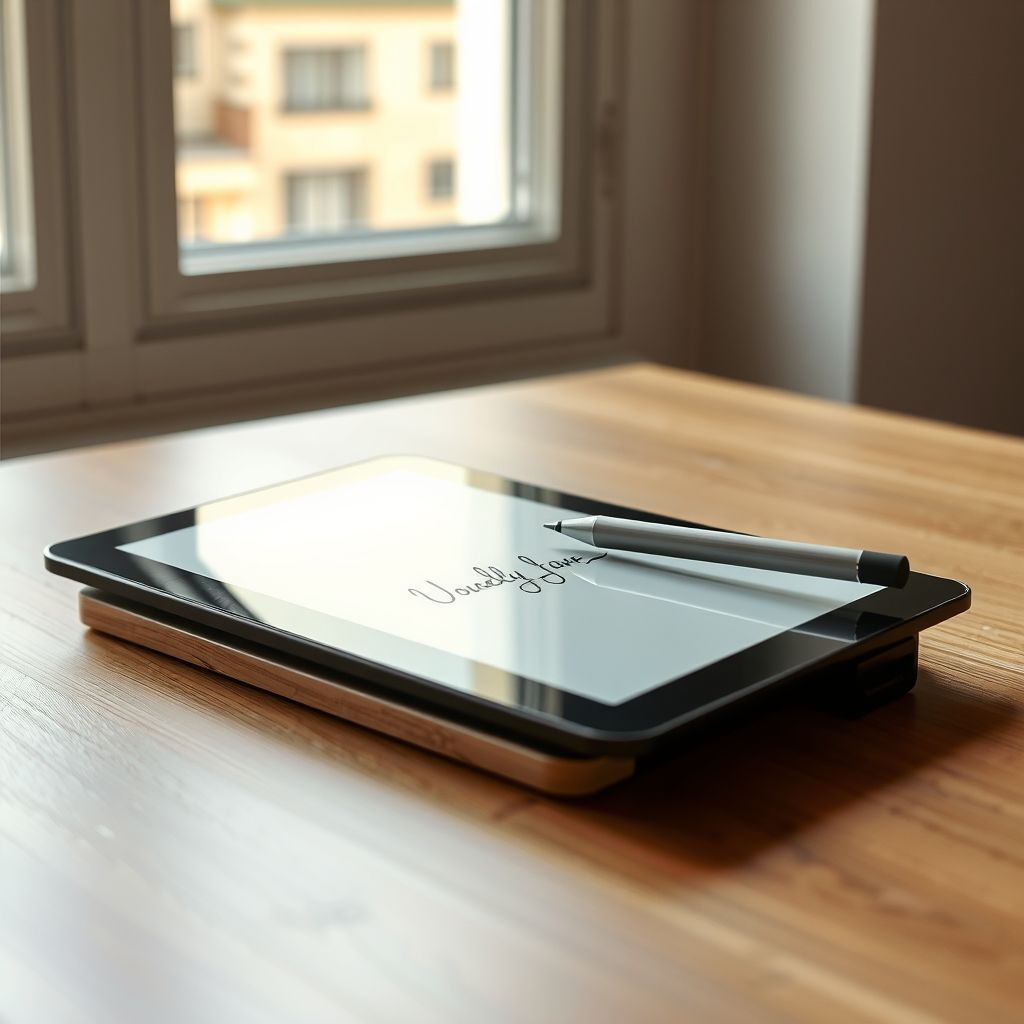
Basic e-readers are a mature, shrinking category — phones and tablets absorbed most casual reading years ago. But a different e-ink category has been growing underneath that decline: premium note-taking tablets priced from roughly $300 to $630, built to replace a paper notebook rather than a library of ebooks. ReMarkable's Paper Pro, Amazon's Kindle Scribe, and Onyx's Boox lineup are no longer competing with each other for reading time. They are competing with a legal pad.
The product that defined the shift
ReMarkable built its business almost entirely on this repositioning. The Paper Pro ships with a color E Ink Kaleido panel, a stylus with no battery to charge, and deliberately no web browser, no app store, and no video. ReMarkable's own marketing leans on comparisons to Moleskine notebooks and legal pads, not to Kindle or Kobo. At $579–$630 depending on the stylus bundle, it costs more than most tablets that do far more — and buyers pay that premium specifically for a device that does less, because doing less is the point for a certain kind of user.
Amazon's Kindle Scribe took the opposite path to a similar place: it started as a Kindle with a stylus bolted on, aimed at marginalia and marking up ebooks, and has steadily added more general note-taking features release over release. It's still tied to Amazon's content ecosystem in a way reMarkable deliberately isn't, but the trajectory is the same — from "e-reader with a pen" toward "notebook that happens to read ebooks."
Boox broke the walled garden
Onyx International's Boox line — the Note Air and Tab Ultra series — took a third approach: run actual Android on an e-ink panel. That means Google Docs, Notion, a real file system, and a web browser, all rendered at a deliberately throttled refresh rate to keep the e-ink display usable. This matters because it turns the category argument on its head. ReMarkable and Kindle Scribe sell you a replacement for paper with no distractions by design; Boox sells you a thin, long-battery-life Android client that can run your existing productivity stack, distractions and all, if you choose to enable them.
That split — distraction-proof single-purpose device versus open Android e-ink client — is now the real axis buyers choose along, not "which brand has better ebook selection."
The trade-off nobody gets around
E-ink's physics sets a hard limit that explains both why this category exists and why it will never replace a laptop or iPad. A passive e-ink display only draws power when the image changes, which is why these devices run for weeks on a charge instead of hours, and why extended reading or writing on one causes none of the eye strain that comes from an LCD or OLED backlight. The same physics means refresh rates are slow enough that video, fast scrolling, and anything resembling a responsive UI are either absent or noticeably laggy. That is not a bug the next generation will fix — it is the fundamental trade for the battery life and paper-like legibility that are the entire reason to buy one of these instead of an iPad.
Who should actually buy one
The use case that holds up under scrutiny is narrow but real: people who take long-form handwritten notes daily and want them searchable and backed up — lawyers and consultants annotating PDFs in meetings, researchers marking up papers, students who retain material better writing longhand but still want a digital copy, and writers who want zero-notification drafting sessions with sync to a laptop afterward. If your primary need is consuming video, browsing the web, or anything that benefits from a fast, colorful screen, none of these solve a problem a $200 Android tablet doesn't already solve better.
Within the category, the choice comes down to how much you want the device to do. Pick reMarkable if you want the most paper-like writing feel and don't want the option to get distracted, even by yourself. Pick Boox if you want an e-ink display but also want the flexibility to run your existing cloud note app, read PDFs with real file management, and occasionally break the "no distractions" promise on purpose. Pick Kindle Scribe only if you're already deep in Amazon's ebook ecosystem and the note-taking features are a bonus rather than the primary reason to buy.
The cost case nobody runs
A $600 reMarkable looks expensive next to a $15 notebook until you run the actual comparison most buyers skip: a working professional filling two to three notebooks a year for a decade spends more on paper, in dollars and in landfill, than a single e-ink device amortized over the same period, and none of that paper is searchable, backed up, or exportable as a PDF afterward. That math doesn't make the purchase automatic — plenty of people genuinely prefer the tactile feel of ink on paper and should keep using it — but it's the honest frame for the price tag, rather than comparing it to a $100 basic Kindle and concluding it's overpriced for an e-reader. It was never priced as an e-reader in the first place.