Design Systems Are Becoming Product Infrastructure, Not Just UI Libraries
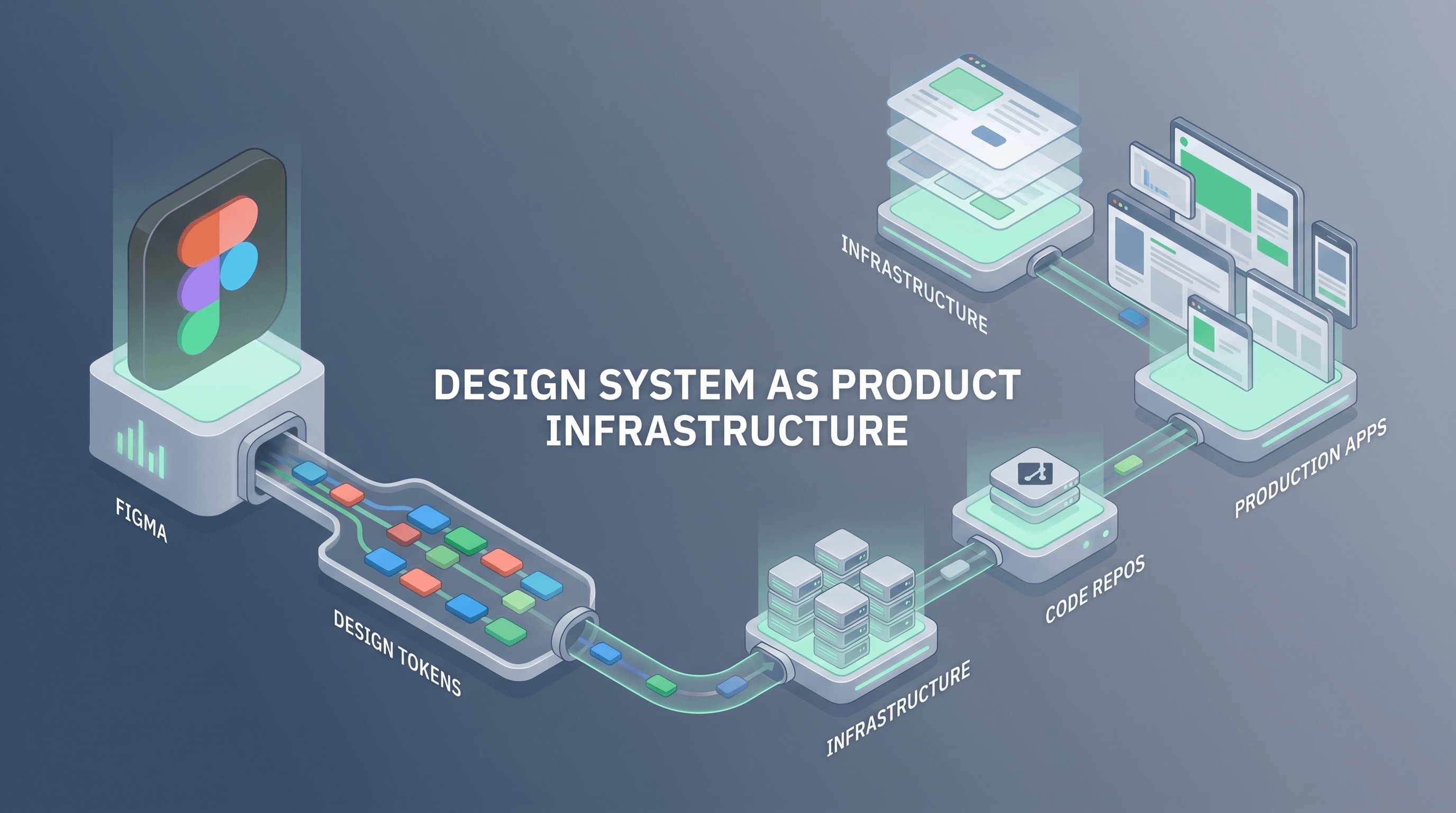
Design systems used to be pitched as a consistency project. Build a shared component library, settle some typography arguments, standardize buttons, and ship fewer one-off screens. That framing is no longer big enough. In modern software organizations, the design system is turning into infrastructure: a layer that connects design decisions, engineering implementation, accessibility rules, theming, AI-assisted code generation, and release governance.
This shift matters because product teams now build across more surfaces, brands, and states than a static style guide can realistically govern. They ship web apps, mobile apps, embedded flows, marketing surfaces, admin tools, and increasingly AI-generated or AI-assisted interfaces. The question is not whether a button looks the same everywhere. The question is whether the product organization has a machine-readable source of truth that can keep many teams aligned while software changes continuously.
Components were the first chapter, not the whole story
A component library still matters, but it is only the visible layer. The deeper value sits in tokens, semantics, and constraints. Once a company starts describing color, spacing, motion, typography, states, and accessibility behavior as structured system data rather than scattered visual preferences, the design system becomes far more powerful. It stops being a kit and starts becoming a contract.
That is why the growing momentum around design-token standards matters. The Design Tokens Community Group at W3C has been working toward a vendor-neutral format for portable design decisions, and the industry is increasingly treating tokens as the connective tissue between Figma, front-end frameworks, mobile codebases, and documentation systems. This is one of those boring standards stories that quietly changes how teams work. A token is more useful than a screenshot because software can actually enforce it.
Design-to-code is turning system quality into a multiplier
AI tooling and products like Figma Make, improved Dev Mode workflows, and code-aware design platforms are accelerating this transition. When teams can move from structured design intent to working prototypes or code suggestions faster, the quality of the underlying system matters more. A messy design system now causes larger downstream damage, because automation scales inconsistency just as efficiently as it scales quality.
That is the strategic reason design systems are becoming infrastructure. They are no longer only for humans reading guidelines. They are increasingly inputs for tools. If an AI coding assistant, a code generator, or a design-to-dev sync process is going to produce UI at speed, it needs a reliable vocabulary for what the product is allowed to look like and how components are supposed to behave.
Accessibility and theming become easier only when the system is real
Organizations often talk about accessibility and multi-brand theming as if they are separate initiatives. In practice, both are tests of whether the design system is real infrastructure or just shared artwork. A real system encodes contrast requirements, focus behavior, motion preferences, layout constraints, and semantic naming well enough that teams can adapt safely across contexts. A superficial system forces every product squad to rediscover those rules by hand.
This is especially important for enterprise software, where products often need white-label support, dark mode, regional branding, complex forms, and long-lived internal screens that evolve over years. Without a solid system layer, each variation becomes a local fork. Over time, those forks become maintenance debt. A strong design system turns variety into configuration instead of fragmentation.
The old handoff model is breaking down
One reason this category feels more urgent now is that the old design handoff ritual is becoming less useful. In many teams, the bottleneck is no longer that engineering cannot inspect a mockup. The bottleneck is that design intent gets lost between tools, sprint pressures, and repeated local decisions. Static handoff is too slow for that environment.
Infrastructure thinking changes the goal. Instead of asking whether the engineer has the latest file, teams ask whether the design rules, code components, docs, and acceptance criteria are all connected enough to reduce interpretation. That sounds less romantic than “better collaboration,” but it is much more actionable. The best systems reduce the number of judgment calls people have to make under deadline pressure.
Governance is now as important as craft
This is where many companies still struggle. They invest in the first glossy version of a design system, then underinvest in governance. But infrastructure without stewardship decays quickly. Someone has to own versioning, migration, deprecation, component review, contribution rules, and adoption metrics. Someone has to decide when a local exception is justified and when it creates system debt.
That governance work is not glamorous, yet it is where design systems earn their business value. A system is only infrastructure if people trust it enough to depend on it. Trust comes from reliability, change management, and documentation that helps teams make decisions without opening another Slack thread.
What software teams should do differently
If your design system still behaves like a gallery website, the next step is to treat it like a product with interfaces and consumers. Audit what is actually encoded as reusable logic. Move visual decisions into tokens and semantic layers where possible. Tie system documentation to implementation rather than leaving it as a parallel universe. Measure adoption at the component and workflow level, not just by counting Figma assets.
It is also worth designing the system for automation explicitly. Ask whether a coding assistant or generator could use your rules without human translation. If the answer is no, the system probably depends too much on tribal knowledge. In an era of AI-assisted software creation, undocumented judgment becomes a scaling problem.
Why this matters more now than five years ago
Software teams are shipping faster, across more channels, with more contributors who may not share the same craft context. Meanwhile, design tools and developer tools are collapsing into each other. In that environment, the cost of not having a real system rises quickly. UI drift becomes operational noise. Accessibility bugs multiply. Theming breaks. Generated code looks close enough to pass review until the inconsistencies pile up.
That is why design systems no longer sit comfortably in the “nice to have” bucket. They are increasingly part of the production stack. The companies that understand this will not just make prettier apps. They will make product change safer, faster, and more coherent.
Actionable takeaways
Treat your design system like infrastructure: fund maintenance, set ownership, standardize tokens, and make the documentation machine-readable wherever possible. Use it to reduce repeated local decisions, not to win aesthetic debates. If your organization is investing in AI-assisted design or code generation, this work becomes even more urgent. Automation will expose whether your system is real.