Data Clean Rooms Are Becoming the Default Way Companies Share Data Under Stricter Privacy Law
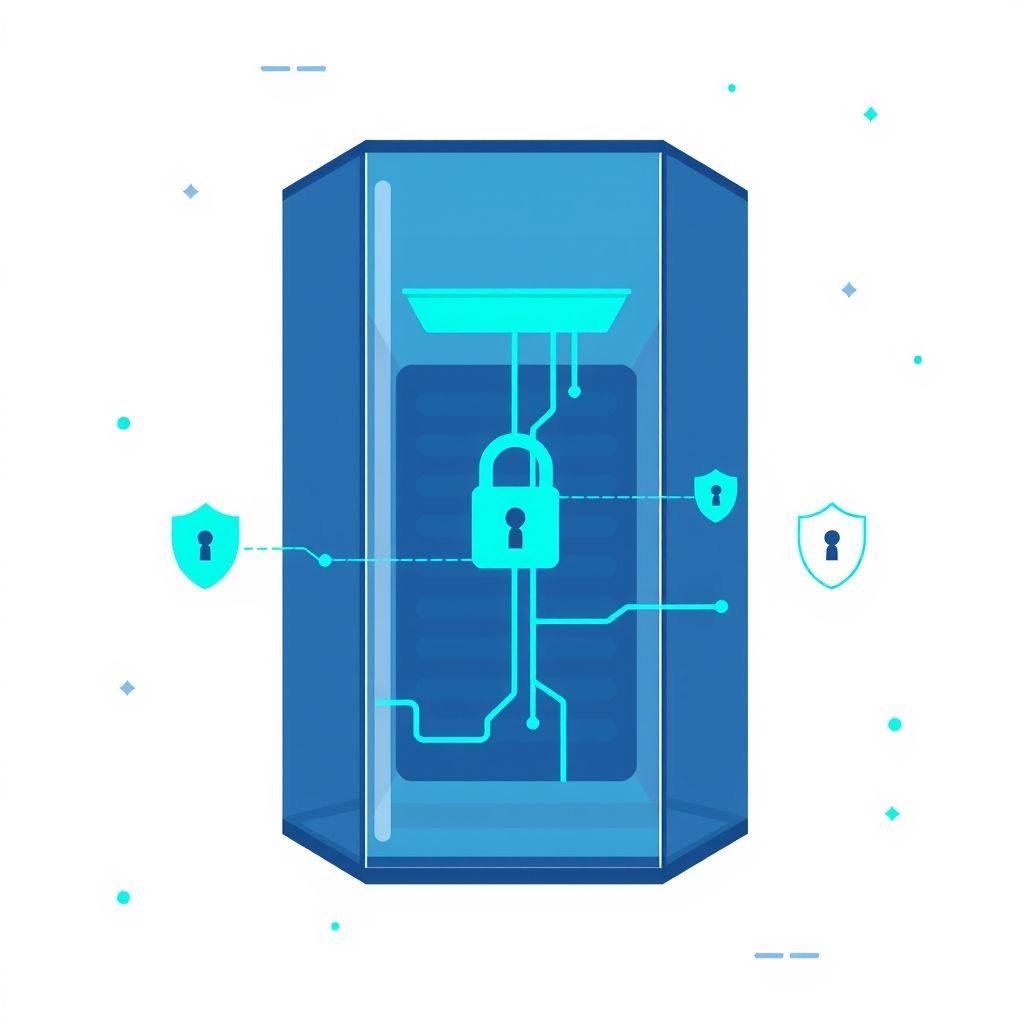
Two companies want to know how their customer lists overlap — a retailer and a payments processor, a streaming service and an advertiser, a hospital system and a research partner — without either one handing over its raw customer data to the other. That used to be either impossible to do safely or handled through crude, risky workarounds like hashed email matching over an unencrypted file transfer. Today it's handled through a data clean room, and the technique has moved from a specialized ad-tech tool used by a handful of large platforms into the default architecture for cross-company data collaboration under increasingly strict privacy law.
What a Data Clean Room Actually Is
A data clean room is a controlled computing environment where two or more parties can run joint analysis on their combined data without either party gaining direct access to the other's raw records. Each party uploads or connects their dataset into the clean room, queries run against the combined data inside that controlled environment, and only aggregated, privacy-safe outputs — never row-level records — leave the room. Neither party can query for information about a specific individual; results are typically only released when they represent a group above a minimum size threshold, a technique borrowed from statistical disclosure control that prevents someone from narrowing a query down to identify a single person.
The technical implementation varies. Some clean rooms run on secure enclaves — hardware-isolated computing environments where even the cloud provider hosting the infrastructure cannot see the data being processed. Others rely on differential privacy, which adds carefully calibrated statistical noise to query results so that no single record can be reverse-engineered from the output, while aggregate patterns remain accurate. Google's Ads Data Hub, Amazon Marketing Cloud, Snowflake's data clean room product, and independent vendors like Habu and LiveRamp all take slightly different technical approaches, but the underlying goal is consistent: enable joint analysis, prevent raw data exposure.
Why Regulation Is Driving Adoption Now
Three regulatory and market pressures converged to push clean rooms from niche to standard. First, the ongoing deprecation of third-party tracking cookies across major browsers eliminated the crude cross-site matching techniques advertisers relied on for years, and clean rooms became the compliant replacement for measuring ad performance without individual-level tracking. Second, GDPR and the growing patchwork of US state privacy laws — California's CPRA among them — impose strict limits on transferring personal data between companies, but data that never leaves a controlled environment and only exits as aggregated output falls into a meaningfully different, lower-risk regulatory category. Third, sector-specific data-sharing needs — healthcare research partnerships, financial fraud detection consortiums, retail media networks — all face the same underlying problem of needing joint insight without joint custody of raw data, and clean rooms answer that need directly.
Real Deployments Beyond Advertising
Retail media networks are the most mature use case: a retailer's purchase data combined with a brand's ad spend data, analyzed jointly to measure whether a campaign actually drove purchases, without the brand ever seeing individual customer purchase histories and without the retailer exposing its full transaction data to an outside advertiser. Healthcare research partnerships use clean rooms to let hospital systems and pharmaceutical researchers analyze treatment outcomes across combined patient populations while keeping identifiable patient records inside each institution's own systems. Financial services consortiums use similar architecture for fraud pattern detection across multiple banks, where seeing fraud signals in aggregate across institutions is valuable but no single bank wants to hand over its raw transaction data to competitors.
The Limits Worth Knowing
A clean room is not a privacy guarantee by itself — it's an architecture that reduces risk when implemented correctly and can create a false sense of security when it isn't. Aggregation thresholds that are set too low still allow re-identification through repeated, cleverly constructed queries, a well-documented attack against naive implementations. Differential privacy's noise parameters involve a real tradeoff between privacy protection and result accuracy, and vendors don't always default to conservative settings. And a clean room only protects data while it's inside the room — governance questions about who can initiate queries, what queries are permitted, and how long access persists still require the same access-control discipline that any sensitive system needs.
What to Actually Evaluate
If your organization is considering a clean room for a data-sharing partnership, verify the specific technical approach — secure enclave versus differential privacy versus simple aggregation thresholds — because the privacy guarantees differ meaningfully between them. Ask what the minimum aggregation threshold is and whether it can be configured, since a threshold of five records provides much weaker protection than one of a few hundred. Confirm whether the vendor's infrastructure has been independently audited rather than relying on marketing claims, and map out exactly which queries each party will be permitted to run before the partnership goes live rather than leaving query permissions open-ended. The technology solves a real problem, but it solves it only as well as the governance wrapped around it.