Co-packaged optics could reshape the economics of AI data centers
When people talk about AI infrastructure, they usually talk about GPUs first and power grids second. Networking often comes third, as if it were a supporting detail. That mental model is now outdated. In large AI clusters, the network is no longer background plumbing. It is a hard constraint on cost, scale, latency, and energy use.
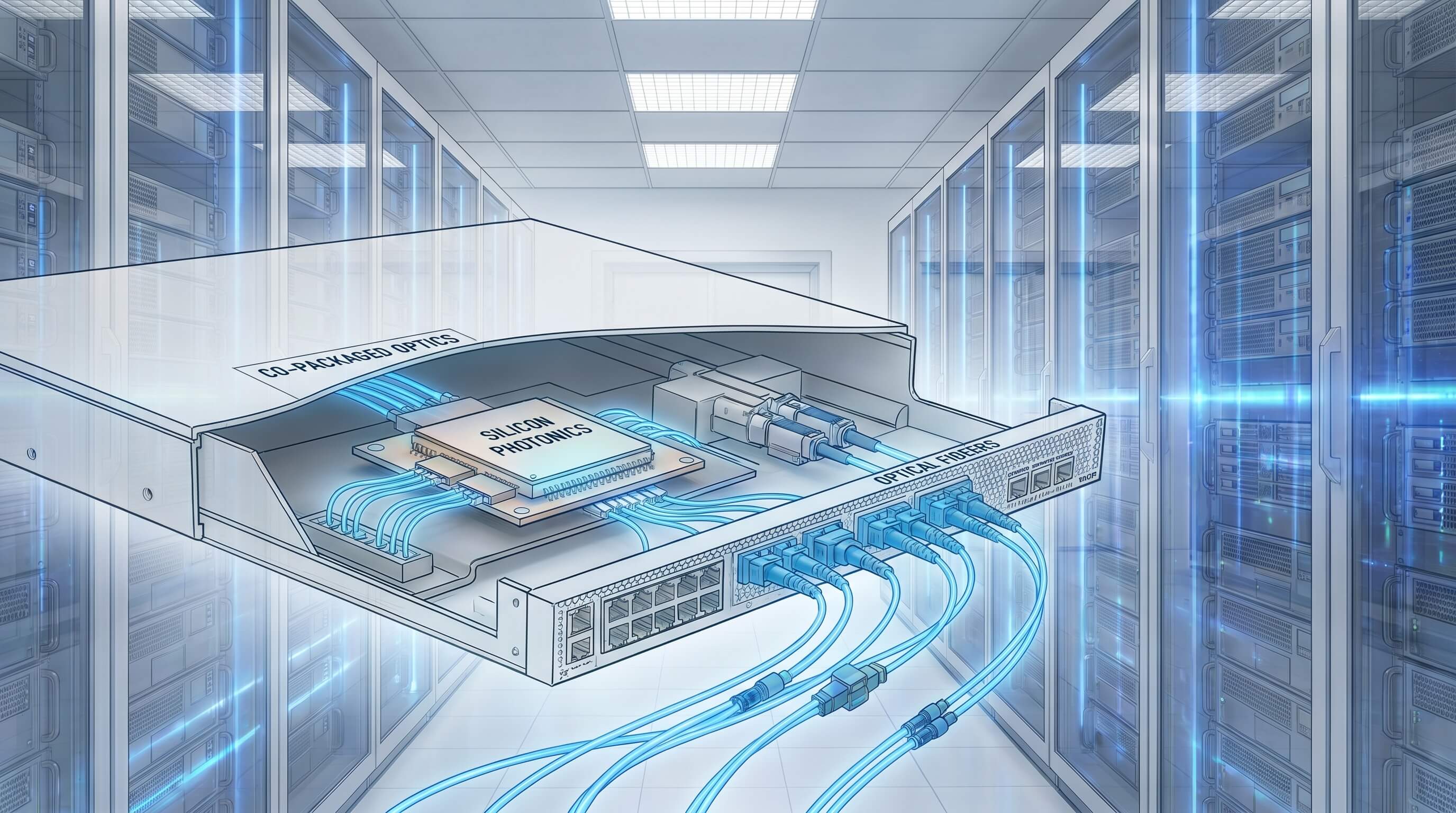
This is why co-packaged optics, or CPO, has moved from an esoteric photonics topic to one of the more interesting hardware shifts in the data center. The core idea is straightforward. Instead of using traditional pluggable optical transceivers hanging off the switch faceplate, optical engines are integrated much closer to the switch ASIC itself. That shortens the electrical path dramatically before the signal is converted to light.
Why that matters now
The reason CPO is gaining attention now is that AI clusters are exposing the limits of older interconnect assumptions. Large-scale training and inference systems need huge east-west bandwidth. They also pack GPUs densely, which means more heat, more cabling complexity, and far less tolerance for inefficient components. A design that was acceptable in a more conventional enterprise data center starts to look wasteful when thousands of accelerators have to communicate constantly.
NVIDIA’s recent photonics pitch captures the argument clearly. In pluggable designs, signals travel through long electrical paths, connectors, and multiple interfaces before optical conversion. That increases loss, power draw, and failure points. In a co-packaged design, the optical engine sits beside the switching silicon, reducing electrical loss and simplifying the path. The result is better signal integrity and lower power per link.
Power is the real headline
Bandwidth gets the flashy numbers, but power is the more strategic story. AI data centers are already running into physical and economic limits around electricity, cooling, and rack density. Saving a few watts on a laptop component is nice. Saving major link power across thousands of high-speed connections changes the shape of a buildout. NVIDIA has argued that moving from conventional pluggables to photonics-heavy designs can bring large per-interface savings and broader system-level efficiency gains. Other vendors and analysts are making similar claims as switch bandwidth climbs past 100Tbps-class designs.
That matters because network power is not isolated. More power means more heat. More heat means more cooling complexity. More complexity means more operational fragility and more money spent on infrastructure that does not directly create business value. Hardware that reduces optical power draw can therefore improve economics in multiple ways at once.
Reliability and serviceability are part of the tradeoff
CPO is not just about efficiency. It is also about reducing the number of discrete components and electrical interfaces that can fail. In theory, fewer modules and cleaner signal paths should improve resiliency. For AI operators, that matters because training jobs and large inference clusters are sensitive to network disruptions in ways traditional enterprise workloads often were not. One flaky link in a tightly coupled cluster can become a surprisingly expensive problem.
That said, the tradeoff is real. Traditional pluggables became popular partly because they are modular and familiar. If a module fails, operators know how to swap it. Co-packaged systems require the industry to rethink service models, thermal design, manufacturing, and test strategy. You get a more integrated system, but you also inherit more integrated failure handling. That is why CPO adoption has been slower than the hype cycle might suggest.
The manufacturing challenge is still serious
There is no free lunch here. CPO asks hardware vendors to align photonics, packaging, thermal management, and switch design far more tightly than before. Fiber routing, photonic yield, rework procedures, and field service all become harder. It is one thing to prove a power-efficiency chart in a launch blog. It is another to ship enough reliable systems that hyperscalers and enterprise operators are comfortable betting billions of dollars on the architecture.
Still, this is the kind of problem the industry tends to solve when the economic incentive becomes strong enough. AI has supplied that incentive. As clusters stretch toward larger fabrics and higher port speeds, the old design assumptions become more expensive to defend. That does not mean pluggables disappear overnight. It means the threshold where CPO becomes worth the complexity is moving closer.
Why this is bigger than one vendor roadmap
It would be a mistake to read CPO as just another feature in a networking product cycle. What makes it important is that it addresses a structural bottleneck. AI infrastructure is teaching the industry that compute progress is only useful when the rest of the system can keep up. If networking power, signal loss, and scale-out complexity dominate the economics, then optics becomes central to the compute roadmap.
That is also why investors and system architects care. CPO affects switch silicon, photonic packaging, cooling design, deployment speed, and total cost of ownership. In other words, it is not a niche component story. It is a data center architecture story.
What to watch next
The near-term question is not whether co-packaged optics are technically elegant. They are. The real question is where they become operationally and economically unavoidable. Watch for three things. First, whether hyperscale AI factories deploy CPO at meaningful volume rather than in showcase systems. Second, whether field reliability and repair workflows become routine enough to reassure buyers. Third, whether power constraints in new AI campuses become so intense that more integrated optics stop looking exotic and start looking necessary.
Hardware transitions often sound incremental until the constraints get brutal enough to force a redesign. That may be where AI networking is headed. If so, co-packaged optics will matter not because they are futuristic, but because they help keep AI data centers from drowning in their own bandwidth and power demands.