Chinese EV Makers Are Exporting Their Price War to Europe and Latin America
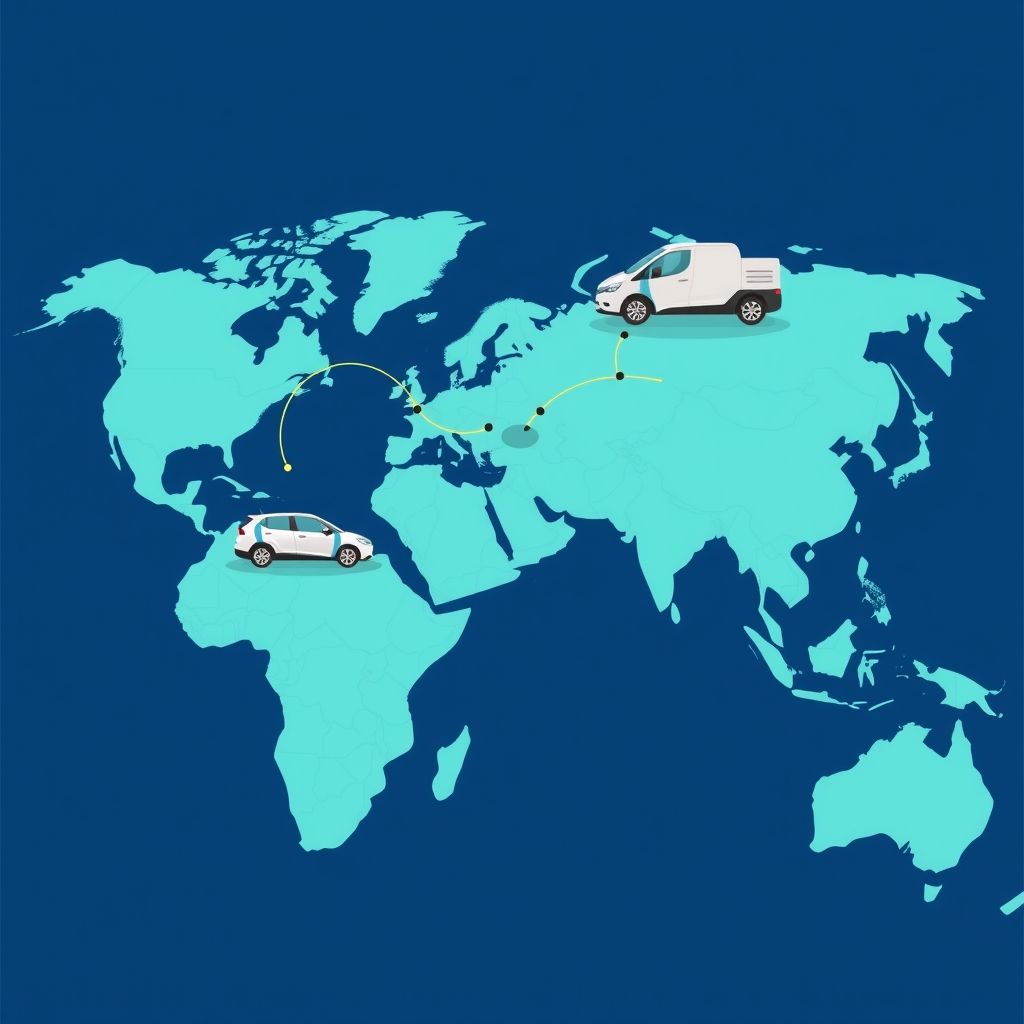
China's domestic EV price war has gotten so brutal that Beijing is now publicly warning automakers against selling below cost, and BYD's average discount hit a record 10 percent in March 2026. The companies caught in that squeeze have found the obvious release valve: export the excess. Chinese EV exports more than doubled in a single month this spring, and BYD has raised its own 2026 overseas sales target to 1.5 million vehicles. The price war didn't end — it went international, and the markets absorbing it are Europe and Latin America.
That matters beyond the auto industry. It's a live case study in how a domestic overcapacity problem gets exported as a pricing shock to other countries' markets, and in how those countries are now scrambling to build trade defenses that split the difference between protecting local manufacturers and not shutting out genuinely useful technology.
Europe's answer: price floors instead of tariff walls
The EU's original response to Chinese EV dumping was a tariff, as high as 35 to 45 percent depending on the manufacturer and whose numbers you trust. In January 2026, Brussels replaced that blunt instrument with something more surgical: a minimum-price "undertaking" framework that lets Chinese automakers sell in the EU as long as they don't go below an agreed floor price. The logic is that a tariff just taxes the consumer, while a price floor removes the competitive advantage of underpricing without walling off the market entirely.
It's working well enough that Chinese brands took a record 12.8 percent share of Europe's EV market, according to industry tracking cited in November reporting — a number that would have been unthinkable five years ago, when Chinese automakers were barely a rounding error in the European market. The price floor didn't stop the gains. It just meant the gains came from product and brand appeal rather than a 20-30 percent price advantage, which is a more sustainable position for Chinese automakers in the long run and a less existential threat to European incumbents in the short run.
Localization is the next move, and it's already underway
BYD isn't waiting to find out whether the price-floor arrangement holds. Its plant in Szeged, Hungary is targeting production start in Q4 2026, which converts Chinese-built exports subject to trade friction into EU-built vehicles that sidestep most of it. That's the standard playbook for companies facing tariff walls: stop exporting the finished product and start exporting the capital and the supply chain instead. Expect more of this. A price floor discourages underpricing imports; it does nothing to discourage a factory built inside the tariff wall.
Latin America: fewer rules, bigger swings
Latin America has been less willing, or less able, to build the kind of calibrated trade instrument the EU designed. Mexico became one of the fastest-growing destinations for Chinese EVs, with roughly 221,000 vehicles sold there in a recent 12-month period — then tariffs on Chinese-made vehicles rose there too, reportedly as high as 50 percent, and BYD paused construction on its planned Mexican plant in response. That's a sharper, less predictable policy swing than Europe's price-floor approach, and it shows up directly in corporate investment decisions: BYD didn't wait around to see if the tariff regime would soften, it just stopped building.
Brazil and Argentina have taken a steadier path, with Chinese-built factories already operating or under construction in both countries, aiming for the same localization outcome Hungary represents for the EU market — vehicles assembled close enough to the point of sale that they're less exposed to swings in import policy.
What buyers and competitors should actually watch
For consumers, the price war's export phase means genuinely good deals on Chinese EVs in markets where trade policy hasn't caught up yet, and a shrinking window before price floors or localization erode that advantage. For competing automakers — European, American, Korean, Japanese — the lesson from the EU's price-floor experiment is that blunt tariffs buy time but not market share; the companies that respond by improving their own cost structure and product competitiveness during that window are in a better position than the ones that just rely on the tariff to hold.
And for anyone trying to forecast where this goes next: watch localization announcements, not export volume. Export volume is the symptom of a price war that's still raging domestically in China. Localization — a Hungary plant, a Brazilian factory, a paused Mexican investment — is the signal of how durable each regional market actually expects the current trade arrangement to be. Where automakers are building local factories, they're betting the market stays open. Where they're pausing those investments, as BYD did in Mexico, they're reading the tariff risk as too high to commit capital against.