BYD Surpassed Toyota as the World's Top-Selling Automaker in Early 2026
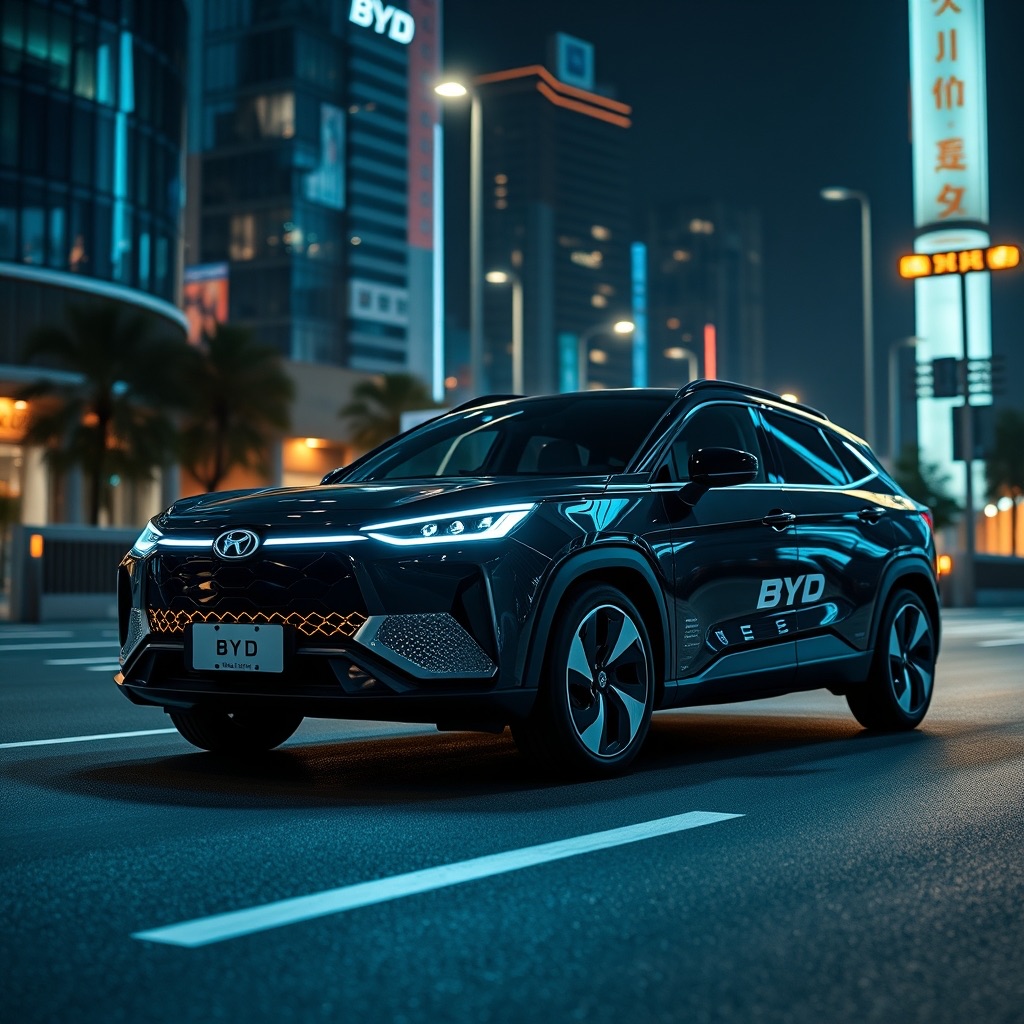
For the first time in automotive history, a Chinese automaker topped global vehicle sales charts. BYD sold approximately 1.4 million vehicles in Q1 2026, edging past Toyota's 1.35 million and GM's 1.2 million to claim the top spot. This wasn't a one-quarter anomaly built on incentives or inventory dumps — it was the culmination of a decade-long pivot from budget battery supplier to vertically integrated EV giant.
BYD's ascent has three distinct pillars: a proprietary battery technology that undercuts rivals on cost and safety, a model lineup spanning nearly every price segment, and an aggressive international expansion that is only accelerating. Each pillar reinforces the others, and together they explain why legacy automakers are struggling to mount a credible response.
The Blade Battery: BYD's Core Competitive Weapon
BYD's Blade Battery, introduced in 2020, uses lithium iron phosphate (LFP) chemistry arranged in long, flat cells packed directly into the battery pack structure — eliminating the traditional module layer. This "cell-to-pack" design reduces wasted volume, cuts pack weight by roughly 10–15%, and improves thermal management. The result: packs that are cheaper to manufacture, more resistant to thermal runaway, and structurally stronger than equivalent NMC-based alternatives.
The safety record is measurable. BYD's Blade Battery passed the nail penetration test without fire or smoke — a test that causes conventional lithium-ion cells to ignite. In large-scale fleet deployments across Chinese taxis and ride-hailing operators, Blade-equipped vehicles logged over 1 billion kilometers by end of 2024 without a single fire reported in cells. That data point is a direct sales argument in markets where EV fire incidents have generated negative press coverage.
Critically, BYD manufactures its own cells. This gives it direct cost control at the component level that most Western automakers — who source cells from CATL, Panasonic, or LG — simply do not have. BYD's cell cost per kWh is estimated at $56–$62 as of late 2025, versus an industry average closer to $80–$90. That gap flows directly to vehicle margin or price competitiveness.
The Model Lineup: From $10,000 Seagull to $150,000 Yangwang U9
BYD's range is deliberately designed to leave no segment unchallenged:
- Seagull — Starting at around $10,200 in China. A 4-seat urban EV with 305 km CLTC range. It became China's best-selling EV in 2024 and is now being adapted for export to Southeast Asia, Latin America, and Brazil.
- Dolphin — Priced from approximately $14,000 in China, launched in Europe and Australia. European pricing starts around €23,990 after import duties.
- Atto 3 / Yuan Plus — A compact SUV sold in Europe, Australia, Thailand, and Israel. In Australia it was the top-selling EV for much of 2024.
- Han EV — A full-size sedan with up to 715 km CLTC range, positioned against Tesla Model S.
- Seal — A performance sedan with 0–100 km/h in 3.8 seconds for the AWD version, competing directly against the Tesla Model 3.
- Yangwang U8 — BYD's luxury SUV starting above $150,000, featuring quad-motor drive and tank-turn capability.
- Yangwang U9 — A pure electric supercar priced above $230,000, with 0–100 km/h in 2.36 seconds.
The Fang Cheng Bao sub-brand adds off-road vehicles, while the Denza brand (a joint venture with Mercedes-Benz) covers premium family EVs. BYD is segmenting deliberately and using shared platforms to manage cost across all of them.
Plug-in Hybrids as a Bridge Strategy
BYD's 2025 sales figures show roughly 49% of units sold were plug-in hybrids (PHEVs), not battery electric vehicles (BEVs). BYD's fifth-generation DM (Dual Mode) hybrid system, released in early 2024, achieves a claimed fuel consumption of 2.9 liters per 100 km in charge-sustaining mode — competitive with the most efficient conventional hybrids. The electric-only range has been pushed to 200 km on select models.
PHEVs serve two functions: they address range anxiety in markets without dense charging infrastructure, and they sidestep some EV-specific import barriers. The EU's countervailing duties imposed in mid-2024 apply differentially across BYD models, with BEVs facing the highest tariffs. PHEVs are partly insulated. BYD is using its hybrid sales to maintain revenue momentum in Europe while it evaluates local manufacturing options.
Europe Strategy: Factories, Not Just Exports
BYD announced a manufacturing plant in Szeged, Hungary with production expected to begin in late 2025 or early 2026. Local European production exempts vehicles from Chinese import duties and qualifies them for local EV incentives. A second site in Turkey targets Middle Eastern markets.
In parallel, BYD signed a deal with Stellantis for vehicle distribution in selected European markets and has built independent dealer networks across Germany (200+ points of sale), France (170+), and the UK (250+). BYD's European sales rose from approximately 16,000 units in 2022 to over 83,000 in 2024 — a 5x increase in two years. BYD also operates in Thailand, where it holds the second-largest EV market share. A factory in Rayong Province with 150,000-unit annual capacity opened in mid-2024.
What Legacy Automakers Face
Volkswagen posted a net loss in Q3 2024 and announced the potential closure of three German plants. Toyota's solid-state battery timeline has been pushed from 2027 to 2028 multiple times. GM's Chevy Bolt EV was briefly discontinued before being relaunched.
The structural problem for Western automakers is not engineering capability — it's vertical integration and cost structure. A typical legacy OEM sources batteries from external suppliers, pays union labor rates in high-cost markets, and carries legacy combustion tooling costs. BYD makes its own cells, operates factories in lower-cost regions, and has no legacy combustion product line dragging down its capital allocation. The cost gap is real, documented, and not narrowing quickly.
Ford's CFO acknowledged in Q4 2024 earnings that the company loses approximately $44,000 per EV sold on its Model e division. BYD's operating margin on EVs is estimated at roughly 6–8% positive. That disparity does not close with software updates or minor efficiency improvements — it requires wholesale restructuring.
Actionable Takeaways
- Investors watching auto sector: BYD's market cap as of June 2026 exceeds $120 billion. Its sales trajectory supports premium valuation in a sector that is structurally repricing.
- Automotive suppliers: BYD's vertical integration is expanding. Component suppliers to legacy OEMs without BYD relationships should model significant volume loss through 2028.
- Consumers in export markets: BYD's European Seal starts at €35,990. The Atto 3 is €36,900 with a 7-year/150,000 km warranty. Residual value data from 2023–2024 models is now becoming available.
- Policy observers: EU tariffs have not stopped BYD — they have accelerated its localization strategy. Tariff policy without industrial investment in local battery supply chains is unlikely to reshape the competitive dynamic by 2030.
BYD overtaking Toyota is not a "China rises" narrative — it is a specific, engineered outcome of decisions made at the cell chemistry level in 2016, scaled through vertical integration, and pushed into global markets through patient distribution investment. Whether legacy automakers have the cost structure and institutional speed to respond before BYD consolidates its position is the more important question.