Bitcoin mining is quietly turning into a grid-balancing business
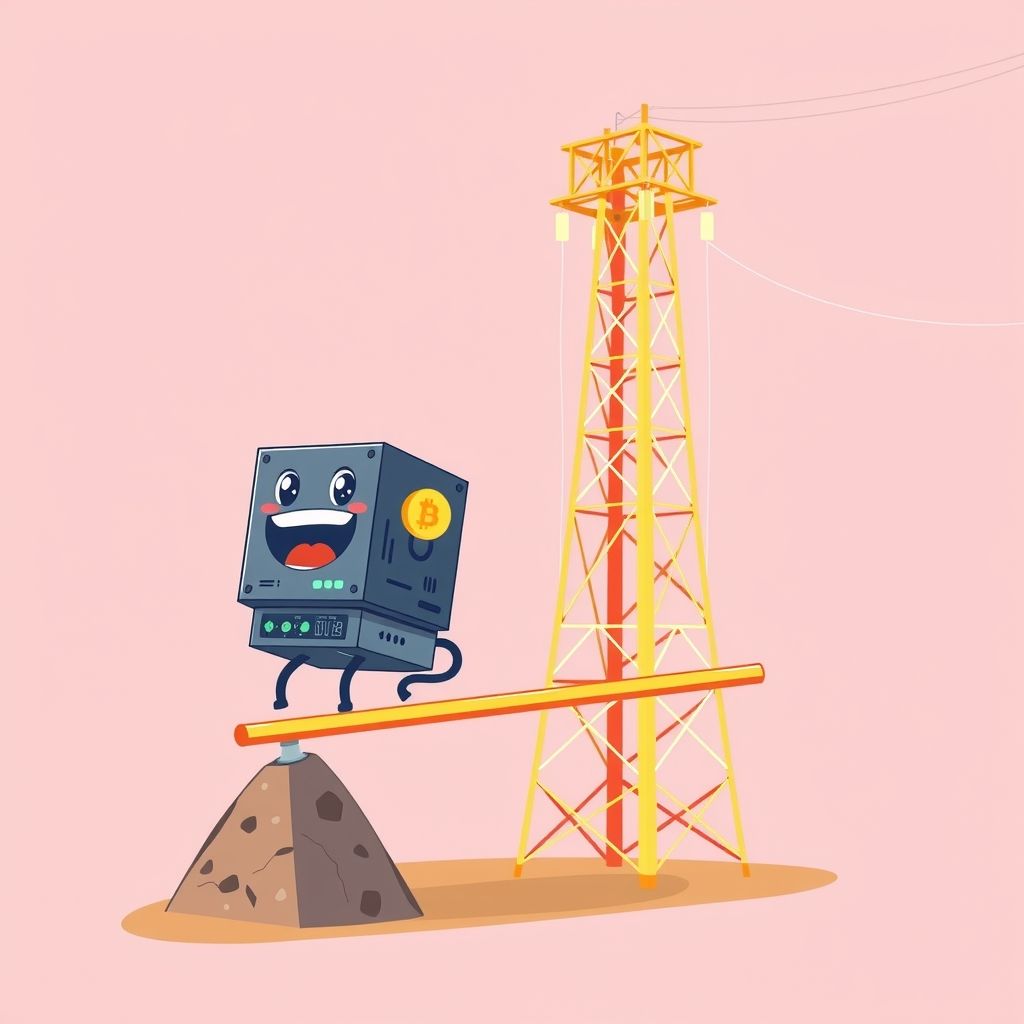
In July 2026, Enel North America and mining-software firm Braiins launched a joint product called Mining Energy Intelligence, pairing Braiins' mining fleet software with Enel's demand-response market access so bitcoin miners can automatically curtail power draw during grid stress — and get paid for it. It's the clearest sign yet that bitcoin mining's relationship with the electrical grid has flipped from liability to asset in the eyes of utilities.
This is a genuine shift in how grid operators think about crypto mining, not just a PR move by one mining-software company. The economics behind it are specific enough to be worth unpacking.
Why Miners Are Uniquely Suited to This Role
Demand response — paying large electricity users to reduce consumption during peak stress — is not a new idea. Factories, data centers, and large commercial buildings have participated in these programs for years. What makes bitcoin miners different is how cleanly they can act on a signal: a mining facility can drop its entire load to near zero within seconds and resume at full power just as fast, with no spoiled product, no interrupted customer service, and no safety shutdown procedure to manage.
A steel plant can't do that. A data center running customer workloads can't do that without breaching SLAs. A bitcoin miner can, because the only thing it's interrupting is its own hash rate — and missing a few minutes of mining during a grid emergency costs the miner revenue, but costs no one else anything.
The Texas Blueprint
ERCOT, the grid operator for most of Texas, has built out voluntary curtailment agreements specifically with large-load facilities — predominantly crypto miners — that cut demand when the system is under stress. ERCOT classifies any facility expecting 75 megawatts or more of peak demand as a "large flexible load," a category miners increasingly dominate given how much compute-dense mining operations draw.
The pitch to grid operators is straightforward: paying a flexible industrial load to idle for a few dozen hours a year is cheaper than building or running a gas peaker plant that sits mostly unused waiting for the same rare demand spikes. Research backs the logic directionally, though a 2026 study in Electric Power Systems Research found the profitability of miner demand response depends heavily on mining-hardware costs and the renewable share of the local grid mix — this isn't free money for miners in every market, and it responds to hashprice. As bitcoin's price and mining profitability rise, miners' willingness to curtail for demand-response payments weakens, because the opportunity cost of idling goes up.
The Energy Mix Caveat Nobody Should Skip
None of this makes bitcoin mining's overall electricity footprint small. Mining still draws roughly 155 terawatt-hours of electricity annually worldwide — more than many mid-sized countries consume in total. A 2025 Cambridge Centre for Alternative Finance survey put zero-emission sources at about 52% of mining's electricity mix, with natural gas as the single largest source at 38.2%. Grid operators treating flexible mining load as a balancing asset doesn't erase that consumption; it just means some of that consumption happens at times that help the grid rather than strain it further.
What to Watch From Here
If you're tracking this space, three things matter more than the headline partnership announcements. First, whether curtailment participation holds up as bitcoin's price rises — the Texas working paper on miner load responsiveness found exactly this weakening effect as hashprice increases, which is the real stress test for whether demand response from miners is durable or just works when mining margins happen to be thin. Second, whether other grid operators outside Texas replicate ERCOT's large-flexible-load framework, since Texas's deregulated market made this easier to build than it would be in a traditionally regulated utility territory. Third, whether the renewable share of mining's energy mix moves meaningfully beyond the current roughly 50/50 split, since that ratio determines whether "miners as grid assets" is also a genuine decarbonization story or simply a load-management one.
The Enel-Braiins product and ERCOT's large flexible load category are both real, operating programs — not pilots or press-release vaporware. Bitcoin mining becoming grid infrastructure is happening. Whether it remains cheap enough for miners to keep saying yes, as prices rise, is the open question that will determine whether this is a permanent feature of grid operations or a temporary byproduct of a specific point in the mining-profitability cycle.