Bidirectional EV charging is moving from cool demo to home energy strategy
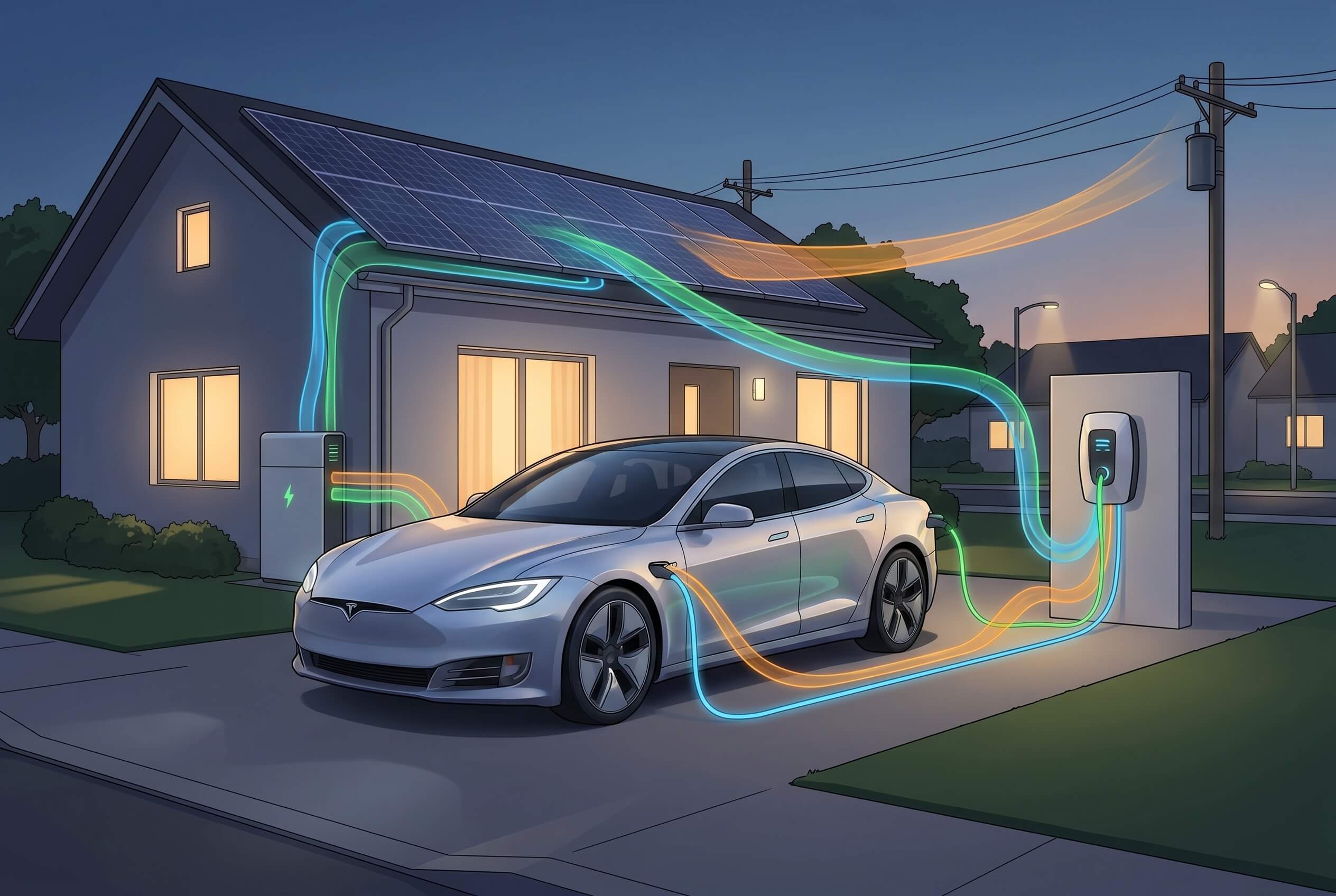
For a long time, bidirectional EV charging was one of those technologies that looked impressive in conference demos but felt distant from everyday household decisions. The concept was easy to understand. Your car already contains a very large battery, so why should it sit idle while your house faces high peak pricing or a power outage? What was harder was turning that logic into a usable consumer product with the right chargers, compatible vehicles, utility rules, and installation economics. In 2026, that gap is finally narrowing enough to matter.
Vehicle-to-home, or V2H, is not yet a mainstream default. Upfront system costs are still meaningful, hardware compatibility remains messy, and interconnection rules vary too much by region. But the market is moving from novelty toward practical energy strategy. That shift is happening because the value proposition is no longer abstract. Homeowners care about outage resilience, utilities care about flexible distributed capacity, and automakers increasingly see bidirectional capability as a differentiator rather than a side feature.
Why the economics are starting to make sense
The simplest V2H argument is backup power. Many households already spend serious money on generators or stationary batteries to deal with storms, wildfire shutoffs, or unstable local grids. A compatible EV can offer a large chunk of that resilience using an asset the household already owns. The American Solar Energy Society notes that EV batteries often hold much more energy than a typical residential battery system and can power selected home loads for many hours, sometimes longer depending on usage and solar support. That makes the car more than transportation. It becomes a mobile energy reserve.
Economics improve further in regions with time-of-use electricity pricing. Instead of only charging the vehicle when power is cheap, homeowners can potentially use stored energy during expensive evening peaks. In markets where utilities are building more dynamic demand-response programs, that flexibility becomes even more valuable. The California Energy Commission has been working through a roadmap to unlock bidirectional charging benefits, which is a useful signal that regulators increasingly view EVs as grid assets rather than just new electrical loads.
The standards problem is still the real bottleneck
If V2H were only a battery question, adoption would be faster. The harder problem is system coordination. The vehicle, charger, home electrical panel, transfer equipment, utility interconnection rules, and software layer all need to work together safely. That is why standards and interoperability matter so much. ISO 15118-20 is frequently discussed as a critical protocol for richer communication between EVs and chargers, but the commercial ecosystem still feels fragmented. Different automakers expose different capabilities, and support for vehicle-to-load, vehicle-to-home, and vehicle-to-grid remains inconsistent.
This inconsistency is a major reason the market has moved more slowly than the technology’s promise suggested. Consumers do not want to become power-systems integrators just to use the battery in a car they already bought. Until the installation process becomes more standardized and the compatibility story becomes less confusing, V2H will remain stronger in early-adopter households than in the mainstream mass market.
Why automakers are taking it more seriously now
The strategic shift is that more manufacturers now see bidirectional energy as part of the EV product story. Ford made this visible early with the F-150 Lightning’s home backup messaging. GM has talked about bringing bidirectional capability across more of its lineup. Tesla has opened up more discussion around home energy integration for compatible vehicles and hardware. Hyundai, Kia, and others are pushing variations of outward power use today and broader home integration over time.
This matters because consumers usually adopt complex energy features only when the automaker makes the experience feel native and supported. A capability that exists in a lab or in a pilot program is not the same as a capability that is marketed, financed, installed, and serviced through mainstream purchase flows. As more manufacturers treat energy functionality as part of EV ownership, V2H gains a clearer path into ordinary buying decisions.
Utilities and grid operators have their own reason to care
There is also a grid-level story here that goes beyond household backup. Utilities are under pressure to manage evening demand peaks, integrate more renewable generation, and avoid expensive infrastructure buildouts where possible. A large installed base of bidirectional-capable EVs could eventually act as a distributed buffer, especially if software and incentives align well enough to aggregate that flexibility. From the grid’s point of view, a parked EV is not just a charging liability. It may become a dispatchable energy resource.
That does not mean every driver wants their vehicle treated like a grid battery, and trust will matter enormously. Drivers need confidence that participation will not damage convenience, mobility, or battery life beyond acceptable limits. Still, the direction of travel is clear. The more grids value flexibility, the more attractive bidirectional capability becomes.
What still needs to improve
The main barriers are not conceptual anymore. They are operational. Installation is expensive. Equipment options are limited. Utility programs are inconsistent. Consumer education is weak. Backup configurations can be confusing. Some buyers still do not know whether their vehicle supports only external-device power, full home backup, or actual grid export. Battery warranty questions also need careful communication, even if the underlying concerns are often overstated in casual discussions.
There is also a timing challenge. Many households are not ready to replace both their car and parts of their electrical system at once. The market may therefore grow in layers, starting with higher-income early adopters, solar-equipped households, and outage-prone regions before reaching a broader base.
The practical takeaway
Bidirectional charging matters because it makes EV ownership look less like a single-purpose transport decision and more like participation in a broader home-energy system. That opens new value beyond fuel savings or emissions reduction. For some households, the most important EV feature in a few years may not be acceleration or screen design. It may be how well the vehicle fits into backup power, electricity savings, and resilience planning.
V2H is not yet plug-and-play enough to be effortless. But it is getting closer to a real consumer energy category rather than a persistent future promise. When that shift becomes mainstream, the winning automakers and energy partners will be the ones that make the complexity disappear.