Bidirectional EV charging is becoming a real buying criterion
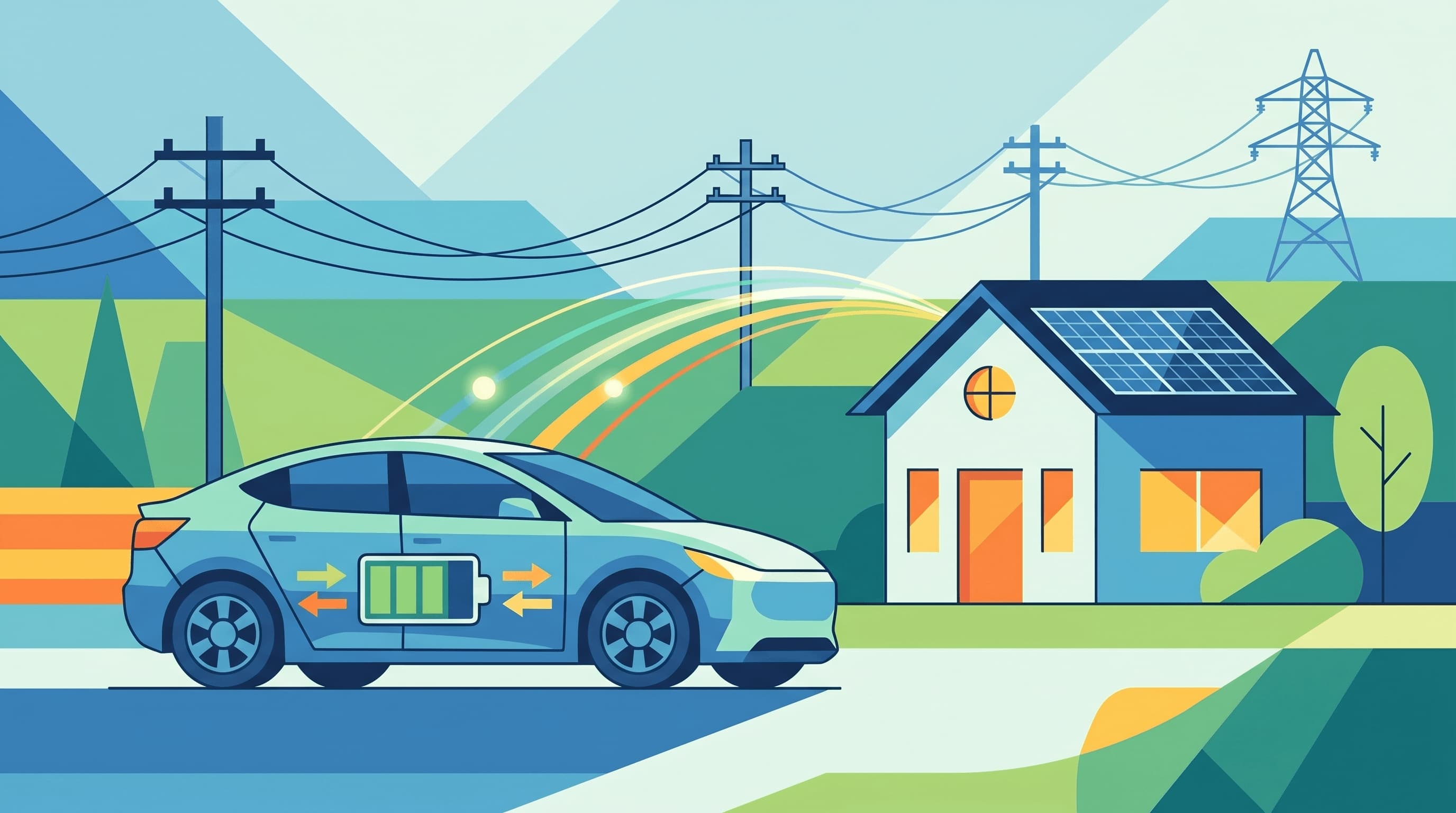
The conversation around electric vehicles (EVs) is rapidly evolving beyond range and charging speed. A new, critical dimension is emerging: bidirectional charging. Once a niche concept discussed primarily at industry trade shows, the ability for an EV to not only draw power from the grid but also feed it back is fast becoming a tangible buying criterion for a growing segment of consumers and fleet managers. This shift is driven by a confluence of factors, including volatile energy prices, increasing grid instability, and the desire for greater energy independence, particularly for homeowners integrating solar and other renewable energy sources.
Bidirectional charging, encompassing Vehicle-to-Home (V2H) and Vehicle-to-Grid (V2G) capabilities, represents a fundamental redefinition of the EV's role. It transforms a mere mode of transport into a mobile energy storage unit, capable of interacting dynamically with a home's energy system or the broader electricity grid. This evolution moves EVs from being simple energy consumers to active participants in a smarter, more resilient energy ecosystem, offering practical benefits that extend far beyond simply getting from point A to point B.
Understanding the Nuances: V2L, V2H, and V2G
To fully grasp the significance of bidirectional charging, it's crucial to differentiate between its various forms, which are often conflated by the public. Each serves a distinct purpose and carries different implications for infrastructure and regulation.
- Vehicle-to-Load (V2L): This is the simplest and most common form of power export from an EV. V2L allows the car to act as a portable power bank, supplying electricity to external devices like power tools, camping equipment, or even small home appliances during an outage. Many modern EVs, such as the Hyundai Ioniq 5/6, Kia EV6, and Ford F-150 Lightning, already offer V2L via a standard household outlet integrated into the vehicle or an adapter. It requires no special home infrastructure beyond the car itself.
- Vehicle-to-Home (V2H): V2H takes V2L a significant step further by enabling the EV to power an entire home. This capability requires dedicated hardware, typically a specialized bidirectional wallbox and often an energy management system, to safely disconnect the house from the grid and supply it with power from the EV's battery. V2H is invaluable for energy resilience, providing backup power during grid outages, or for optimizing self-consumption of rooftop solar by storing excess solar energy in the EV and discharging it when needed.
- Vehicle-to-Grid (V2G): The most sophisticated form, V2G allows the EV to export power directly back to the main electricity grid. This requires not only the bidirectional charging hardware but also sophisticated communication protocols (like ISO 15118) and utility approval. V2G enables EVs to participate in grid services, such as frequency regulation, peak shaving, or providing ancillary services, for which owners can often receive financial compensation. It's a complex undertaking involving regulatory frameworks, utility agreements, and advanced software platforms.
While V2L is largely a convenience feature, V2H and V2G are the true game-changers, transforming the EV into a strategic energy asset. The distinction is critical because the infrastructure, cost, and regulatory hurdles for each are vastly different.
Industry Momentum: From Concept to Commercial Reality
Recent developments underscore the growing commercial viability of bidirectional charging. What was once primarily research and pilot projects is now being integrated into mainstream product offerings by major automakers. A roundup from The Mobility House, a key player in smart charging solutions, highlights this momentum:
- BMW: The German automaker has announced a commercial V2G offering in Germany, initially tied to models like the iX3 and future Neue Klasse vehicles. This move signals a strategic commitment to integrating EVs into the broader energy ecosystem, not just as consumers but as active contributors.
- Ford: A pioneer in this space, Ford has heavily promoted the bidirectional capabilities of its F-150 Lightning in the US, positioning it as a powerful home backup solution (V2H). In Europe, Ford is also pushing for broader bidirectional capability across its EV lineup, recognizing the diverse energy needs of different markets.
- General Motors (GM): Leveraging its Ultium battery platform, GM is positioning its upcoming EVs for V2H capabilities, with V2G functionality also in the pipeline. This platform-based approach suggests a scalable future for bidirectional charging across a wide range of GM vehicles.
These examples illustrate that automakers are no longer merely experimenting with bidirectional charging; they are actively developing and marketing it as a core feature, responding to a clear market demand for greater energy flexibility and resilience.
The Ecosystem Challenge: Beyond the Car Itself
While an EV's inherent bidirectional capability is essential, it is merely one component of a much larger, complex ecosystem. A common misconception is that simply owning a V2H/V2G-capable car is enough. In reality, the car alone is not the product; it's part of a comprehensive energy solution that requires several integrated elements:
- Compatible Wallboxes and Converters: To enable V2H or V2G, a specialized bidirectional charging station (wallbox) is necessary. This device manages the flow of electricity between the car, the home, and the grid, converting DC power from the battery to AC for household use or grid export.
- Professional Installation and Home Integration: Installing a bidirectional system is more complex than a standard Level 2 charger. It often involves integrating with the home's electrical panel, potentially adding an automatic transfer switch for V2H, and ensuring compliance with local electrical codes. Professional, certified installers are crucial.
- Utility Approval and Grid Connection Agreements: For V2G, explicit approval from the local utility company is almost always required. This often involves signing specific interconnection agreements and potentially undergoing inspections to ensure grid stability and safety.
- Software and Energy Management Systems: Intelligent software is needed to optimize energy flow, deciding when to charge the car, when to discharge to the home, or when to export to the grid, based on electricity prices, solar generation, and battery state of charge.
- Tariffs, Incentives, and Warranty Clarity: The financial benefits of V2G often depend on specific utility tariffs or incentive programs. Furthermore, consumers need clear information on how frequent bidirectional use might affect their EV battery warranty and long-term degradation.
The underlying communication standard, particularly ISO 15118, is becoming increasingly central to ensuring interoperability and secure communication between the EV, charging station, and grid. While CHAdeMO connectors have historically been at the forefront of bidirectional charging, CCS (Combined Charging System) is rapidly evolving to support V2G through ISO 15118-20. The emerging NACS (North American Charging Standard) also has the potential for bidirectional capabilities, though its implementation is still being defined. These standards are critical for a seamless and future-proof energy ecosystem.
When Bidirectional Capability Becomes a Real Buying Criterion
For many, bidirectional charging remains a future-facing concept, but for a growing segment of buyers, its practical implications are already making it a decisive factor. Here's when it materially matters versus when it's still largely brochureware:
Materially Matters When:
- Living in Regions with High or Volatile Electricity Prices: The ability to charge an EV during off-peak hours when electricity is cheaper and discharge it during peak hours (peak shaving) can lead to significant savings on household energy bills.
- Experiencing Frequent Power Outages: For homeowners in areas prone to grid instability or natural disasters, V2H provides backup power, turning the EV into a large battery on wheels that can run essential home loads for days.
- Integrating with Home Solar or Renewable Energy Systems: EV batteries can act as a crucial storage component for solar installations, storing excess daytime generation for use at night or during cloudy periods, maximizing self-consumption and reducing reliance on the grid.
- Managing a Fleet of EVs: Fleet operators can leverage V2G capabilities to optimize energy costs across multiple vehicles, participate in demand response programs, and even generate revenue by providing grid services.
- Seeking Energy Independence and Sustainability: For environmentally conscious buyers, bidirectional charging aligns with a broader goal of reducing carbon footprint and enhancing energy self-sufficiency.
Still Largely Brochureware When:
- Residing in Regions with Stable, Low Electricity Prices: If electricity costs are consistently low and predictable, the financial incentive for V2H/V2G might not yet outweigh the upfront investment in hardware and installation.
- Renting or Lacking Home Energy Infrastructure: Renters or those without the ability to install complex home energy systems will find V2H/V2G impractical, as it requires significant home integration.
- Prioritizing Purchase Price Above All Else: The added cost of bidirectional hardware and installation can be a barrier for budget-conscious buyers who primarily view their EV as transportation.
- Operating in Nascent Regulatory Environments: In markets where utilities haven't established clear V2G tariffs, interconnection rules, or incentive programs, the practical benefits are limited.
The Future is Two-Way: Empowering the EV Owner
Prospective EV buyers should therefore look beyond the initial purchase price and consider the long-term energy implications. Asking about V2H/V2G compatibility, understanding the required home infrastructure, inquiring about local utility programs, and evaluating the total ecosystem cost will be crucial. As standards like ISO 15118 mature and infrastructure providers catch up, bidirectional charging will not just be a feature; it will be a fundamental expectation, making the EV a cornerstone of the smart home and the smart grid.