Bidirectional charging is turning electric cars into home energy assets
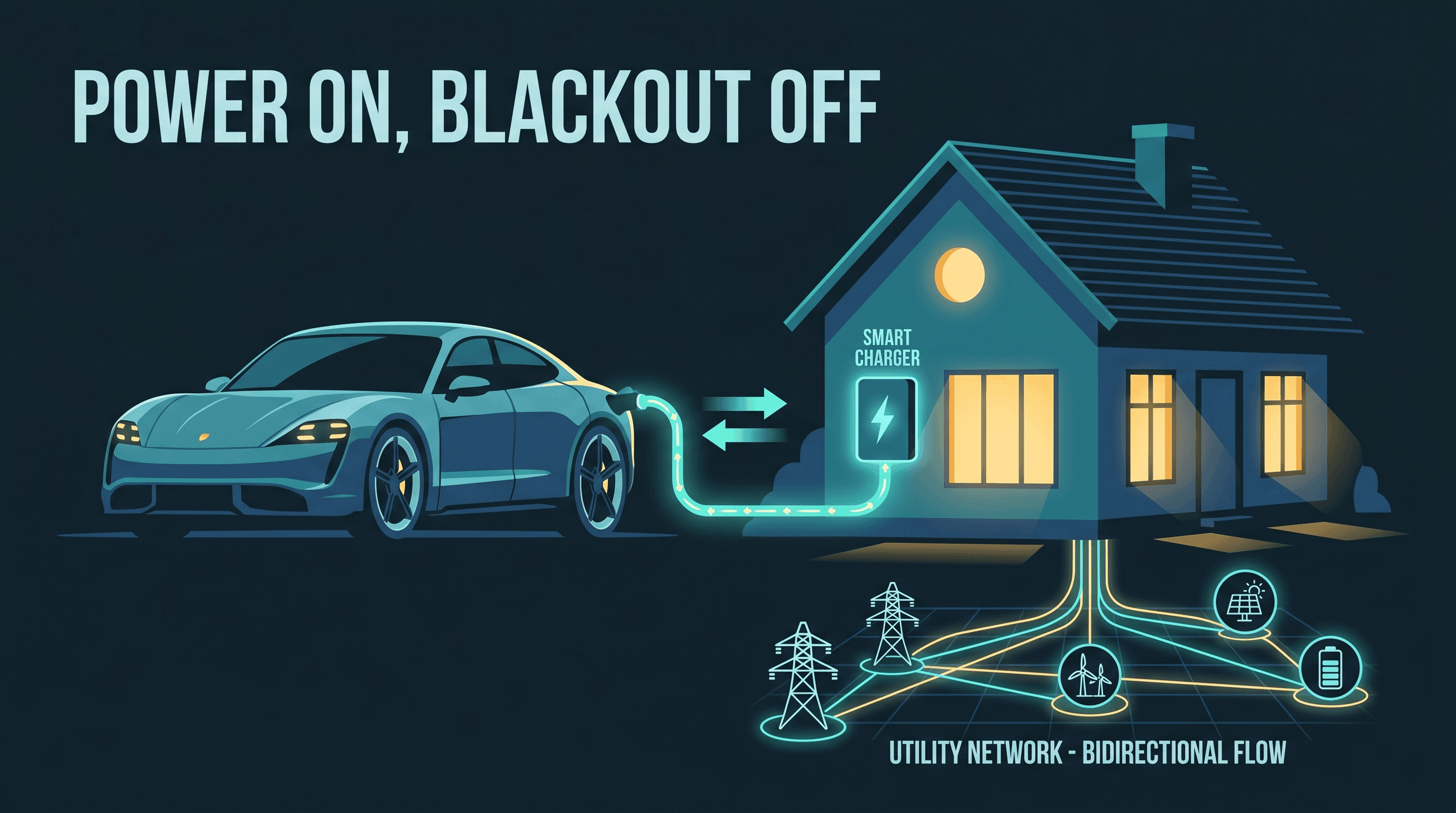
Electric cars have spent a decade being framed mainly as better vehicles. That made sense early on. Range, charging speed, battery cost, and model variety were the obvious adoption barriers. But as more EVs reach the market with large batteries and more capable power electronics, a different question is moving to the center: what else should that battery be able to do when the car is parked? Bidirectional charging is the clearest answer, and it is starting to turn the EV from a transport product into an energy asset.
The important shift is practical rather than theoretical. Ford pushed the conversation forward by showing that the F-150 Lightning could back up a home through Intelligent Backup Power. General Motors has been building out a broader GM Energy ecosystem around home integration. BMW says the iX3 arriving in spring 2026 will support bidirectional charging, while Hyundai, Kia, and others are tying V2G and V2H pilots to real utility or neighborhood programs. That does not mean every owner will start selling electricity back to the grid next year. It does mean the category has moved beyond concept slides.
V2L, V2H, and V2G are not the same thing
One reason the conversation gets muddled is that “bidirectional charging” bundles together several different use cases. Vehicle-to-load is the simplest: the car powers an appliance, tool, or campsite device. Vehicle-to-home goes a step further and allows the battery to support household circuits, especially during outages or expensive peak periods. Vehicle-to-grid is the most ambitious model, where the car participates in grid balancing or virtual power plant programs and sends energy back through an approved, managed interface.
Those distinctions matter because the customer value is different at each stage. Vehicle-to-load is already a convenience feature. Vehicle-to-home is a resilience and savings feature. Vehicle-to-grid is an infrastructure feature, which means it depends not only on the car but also on utilities, standards, tariffs, local regulation, and certified hardware. Many EV owners will experience the first two long before they ever participate in the third.
That is why the near-term winner may be V2H rather than full V2G. Home backup is easy to understand. If a household already sees an EV as a giant battery on wheels, using that battery during a blackout or to reduce peak energy costs feels intuitive. Grid participation requires more trust, more interoperability, and better incentives. It will grow, but probably behind the simpler home use case.
Why this matters for buyers even if they never join a grid program
The battery in a modern EV is often the largest concentrated energy asset a household will ever own. Treating it as a one-way consumer of electricity increasingly looks wasteful. For homeowners with rooftop solar, bidirectional charging can improve self-consumption by storing midday surplus and using it later. For areas with unreliable grids, it can turn the car into a serious backup system. For fleets, it opens a path to managing energy costs across dozens or hundreds of parked vehicles.
There is also a broader economic argument. Stationary batteries are useful, but they are an additional purchase. An EV battery already exists in the driveway. If the hardware, software, and warranty structure make controlled discharge practical, the owner gets more utility from an asset they were already paying for. That does not make every EV an automatic replacement for dedicated storage, but it does change the value equation.
The grid case is larger still. A parked fleet of connected EVs represents flexible demand and, in some cases, flexible supply. California and European utilities already see EV load management as a major planning issue. The more these vehicles can respond intelligently to pricing and grid conditions, the more valuable they become to system operators trying to absorb intermittent renewable generation without overbuilding peaker capacity.
The hard part is not the battery, it is the system around it
Bidirectional charging sounds simple in marketing language, but the real product is a stack: vehicle capability, charger hardware, home integration gear, software controls, utility rules, and customer support. That is where rollouts can get messy. A car may technically support one form of discharge while the local market still lacks approved hardware. A utility may support export in one tariff but not another. Warranty language can be cautious. Install costs can push the setup from exciting to impractical.
Standards also matter. Different regions and manufacturers have taken different routes through CHAdeMO, CCS, and newer communication layers. Even when the physics works, the customer experience can still feel fragmented. That is one reason automakers are increasingly bundling the vehicle with a charger, installer network, or energy-management platform rather than treating bidirectional capability as a stand-alone spec sheet line.
Battery health is another concern, though it is often discussed more dramatically than necessary. Extra cycling does have consequences, but controlled use is not the same thing as reckless depletion. The real issue is economic clarity: how much value does the owner get back relative to equipment cost and battery wear over time? If automakers and utilities can answer that with real programs instead of vague promises, adoption should accelerate.
What to watch before buying into the hype
The signal to watch is not whether more brands mention bidirectional charging in launch events. It is whether complete, usable ecosystems appear in ordinary markets. Can a customer buy the car, install the required hardware, get permitted, and use the feature without becoming an energy hobbyist? Can they see savings or resilience benefits clearly in the first year? Can fleets model the economics with enough confidence to change procurement decisions?
Those are the questions that separate a clever feature from a durable market shift. If the answers improve, bidirectional charging will start influencing which EVs businesses and homeowners choose, not just how they talk about them. That would mark a real change in the industry. The EV would stop being judged only by miles, seconds, and screens, and start being judged by the intelligence of its relationship with the grid.
For readers considering their next EV purchase, the practical takeaway is to look beyond raw battery size. Ask which discharge modes the vehicle actually supports, what hardware is required locally, whether home backup is officially supported, and how warranty and utility rules work in your market. The most valuable battery in the house may soon be the one sitting in the garage.