Bidirectional Charging Is Giving EVs a Second Job on the Grid
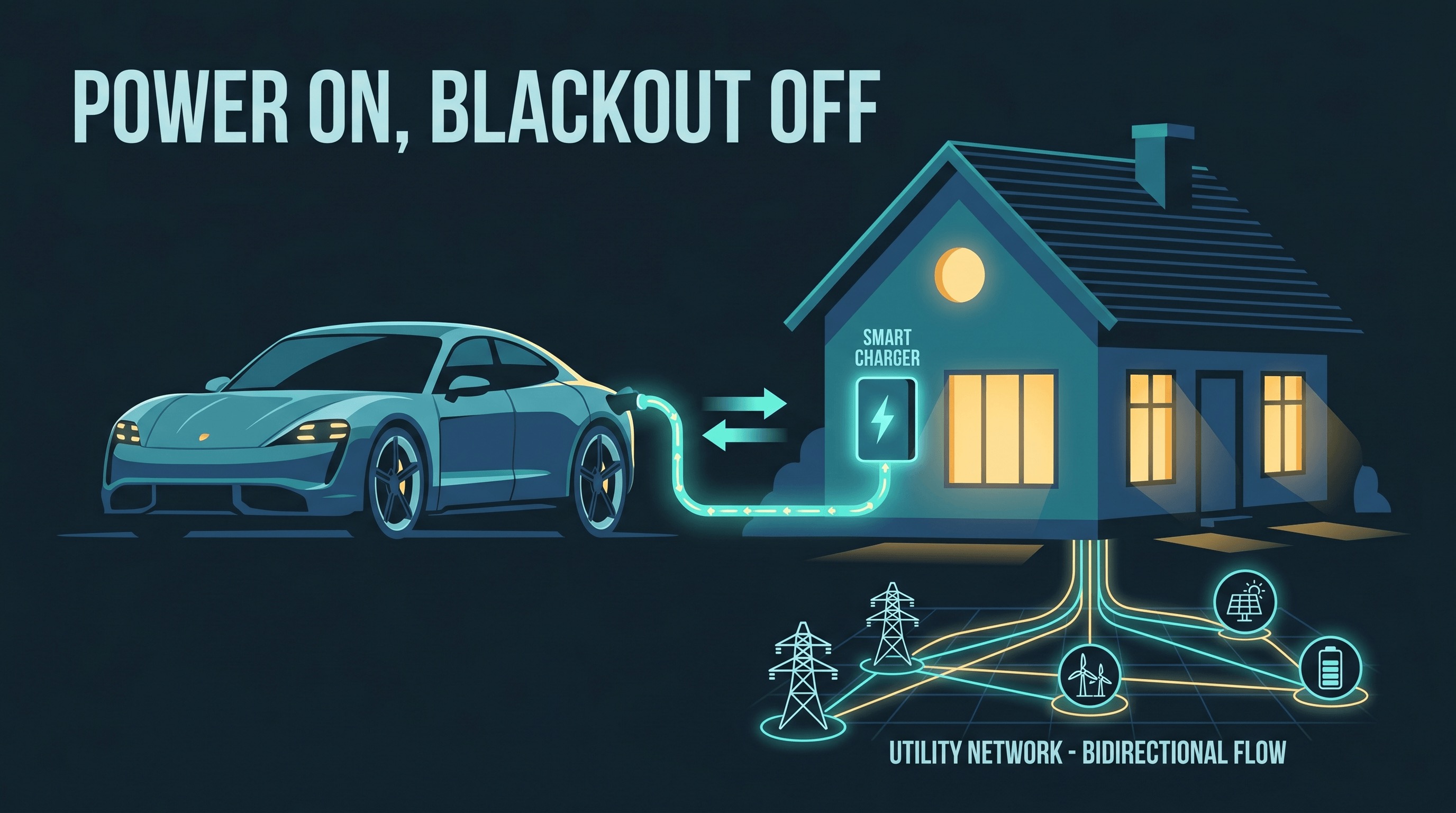
Electric vehicles (EVs) are rapidly transitioning from mere transportation devices to pivotal components of the modern energy landscape. This evolution is driven by bidirectional charging technology, which allows EVs to not only draw power from the grid but also feed it back, either to a home or directly to the electrical grid. This capability is fundamentally reshaping the value proposition of EV ownership, moving beyond emissions reduction and fuel savings to encompass significant energy flexibility and resilience. Bidirectional charging could become one of the most practical reasons to own an EV, but its success depends less on battery chemistry than on standards, incentives, and grid integration.
The core concept is simple: an EV battery, typically ranging from 15 to over 100 kilowatt-hours (kWh) in light-duty vehicles, represents a substantial mobile energy storage unit. Unlocking this storage capacity for uses beyond propulsion transforms an EV into a distributed energy resource. The challenge now is to align the disparate elements—vehicle hardware, charging infrastructure, utility tariffs, and regulatory frameworks—to make this "second job" for EVs an economically routine and widely accessible reality.
Understanding Bidirectional Charging: V2H and V2G
Bidirectional charging manifests primarily in two forms: Vehicle-to-Home (V2H) and Vehicle-to-Grid (V2G). V2H systems enable an EV to power a home during outages, acting as a robust backup generator. This capability offers immediate, tangible benefits to homeowners, providing energy security and independence. Beyond emergencies, V2H can also integrate with residential solar installations, storing excess solar generation during the day and discharging it to power the home at night, optimizing self-consumption and reducing reliance on grid power during peak pricing hours.
V2G, on the other hand, involves the EV directly interacting with the broader electrical grid. In a V2G scenario, an EV can supply power back to the grid during periods of high demand or when renewable energy sources like solar and wind are intermittent. This allows utilities to leverage a vast, distributed network of EV batteries to stabilize the grid, perform demand response, and integrate a higher proportion of renewable energy. The U.S. Department of Energy (DOE) highlights that bidirectional EVs can act as mobile storage for resilience, V2B (Vehicle-to-Building), and V2G use, complementing solar and other distributed energy resources.
The Economic and Environmental Case
For EV owners, bidirectional charging presents compelling economic opportunities. By participating in V2H or V2G programs, owners can reduce their electricity bills by charging their vehicles when electricity prices are low (e.g., overnight) and discharging power back to their home or the grid when prices are high. This time-of-use arbitrage can significantly offset the cost of EV ownership. Furthermore, utilities may offer financial incentives or compensation for grid services provided by V2G-enabled vehicles, turning an EV into a revenue-generating asset.
From a grid perspective, the benefits are even broader. A fleet of V2G-enabled EVs can act as a massive virtual power plant, providing ancillary services such as frequency regulation and voltage support. This reduces the need for utilities to invest in expensive peaker plants or grid infrastructure upgrades. Integrating EVs into demand response programs allows utilities to shed load during critical periods, enhancing grid stability and reliability. This is particularly crucial as grids grapple with increasing electrification and the variability of renewable energy sources.
Industry Momentum and Early Implementations
Major automotive manufacturers and energy companies are actively investing in bidirectional charging solutions. GM Energy, for instance, markets a V2H bundle that enables properly equipped homes to receive backup power from compatible GM EVs. Their system is designed to provide up to 9.6 kilowatts (kW) of backup power, with expanding model support planned for 2026-2027 vehicles. This move signals a clear intent to position EVs as integral parts of home energy ecosystems.
Similarly, Hyundai Motor Group is expanding its V2G initiatives in Korea and Europe, alongside V2H deployments in the U.S. Hyundai frames its EVs not merely as transport-only devices but as essential components of a wider energy ecosystem. These developments underscore a growing consensus that the future of EVs is intrinsically linked with energy management, moving beyond theoretical discussions to practical, market-ready applications.
Overcoming Technical and Regulatory Hurdles
Despite the immense potential, widespread bidirectional charging faces several significant challenges. One primary hurdle is the standardization of charging protocols. While some EVs and chargers support the CHAdeMO standard for bidirectional power flow, the more prevalent CCS (Combined Charging System) and the emerging NACS (North American Charging Standard) are still evolving their bidirectional capabilities. Ensuring interoperability across different vehicle manufacturers and charging hardware providers is critical.
Hardware compatibility extends beyond the charging port. Bidirectional charging requires specialized inverters and energy management systems that can intelligently manage power flow between the EV, the home, and the grid. These systems must communicate seamlessly, often relying on sophisticated software to optimize charging and discharging based on electricity prices, grid signals, and user preferences. The cost and availability of these advanced chargers and home energy management systems remain a barrier for some consumers.
Regulatory and utility frameworks also present complex obstacles. Many existing utility tariffs and grid interconnection rules were designed for unidirectional power flow. Adapting these to accommodate V2G and V2H requires significant policy reform. Utilities need to develop fair compensation mechanisms for power exported by EVs, as well as clear guidelines for grid operators to manage these distributed energy resources effectively. Without clear incentives and streamlined processes, consumer adoption will be slow.
Addressing Battery Health Concerns
A common concern among potential users and some industry observers is the impact of bidirectional charging on EV battery degradation. While frequent charging and discharging cycles can theoretically reduce battery life, modern battery management systems are highly sophisticated. They are designed to optimize charging patterns to minimize stress on the battery. Furthermore, V2G applications typically involve relatively shallow discharge cycles and are often scheduled during specific grid events, rather than continuous deep cycling. Studies suggest that with intelligent management, the additional degradation from V2G can be minimal and often outweighed by the economic benefits.
The Future: EVs as Core Grid Assets
The trajectory for bidirectional charging is clear: EVs are becoming essential distributed energy assets. The critical question is no longer whether the idea works, but which combinations of vehicle, charger, software, and utility market make it economically routine. This requires a concerted effort from automakers, charging infrastructure providers, software developers, utilities, and policymakers.
Government incentives, pilot programs, and clear regulatory roadmaps will accelerate adoption. As more EVs come equipped with bidirectional capabilities and the charging infrastructure matures, the concept of a "virtual power plant" composed of thousands of parked vehicles will move from concept to reality. This will profoundly impact grid stability, the integration of renewable energy, and the financial landscape of EV ownership.
In conclusion, bidirectional charging is not merely an optional feature; it is a transformative technology that redefines the role of the electric vehicle. By enabling EVs to contribute actively to energy management, it offers a powerful solution for grid resilience, renewable energy integration, and economic empowerment for vehicle owners. The journey towards widespread implementation involves navigating complex technical and regulatory landscapes, but the destination—a more flexible, sustainable, and robust energy future—is well within reach.