Battery swapping is quietly winning in China while the West bets on fast charging
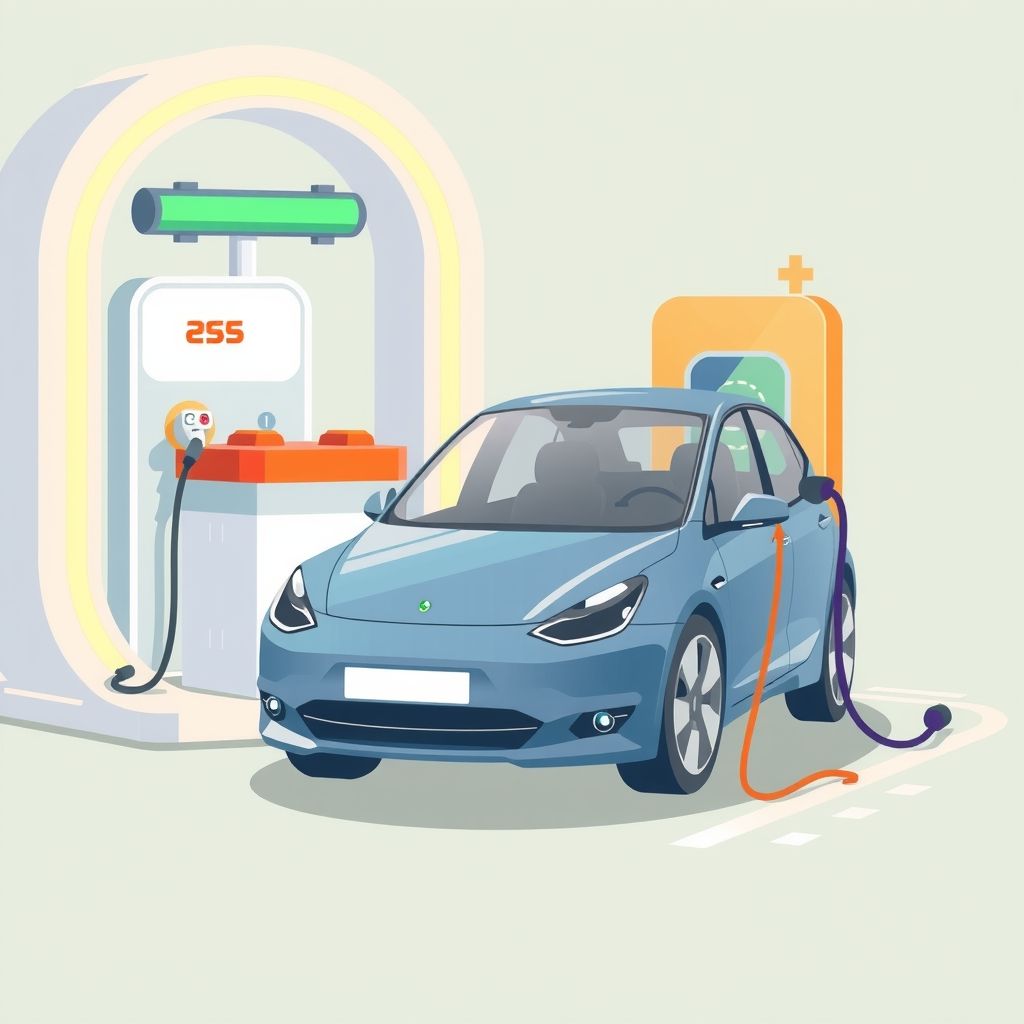
NIO's battery swap network passed 4,000 stations across China in 2026, with cumulative swaps surpassing 120 million and total electricity exchanged reaching 6.35 billion kWh. Meanwhile, not a single major Western automaker offers battery swapping as a serious option. Tesla, GM, Ford, and every European brand have converged on one answer to charging speed: make plugging in faster. China's largest EV makers are running two competing bets simultaneously — and the gap between what China is testing and what the West has already decided reveals something about how differently the two markets think about EV infrastructure.
What NIO actually built
A NIO swap station replaces a depleted battery pack with a charged one in under five minutes — comparable to a gas station stop, not a charging session. Stations are seeing 40 to 45 swaps per day during peak hours and around 30 during off-peak periods. The economics are not straightforward: each station costs roughly ¥3 million (about $420,000) to build and ¥2 million ($280,000) a year to operate. NIO's founder William Li has been explicit that the company isn't chasing near-term profitability on individual stations — it's betting that network density and utilization will eventually make the model work, the way ride-hailing companies burned cash on driver subsidies for years before density made the unit economics click.
The technical advantage of swapping was never really about speed for the average driver — it was about decoupling battery ownership from vehicle ownership. A NIO driver can lease a battery separately from the car, upgrade to a larger pack as prices fall, and never worry about long-term degradation reducing resale value, because the battery in the car today probably isn't the same physical pack as the one bought new.
The fast-charging counter-bet
China's other major EV maker, BYD, is betting the opposite way: it plans to deploy 20,000 megawatt-level flash-charging stations by the end of 2026, using a "station-within-a-station" architecture that reduces how much grid infrastructure upgrade each site requires. Combined with the spread of 800V vehicle platforms and 4C/5C ultra-fast-charging battery chemistry, the time cost of charging has fallen from roughly an hour to genuinely single-digit minutes for a meaningful state-of-charge gain — close enough to swap-station speed that swapping's core advantage is eroding for ordinary daily driving.
This is the same bet every Western automaker has made, for a specific reason: charging infrastructure can be built by anyone — utilities, gas station chains, retailers — without requiring standardized battery pack geometry across manufacturers. Swap stations only work if every vehicle using them has a battery pack built to the same physical dimensions, connector layout, and software interface. NIO can mandate this across its own three brands. No coalition of competing automakers in the US or Europe has ever agreed to a shared battery standard, and there's no regulatory body forcing the issue the way Type-C charging was mandated for phones in the EU.
Where swapping actually has an edge
The case for swapping isn't dead outside China — it's just narrower than NIO's consumer-facing bet suggests. Fleet operations with predictable routes and centralized depots — taxi fleets, last-mile delivery vans, robotaxi operations — are the use case where swap economics work best, because a single operator controls both the vehicles and the charging infrastructure, sidestepping the standardization problem entirely. Ample, a US-based startup, has taken this approach: rather than selling a single battery format, it builds modular swap infrastructure that adapts to different vehicle platforms, and has focused almost exclusively on fleet deployments in cities like San Francisco and Tokyo rather than chasing individual consumer buyers.
The other place swapping wins is battery-cost anxiety in price-sensitive markets. A consumer who can lease a battery separately from the car pays less upfront and never bears full replacement cost when the pack degrades — a meaningful argument in markets where EV adoption is constrained by sticker price rather than charging convenience.
What to watch
NIO's fifth-generation swap station, designed to be faster and more capital-efficient than earlier versions, is the company's direct answer to fast charging's narrowing time advantage — if swap stations can't beat charging on speed, they need to win on cost-per-swap and utilization instead. For buyers and fleet operators outside China, the practical takeaway is to watch fleet and taxi markets, not consumer sedans, for signs that swapping has a durable niche. If Ample-style modular swap infrastructure gains traction in a major Western city's taxi or delivery fleet over the next two years, that's the signal the standardization problem has a workaround. If it doesn't, fast charging's simplicity — no coalition required, works with any car, built by anyone with grid access — will keep winning by default.