Base editing is quietly outperforming CRISPR cut-and-paste in the clinic
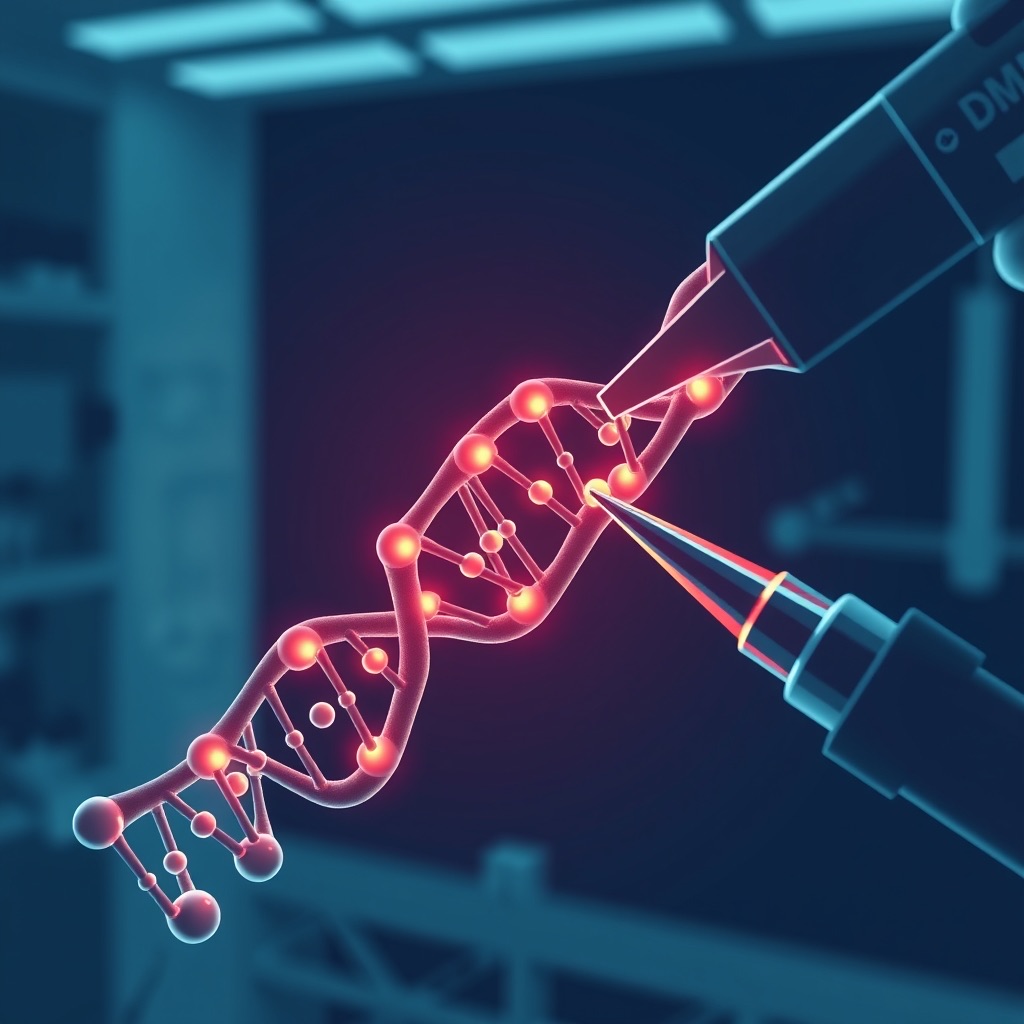
The gene-editing therapy that's actually moving fastest toward approval in 2026 isn't the CRISPR-Cas9 cut-and-paste system that made headlines in 2023 with Casgevy. It's base editing — a more conservative technique that rewrites a single DNA letter without cutting both strands of the double helix. Two separate clinical programs, one from Beam Therapeutics and one from Eli Lilly (via its Verve Therapeutics acquisition), are now producing Phase 1/2 data that makes the case for why the more cautious approach is winning ground.
Why the double-strand break was the problem
Traditional CRISPR-Cas9 editing works by cutting both strands of DNA at a target site and relying on the cell's own repair machinery to fix the break — either by disabling a gene (useful for knockouts) or by inserting a new sequence via a donor template (useful for corrections, but much less efficient and prone to unwanted insertions, deletions, and chromosomal rearrangements at the cut site). That double-strand break is powerful but blunt: cells sometimes repair it in ways that create exactly the kind of genomic instability regulators worry about in a permanent therapy.
Base editing skips the double-strand break entirely. It fuses a disabled Cas9 (one that binds DNA but doesn't cut both strands) to a deaminase enzyme that chemically converts one DNA base to another — for instance, an adenine to a guanine — directly, at a single targeted position. No donor template, no reliance on the cell's repair pathway, and dramatically lower rates of the off-target genomic damage that has dogged first-generation CRISPR programs.
What the trial data actually shows
Beam's BEAM-302 program targets alpha-1 antitrypsin deficiency (AATD), a genetic liver and lung disease caused by a single mistaken DNA letter. Updated Phase 1/2 data released in March and May 2026 showed the therapy substantially increased total AAT protein, produced correctly-folded M-AAT, and reduced the toxic misfolded Z-AAT variant that causes liver damage — while being generally well tolerated. Beam has now locked in a 60 mg dose as optimal and is moving to a pivotal cohort in the second half of 2026, with data also going to the European Respiratory Society Congress this year.
The cardiovascular program tells a similar story with harder endpoints. VERVE-102, developed for patients with heterozygous familial hypercholesterolemia or premature coronary artery disease, edits the PCSK9 gene to durably lower LDL cholesterol. Phase 1b interim results published in the New England Journal of Medicine in May 2026 showed dose-dependent PCSK9 reductions of 51-88% and LDL reductions of 9-62% from a single infusion — effects that held for up to 18 months with no serious treatment-related adverse events. Eli Lilly, which acquired Verve for this pipeline, is starting a Phase 2 study by the end of 2026.
Notably, VERVE-102 is a redesigned successor to VERVE-101, which was paused in 2023 after a safety signal. That the redesigned version resumed trials in 2024 and is now producing clean 18-month safety data is itself evidence that base editing's narrower mechanism of action gives developers more room to iterate on delivery and dosing without restarting from zero.
Why this matters beyond these two programs
A single-infusion therapy that durably lowers LDL cholesterol by up to 62% would compete directly with a lifetime of statins or PCSK9 inhibitor injections — a fundamentally different cost and adherence proposition for a disease that kills more people globally than any other. For AATD, there's currently no cure, only weekly protein replacement infusions for life; a one-time correction that restores functional protein production is a categorically different treatment.
The broader signal for the field: base editing's narrower, more predictable mechanism is proving out in exactly the way its developers argued it would a few years ago, when cut-and-paste CRISPR was getting all the attention. Beam also has BEAM-101 (sickle cell disease, already showing engraftment and fetal hemoglobin reactivation), an FDA-cleared IND for BEAM-304 (phenylketonuria), and initial data expected this year for BEAM-301 (glycogen storage disease type Ia). If AATD and cardiovascular data continue on this trajectory through pivotal trials, base editing — not the original cut-and-paste CRISPR — will likely be the gene-editing modality that reaches broad clinical use first for common, single-mutation diseases.