AI Model Routing Is Becoming the Control Plane for Enterprise Automation
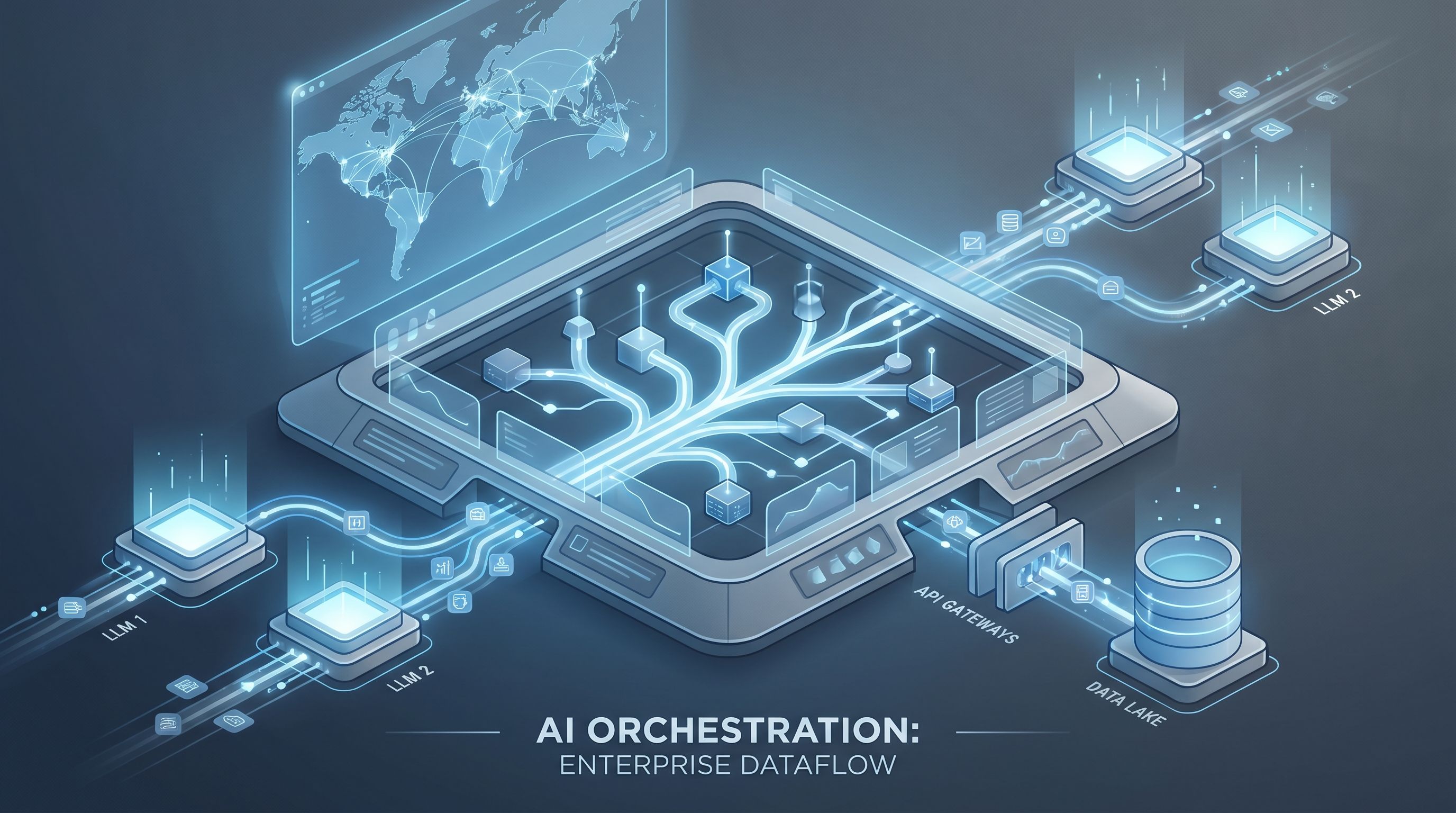
For a brief period, enterprise AI strategy looked deceptively simple. Pick a flagship model, connect it to a few workflows, add prompt templates, and call it a platform. That phase is ending. Companies are discovering that the practical challenge is not just finding a powerful model. It is deciding which model should handle which task, under which policy, with which data access, and with which fallback path. That decision layer, often implemented through AI gateways and routing logic, is turning into the control plane for enterprise automation.
This is a meaningful shift because it changes where value is created. Raw model capability still matters, but many production outcomes now depend on orchestration. A support Agent, a coding assistant, an internal research copilot, and a sales automation workflow do not all need the same model profile. Some tasks need deep reasoning. Others need speed, lower cost, better tool use, or stricter data handling. Routing is what translates that reality into an operating system that production teams can actually manage.
One-model architecture is giving way to routing layers
The early enterprise instinct was to standardize on one vendor and one primary model. That approach made procurement, experimentation, and governance easier. It also created blind spots. When every request is forced through one model, teams tend to overpay for simple tasks, accept unnecessary latency, and lose resilience when quality drops or capacity changes.
Routing layers solve for that by matching work to model characteristics. A lightweight classification task may not need a frontier model. A summarization step inside a larger workflow may perform well with a smaller specialized model. A higher-stakes escalation may justify a more capable and more expensive model. In practice, enterprises are learning that good routing often improves cost and responsiveness without reducing quality, especially when the workflow itself is designed carefully.
This does not make model choice irrelevant. It makes model choice contextual. The winning architecture is increasingly a portfolio, not a single bet.
AI gateways are centralizing policy and observability
As routing becomes more important, AI gateways are becoming core infrastructure. They centralize concerns that individual product teams should not have to rebuild on their own: policy enforcement, observability, cost tracking, caching, and fallbacks. In many organizations, the gateway is the first place leaders can see what is actually happening across dozens of AI features rather than inside isolated application logs.
That visibility matters. Once multiple teams are shipping AI into production, the organization needs shared answers to very operational questions. Which prompts are expensive? Which workflows are timing out? Where are fallback models being triggered? Which teams are sending the most traffic? Which use cases are getting value from caching? A routing layer attached to a gateway creates a practical place to answer those questions and act on them.
It also gives enterprises a way to encode business rules. Some requests may need to stay within a privacy boundary. Some may need a lower-cost model by default unless confidence falls below a threshold. Some may need region-specific handling. These are not only engineering choices. They are operating policies, and the gateway is becoming the place where those policies live.
Workflow quality depends on more than the model
One of the clearest lessons in enterprise AI is that model quality alone does not determine outcome quality. In many systems, RAG orchestration shapes the answer as much as model choice does. Retrieval quality, chunking strategy, ranking, context assembly, and tool sequencing all influence what the user experiences. A strong model with weak retrieval often fails quietly. A smaller model with cleaner context can outperform expectations.
This is why routing is broader than model selection. A mature routing layer decides not only which model to call, but also whether to call retrieval, which index to query, how much context to pass, when to use cache, and when to escalate. In that sense, the control plane is not just choosing intelligence. It is choosing the path through the whole system.
For internal research copilots, this may mean routing a question first through retrieval over trusted knowledge sources before deciding whether a larger model is necessary. For coding assistants, it may mean sending refactoring suggestions down a different path than documentation lookup. For support workflows, it may mean using a smaller model for triage, then escalating edge cases with richer context and stricter review.
Practical enterprise use cases are forcing this maturity
The move toward routing is not theoretical. It is being driven by everyday production use cases where volumes, budgets, and expectations collide.
Support operations
Support teams need automation that can classify issues, draft replies, retrieve policy documents, and escalate ambiguous cases. Routing lets the system keep simple requests fast and inexpensive while preserving a safer path for sensitive or messy conversations.
Coding assistants
Developer workflows vary widely. Generating boilerplate, explaining an error message, searching internal patterns, and reviewing a risky change are not the same task. A routed system can separate lightweight assistance from higher-trust reasoning and pull in repository-aware retrieval where it matters.
Internal research copilots
These systems live or die by source quality and context assembly. Routing determines whether the answer should come from cached prior work, fresh retrieval, a specialist model, or a higher-capability model reserved for synthesis across multiple documents.
Sales automation
Sales teams increasingly want AI to draft outreach, summarize accounts, prepare call notes, and surface opportunity signals. Routing helps keep repetitive tasks cheap while protecting workflows that touch sensitive customer context or require tighter approval rules.
The tradeoffs are real and often underestimated
None of this comes for free. A richer routing layer introduces new forms of operational complexity. Privacy becomes harder when prompts, retrieved context, and outputs may be logged across multiple components. Sensitive information can leak into observability systems if teams are careless about redaction and retention.
Evaluation is also more expensive. Measuring one model against one benchmark is simpler than evaluating a routed system with branching logic, fallback behavior, retrieval quality, and changing traffic patterns. Annotation overhead rises because teams need examples not only of good and bad answers, but of good and bad routing decisions.
Then there is the failure mode many teams notice too late: silent routing failures. A workflow can appear healthy while sending the wrong classes of tasks to the wrong path. Costs creep up. Latency worsens. Quality drifts. Because the system still returns answers, the underlying issue can stay hidden until users lose trust. This is why observability is not optional. If routing is the control plane, enterprises need to monitor it like one.
What leaders should design for next
The next stage of enterprise AI architecture is less about selecting a single winner in the model race and more about building a disciplined decision layer around many options. Teams should define routing rules explicitly, measure routing outcomes as a first-class metric, and treat gateway policy as shared infrastructure rather than application glue code.
They should also resist the temptation to optimize only for average quality. In production, cost ceilings, latency targets, privacy constraints, and fallback behavior matter just as much. The best enterprise systems are not the ones that always call the biggest model. They are the ones that make reliable decisions under real operating constraints.
Actionable takeaways
- Map tasks before models. Break workflows into task types and assign model, retrieval, and tool paths intentionally.
- Use an AI gateway as shared infrastructure. Centralize policy, observability, caching, cost tracking, and fallbacks.
- Evaluate routing, not just outputs. Measure whether the system chose the right path, not only whether the final answer looked acceptable.
- Protect sensitive context. Review prompt logging, redaction, retention, and privacy boundaries across the full routing stack.
- Start with high-volume workflows. Support, coding assistance, internal research, and sales automation usually reveal routing value quickly.