AI meeting copilots are turning notes into workflow systems
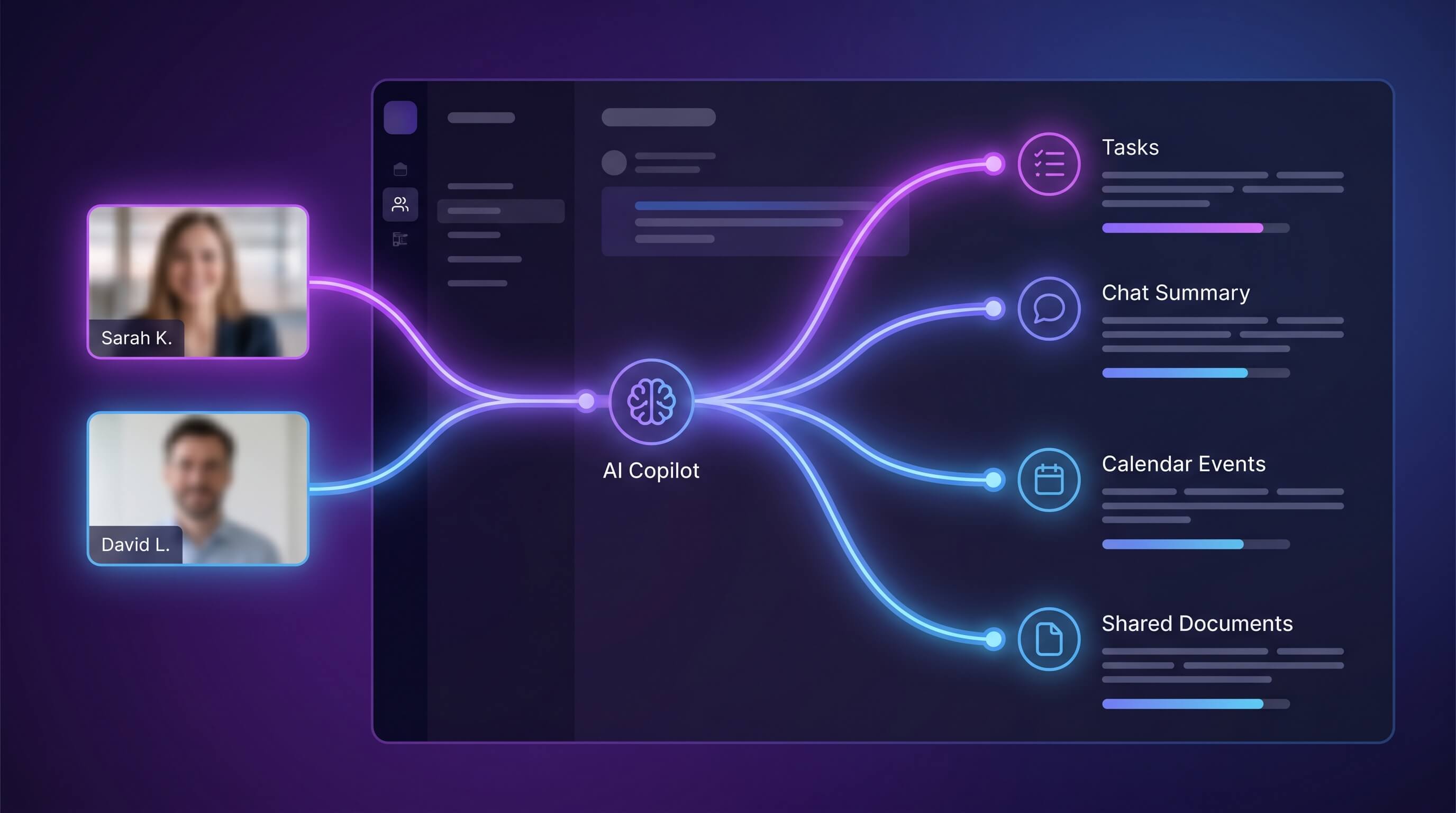
The first generation of AI meeting tools solved an obvious pain point: nobody wanted to take notes, clean up summaries, and chase every action item by hand. That alone made the category easy to sell. But raw transcription turned out to be the least interesting part of the story.
The more meaningful shift in 2026 is that AI meeting assistants are trying to become workflow products. They are no longer content to produce a tidy summary and disappear. The better tools now identify decisions, pull out owners, create follow-up tasks, push summaries into chat, attach notes to calendars and docs, and increasingly try to preserve the operational memory of a team. In other words, the meeting note is becoming an input format for work systems.
Why transcripts were never enough
A transcript sounds useful until you remember what most teams actually need after a meeting. They need to know what was decided, what remains open, who owns the next step, and where the record lives when someone asks about it two weeks later. A 9,000-word text dump does not solve that. It often creates another document nobody wants to read.
That is why the market quickly moved from speech-to-text to structured extraction. Google has been pushing Gemini note-taking in Meet, including automated summaries and action-item capture tied into Workspace. Zoom AI Companion is explicitly positioning itself as an assistant that tracks actions and works across meetings, chat, docs, and connected platforms. Slack AI approached the same problem from the collaboration archive side, with search answers, channel recaps, and thread summaries designed to surface the context teams fail to retrieve manually.
Each product is attacking the same inefficiency: meetings create decisions, but most organizations still lose those decisions in fragmented tools.
Meetings are becoming a data source, not just an event
This is the conceptual change that matters. Historically, a meeting was an isolated block on the calendar. Whatever happened inside it depended on the diligence of whoever happened to be typing. AI copilots are reframing the meeting as a structured data source. The conversation produces commitments, objections, risks, dependencies, and follow-up work that can be extracted and routed elsewhere.
That matters because a modern company rarely works inside one app. Discussions happen in Meet or Teams or Zoom, follow-up lives in docs, execution happens in project managers, clarifications happen in chat, and final decisions are buried in email or calendar notes. The meeting assistant has value only if it can move between those layers.
In that sense, AI note-taking is converging with knowledge management and workflow automation. A good assistant is not just listening. It is translating conversation into organizational state.
The real product is decision capture
Decision capture is more valuable than summarization because it reduces ambiguity. Teams often leave a call thinking they agree when they have only aligned on the shape of a problem. A useful AI assistant can highlight that a pricing test was approved, that the product spec still needs legal review, or that engineering committed to a delivery date with dependencies attached. That creates a much better operational record than a generic paragraph saying the team discussed timelines and next steps.
This is also where AI can improve accountability without turning every meeting into surveillance theatre. The goal should not be perfect verbatim memory. The goal should be a shared, searchable record of outcomes. When done well, that reduces repeated discussions, weak handoffs, and the familiar problem of re-litigating decisions because the original reasoning is hard to find.
Why native integration matters more than standalone cleverness
Standalone meeting bots were a useful first step, but the strongest products now are the ones embedded in broader suites. That is not because independent tools lack features. It is because context matters. If your assistant already sees your calendar event, the related doc, the chat thread, the task system, and the previous meeting notes, it can do much more than summarize audio.
This is why the platform players have an advantage. Google can attach notes directly to Calendar and Docs. Microsoft can tie meeting output to Teams, Outlook, and Microsoft 365 context. Zoom wants to extend AI Companion across its wider workplace stack. Slack benefits from sitting on the knowledge graph of day-to-day discussion. The winning products will not just hear what was said. They will know where that information belongs next.
The risks are becoming clearer too
The rush to deploy AI note-takers has surfaced real concerns. Teams do not always want every conversation summarized in the same way. Some meetings are exploratory, some are sensitive, and some are messy by design. If the assistant overstates certainty, invents action items, or strips away important nuance, it can create false clarity rather than operational discipline.
There is also a governance problem. Once meeting tools become a memory layer, organizations need clear rules about retention, access, training data, and acceptable use. Zoom has made a point of saying it does not use customer meeting content to train its models. That kind of policy now matters as much as the feature checklist. The more these tools touch strategy, hiring, finance, legal, and customer conversations, the more data handling becomes a product decision.
What teams should demand from the next generation
The next generation of meeting copilots should be judged less on how magical the demo feels and more on whether they reduce follow-up friction. Can the tool reliably separate decisions from speculation? Can it assign owners without fabricating certainty? Can it push action items into the systems people already check? Can someone joining late see not just a summary, but the actual unresolved questions? Can teams correct the record without rewriting everything manually?
Those are workflow questions, not speech-recognition questions. That is exactly why the category is maturing.
The best AI meeting products in 2026 are no longer selling note-taking as the end state. They are trying to turn meetings into structured operational memory, and from there into action. That is a much bigger ambition than transcription. It is also a much more defensible one.