AI Is Draining the Grid: Inside the Data Center Power Crisis Reshaping Energy Infrastructure
The Numbers Don't Lie
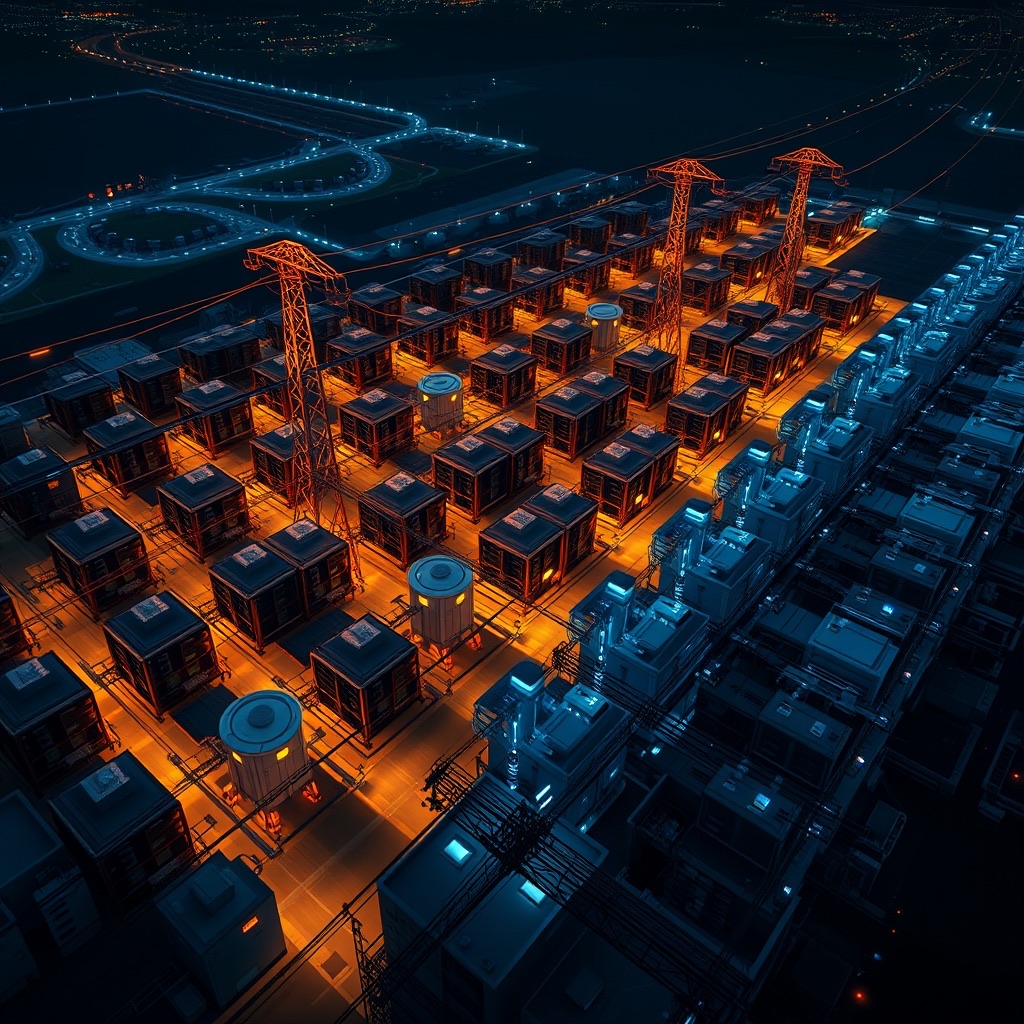
In 2023, data centers consumed approximately 460 terawatt-hours (TWh) of electricity globally — roughly 2% of total world electricity demand. By 2026, the International Energy Agency projects that figure will double to over 1,000 TWh annually, driven almost entirely by AI training and inference workloads. To put that in context: 1,000 TWh is more electricity than the entire nation of Germany consumes in a year.
A single large-scale AI training run — such as those used to develop frontier models — can consume 50 to 100 gigawatt-hours (GWh) of electricity. GPT-4's training run is estimated to have used roughly 50 GWh. Inference, the process of running a trained model to answer queries, scales even faster: with millions of daily active users per major AI product, inference demand is now surpassing training demand in total energy draw at many hyperscaler facilities.
The Grid Is Already Buckling
PJM Interconnection, the largest electric grid operator in North America covering 13 states and Washington D.C., warned in 2024 that projected electricity demand over the next decade had jumped by 40% compared to its 2022 forecast — largely due to data centers. In Northern Virginia, home to the world's densest concentration of data centers ("Data Center Alley"), local utilities have imposed capacity moratoriums in some substations because the grid simply cannot deliver more power without years of infrastructure upgrades.
Ireland, which hosts European data centers for Google, Meta, Amazon, and Microsoft, saw data centers consume 21% of all national electricity in 2023. The Irish grid operator EirGrid has begun restricting new data center connections in the Dublin area through at least 2028. Singapore imposed a three-year moratorium on new data center construction from 2019 to 2022 for identical reasons, lifting it only after green energy commitments were secured.
The bottleneck is not just generation — it is transmission and substation capacity. Building a new high-voltage substation takes 4–7 years in the United States due to permitting, supply chain constraints for large power transformers, and utility coordination. AI infrastructure is being deployed in months. The gap between demand timelines and grid upgrade timelines is the central stress point of this crisis.
Utility Partnerships: A New Industrial Model
Faced with grid constraints, hyperscalers are bypassing traditional utility procurement and negotiating directly with power producers. Microsoft signed a 20-year power purchase agreement (PPA) with Constellation Energy in 2023 to restart the Three Mile Island nuclear plant Unit 1, which had been shut down in 2019 for economic reasons. The deal is estimated at over $3 billion and will deliver approximately 835 megawatts (MW) of carbon-free baseload power exclusively for Microsoft's data centers.
Amazon has taken a different approach, acquiring a data center campus co-located directly beside the Susquehanna nuclear plant in Pennsylvania, securing a dedicated 960 MW power feed through a transmission line that bypasses the public grid entirely. Google has committed to purchasing power from six next-generation nuclear reactors being developed by Kairos Power, targeting deployment between 2030 and 2035 totaling 500 MW.
These deals represent a fundamental shift: tech companies are becoming anchor customers for energy infrastructure in the same way that aluminum smelters and steel mills were industrial anchors in the 20th century. The difference is speed — hyperscalers can commit capital and sign contracts in months, while energy infrastructure takes decades to build.
The Nuclear Revival
Nuclear energy's comeback is the most dramatic consequence of AI's power demand. In the United States, no new nuclear plant had come online in over two decades before 2023. That is now changing:
- Three Mile Island Unit 1 is being restarted by Constellation Energy for Microsoft, scheduled for 2028.
- Vogtle Unit 3 and Unit 4 in Georgia came online in 2023 and 2024 — the first new reactors built in the U.S. in 30 years — with data center demand as a key factor in Southern Company's business case.
- Small Modular Reactors (SMRs) — factory-built reactors in the 50–300 MW range — are receiving billions in investment from Amazon, Google, and Microsoft. NuScale, X-energy, and TerraPower are the leading contenders, though NuScale's first commercial project was cancelled in 2023 after cost overruns, demonstrating the technology is not yet fully de-risked.
Nuclear's appeal for data centers is specific: it provides 24/7 carbon-free baseload power that solar and wind cannot match without massive battery storage. A data center running large AI inference workloads cannot tolerate intermittent power — every millisecond of downtime has a user-facing cost. Nuclear delivers the reliability profile that AI operations require.
France, which already generates over 70% of its electricity from nuclear, has seen its data center sector grow substantially as companies seek to co-locate with dispatchable clean power. The French government announced plans in 2022 to build six new EPR2 reactors and potentially eight more, with AI-driven electricity demand cited explicitly in the policy rationale.
What Efficiency Gains Are — and Aren't — Solving
The industry's standard counterargument to power crisis concerns is efficiency improvement. NVIDIA's H100 GPU delivers roughly 30x the AI inference performance per watt compared to the A100 from four years earlier. Liquid cooling, which is now being deployed in most new hyperscale AI data centers, allows heat densities of 100+ kilowatts per rack versus 15–20 kW for air-cooled facilities — enabling more compute in less physical and power infrastructure footprint.
But the Jevons Paradox is operating in full force: efficiency gains are being consumed entirely by demand growth. When inference gets cheaper per query, the number of queries explodes. When training gets more efficient, researchers train larger models more frequently. The net energy consumption trajectory is steeply upward regardless of per-unit efficiency improvements.
Anthropic, OpenAI, Google DeepMind, and Meta have all deployed or announced models larger than their predecessors within 12–18 month cycles. Each generation requires more compute for training, even if inference becomes cheaper. The efficiency argument is real but insufficient as a standalone solution.
What Comes Next: Three Trajectories
The data center power crisis will resolve along one of three trajectories, or more likely a combination of all three:
- Geographic redistribution: Data centers migrate to regions with surplus power capacity — the American Southwest (wind and solar), Quebec (hydroelectric), Scandinavia (hydro and geothermal), and eventually Sub-Saharan Africa (underdeveloped hydro capacity). This is already happening: Microsoft opened a 500 MW data center campus in Quincy, Washington, specifically for its hydroelectric access.
- Demand-side flexibility: AI training workloads — unlike inference — are time-shiftable. A model training run can be scheduled during off-peak grid hours or during periods of excess renewable generation. Google and DeepMind have already deployed ML systems that shift non-urgent compute to low-carbon grid windows, reducing their carbon intensity without reducing throughput.
- New generation at scale: Beyond nuclear, fusion remains a long-shot but is receiving serious capital — Commonwealth Fusion Systems raised $1.8 billion in 2021 and is targeting a demonstration reactor by 2025. More immediately, offshore wind projects dedicated to data center powering are in permitting stages in the North Sea and off the U.S. East Coast.
Practical Takeaways
For infrastructure teams, investors, and policymakers, the actionable conclusions from this crisis are concrete:
- Power availability is the new land: Site selection for data centers now begins with grid capacity analysis, not geography or fiber routes. Regions that can deliver 500 MW+ of reliable power will attract disproportionate investment for the next decade.
- Nuclear PPAs will appreciate: Long-term power purchase agreements with nuclear operators are underpriced relative to their value. Companies that locked in 20-year nuclear PPAs in 2023–2024 have a structural cost advantage over competitors relying on spot electricity markets through the 2030s.
- Grid upgrade timelines are a hard constraint: No amount of capital can compress a 6-year substation permitting timeline to 18 months without regulatory reform. Lobbying for permitting reform — already happening through the Data Center Coalition and similar groups — will have more near-term impact than any technology investment.
- SMR risk is real: Small modular reactors are not a near-term solution. The earliest credible commercial deployment is 2030, and cost uncertainty remains high. Companies betting on SMRs as their primary power strategy for the 2026–2029 window face execution risk.