AI data centers are running into the grid before they run out of chips
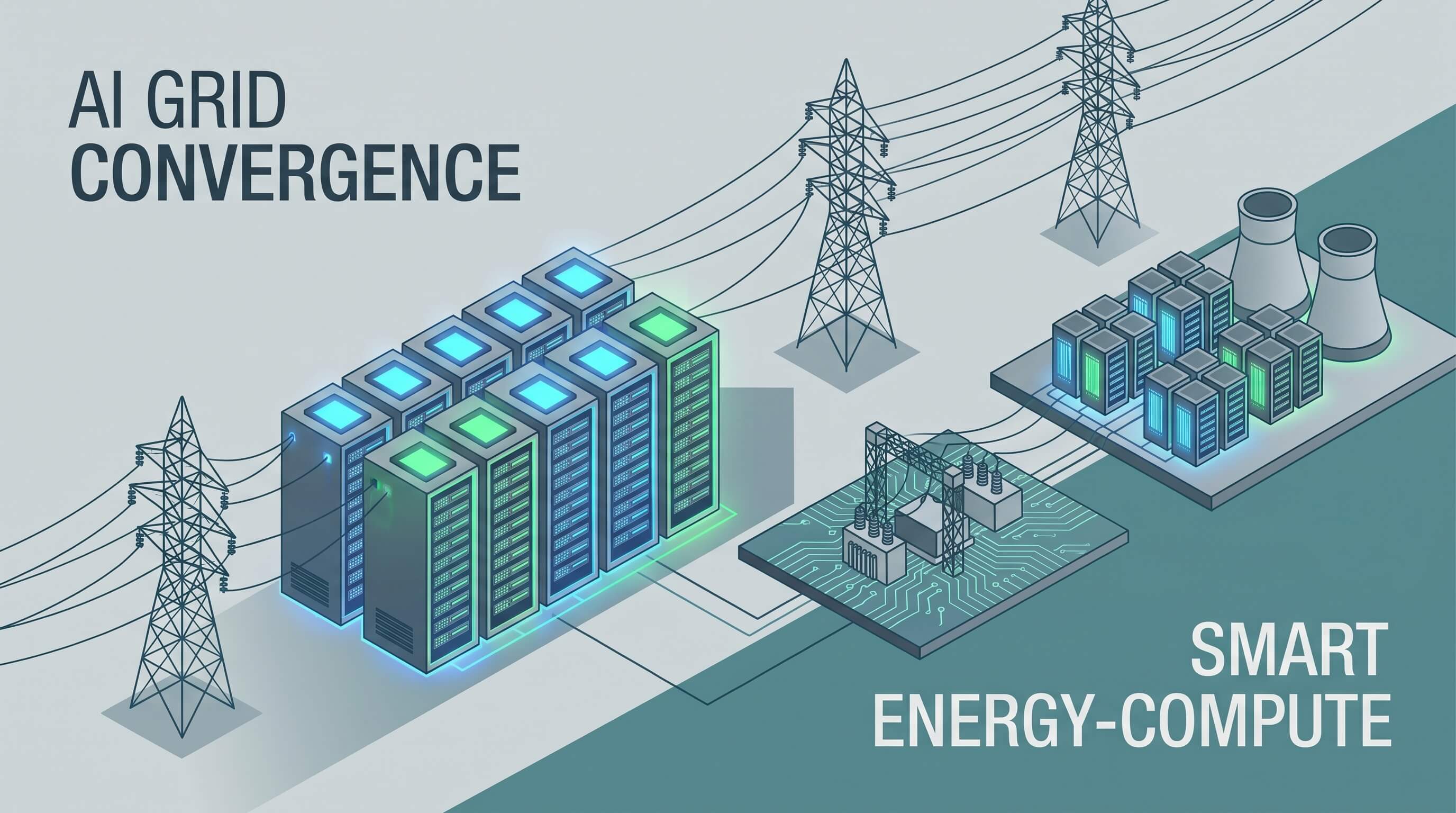
The AI infrastructure conversation has been dominated by chips for good reason. Advanced GPUs, high-bandwidth memory, and packaging capacity remain scarce, expensive, and geopolitically sensitive. But the center of gravity is shifting. In 2026, the more stubborn limit on AI expansion may not be how many accelerators companies can buy. It may be whether they can find enough electricity to turn those accelerators on.
That sounds like a boring utilities problem until you look at the numbers. Lawrence Berkeley National Laboratory estimates that U.S. data center electricity demand could rise from 176 TWh in 2023, about 4.4 percent of total national consumption, to roughly 325 to 580 TWh by 2028. A recent Belfer Center brief argues that in some regions AI-driven demand is already outpacing available capacity, pushing developers toward delays, direct power contracts, and on-site generation strategies that would have sounded extreme a few years ago.
The bottleneck has moved from procurement to interconnection
This is the part of the AI buildout that tech culture has been slow to internalize. You can sign supply agreements for servers, lease land, and line up financing, then still lose years waiting on transformers, substation upgrades, transmission planning, and utility approvals. Data center development is starting to look less like pure cloud economics and more like industrial siting.
That changes who matters. Utilities, grid operators, regulators, local governments, and energy developers now shape AI timelines as much as chip vendors do. A hyperscaler with deep pockets can still move faster than most competitors, but money does not dissolve interconnection queues or create transmission capacity overnight.
The result is a new form of strategic competition. Companies are racing not only to secure NVIDIA allocations or custom silicon roadmaps, but also to lock in power access, regional incentives, and long-dated infrastructure rights. In practical terms, that makes the next wave of AI capital spending look more like a merger of cloud strategy and energy policy.
Why power is a harder constraint than it first appears
A chip shortage is painful, but it is legible. You can count units, analyze vendor roadmaps, and estimate production increases. Power constraints are messier because they are local, political, and entangled with public infrastructure. One region may have generation but weak transmission. Another may have land but no substations. A third may have utility willingness but community opposition.
The Belfer Center notes that rapid data center growth can create real grid reliability concerns, including cases where sudden disconnection events force emergency balancing responses. At the same time, the wrong policy response creates a different risk: utilities and consumers could end up paying for oversize infrastructure if projected demand fails to materialize. That makes regulators cautious, and caution is not what the AI industry wants from infrastructure timelines.
There is also a climate angle. When companies cannot get grid upgrades fast enough, they start looking at gas peakers, reciprocating engines, behind-the-meter generation, and any arrangement that can secure megawatts on schedule. That may keep AI projects moving, but it can clash with state decarbonization goals and create backlash from communities that were promised a cleaner digital economy.
Industrial policy is no longer just about fabs
For the past few years, industrial policy in tech has focused on semiconductor manufacturing, export controls, and supply-chain resilience. Those still matter. The United States, Europe, and China are all treating advanced compute as a strategic asset, and export policy continues to shape who can buy what. But there is a growing mismatch between how policy talks about AI capacity and what actually determines deployment speed on the ground.
It is not enough to subsidize fabs or celebrate domestic chip output if the downstream buildout runs into transmission bottlenecks and permitting delays. A serious AI industrial policy now has to include grid modernization, faster interconnection processes, transformer supply, workforce capacity for utility construction, and clearer cost-allocation rules for large loads.
That is not a glamorous agenda, which is exactly why it matters. Tech policy often prefers frontier announcements to transmission planning. But a great deal of AI competitiveness will be decided by the unglamorous layers, because that is where project schedules live or die.
What this means for the next phase of the AI race
The companies that adapt fastest will treat power as a first-class design input rather than a procurement afterthought. That could mean building in power-rich regions instead of talent-rich ones, signing unconventional energy partnerships, designing inference clusters for better efficiency, or spreading workloads across a more geographically diverse footprint.
It could also change the economics of model deployment. If electricity and interconnection become scarcer, efficiency starts to matter more relative to brute-force scaling. Smaller models, better utilization, more disciplined inference budgets, and hardware-software co-design all look more attractive when every megawatt has strategic value.
This is one reason the AI market may become more regionally uneven than current narratives suggest. Some places will attract data centers because they can move power and permits faster. Others will talk about AI leadership while quietly discovering that their grid cannot support the ambition on political timelines.
The next AI shortage may not look like a shortage at all
When people imagine infrastructure scarcity, they picture empty racks waiting for GPUs. The next wave may look subtler: projects announced with fanfare, then delayed for transmission work; campuses built in phases because full power is unavailable; or clusters deployed with interim generation because the grid connection is years out.
That is still a shortage, just one that appears in construction schedules, utility dockets, and local politics instead of server spec sheets. And it may prove more durable than the current chip crunch because public infrastructure evolves more slowly than semiconductor supply chains.
The AI boom is pushing tech deeper into the physical world. That means the industry's competitive frontier is no longer just about model quality or chip access. It is also about substations, transmission corridors, rate cases, and the deeply unsexy mechanics of keeping very large computers powered. For 2026, that is not a side story. It is the story.