AI coding agents just flipped developers from writing code to reviewing it
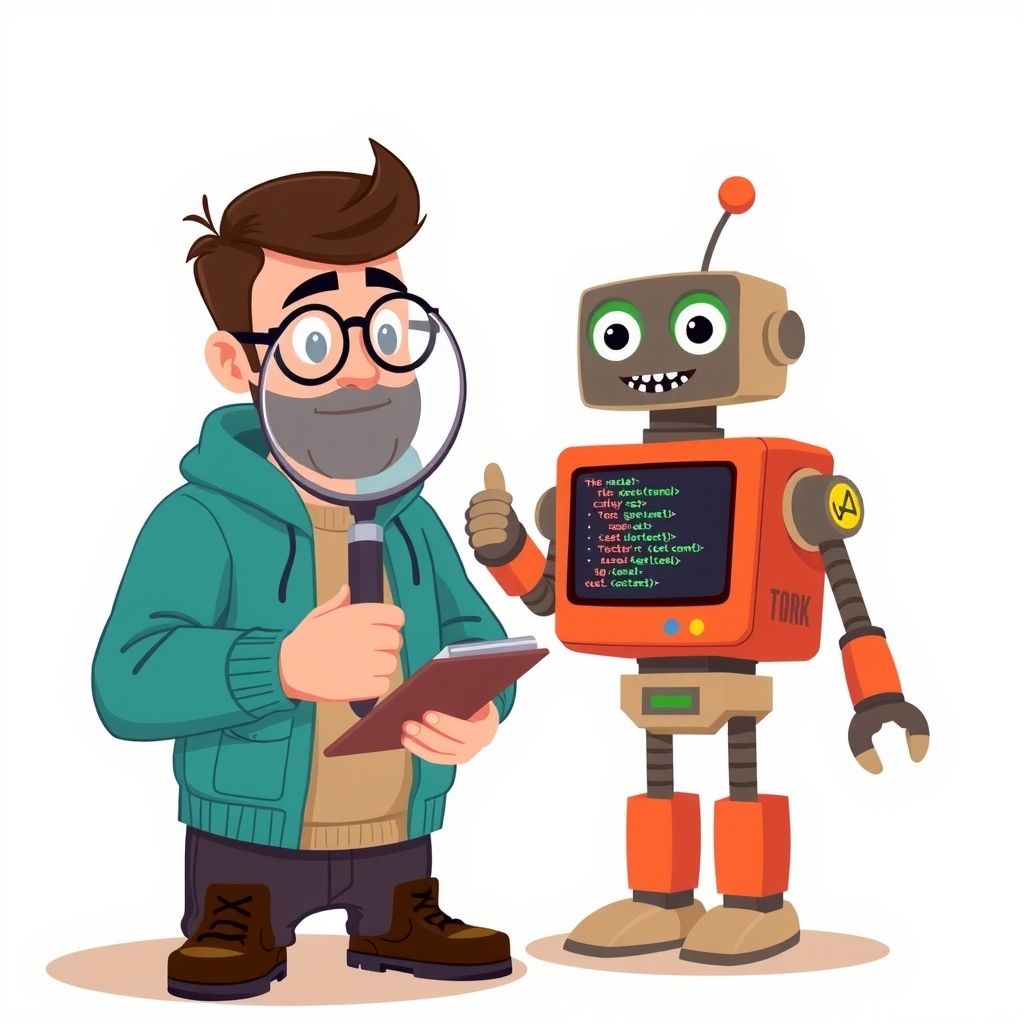
Forty-two percent of code developers commit today is AI-generated or AI-assisted, up from 12% in 2025, according to Sonar's 2026 State of Code Developer Survey. That statistic gets cited constantly as evidence that AI is "writing software now." It obscures the more consequential shift underneath it: 81% of developers say they now spend more time reviewing AI-generated code than they used to spend reviewing human-written code, and 38% say reviewing AI output takes more effort than reviewing a colleague's work, not less. The job hasn't been automated away. It has been restructured — from producing code to auditing it, and auditing AI output turns out to be harder than the productivity narrative assumed.
Why Review Got Harder, Not Easier
The intuitive assumption was that AI-written code, freed from human fatigue and inconsistency, would be easier to trust and therefore faster to review. The opposite has proven true for a specific reason: AI-generated code is confidently wrong in ways human code rarely is. A human developer who doesn't understand a library's edge cases usually writes code that visibly struggles — awkward workarounds, TODO comments, defensive checks that hint at uncertainty. A large language model generates code with the same syntactic fluency whether it fully understands the requirement or is pattern-matching against superficially similar training examples. The uncertainty signal that experienced reviewers rely on to know where to look closely simply isn't there.
This means reviewers can't skim AI-generated code the way they might skim code from a trusted senior colleague. Every function needs the same scrutiny, because a subtly wrong implementation reads exactly like a correct one. Combined with 72% of developers who tried AI coding tools now using them daily, and 84% globally using or planning to use them, the volume of code requiring this uniform scrutiny has grown far faster than review capacity has.
What's Actually Changing in Practice
Teams adapting well to this shift are making three concrete changes rather than treating AI code review as business-as-usual code review with more volume.
First, they're separating "does this run" from "is this correct" as distinct review passes, because AI-generated code reliably passes the first test and unreliably passes the second. Automated test coverage, type checking, and static analysis handle the first pass at scale; human review time gets reserved specifically for logic correctness, security implications, and architectural fit — the categories where AI output's confident-but-wrong failure mode actually bites.
Second, teams are requiring AI-assisted commits to include the prompt or task description that generated them, not just the resulting diff. Reviewing "here's code that does X" without knowing what was actually asked for makes it much harder to spot cases where the AI solved an adjacent problem instead of the intended one — a common failure mode that looks like correct code until it's tested against the actual requirement.
Third, some teams are deliberately routing AI-generated code through a second AI model for adversarial review before human eyes see it — using one model to generate and a differently-trained model to critique, on the theory that models trained differently are less likely to share the same blind spots. Early results are mixed: it catches a meaningful share of logic errors but is unreliable for security-sensitive code, where the review agent needs to reason about attacker behavior rather than just correctness.
The Skills That Are Actually Growing in Value
The developers navigating this well are not the fastest at writing code — they're the ones best at reading it quickly and correctly, a skill that was previously secondary to writing speed and is now the bottleneck. Code review skill, historically taught informally through years of pairing and mentorship, is becoming something teams need to train explicitly: what does a subtly wrong recursive function look like versus a correct one, how do you verify an AI's claimed understanding of a spec rather than trusting its confident tone, what's the fastest way to construct a test case that would expose the specific failure mode AI-generated code tends toward for a given task type.
Architectural judgment is following the same trajectory. AI models are good at generating code that satisfies a locally-scoped specification and much weaker at recognizing when a locally correct solution creates a system-level problem — a caching layer that works for the tested case but breaks an invariant elsewhere, a database query that's correct but doesn't scale to the actual data volume. That system-level judgment was always a senior-engineer skill; it's now the load-bearing skill, since AI tools have compressed the gap in raw code-writing output between junior and senior engineers while leaving this judgment gap untouched.
What Teams Should Do Now
If your team's AI adoption metrics track lines of code generated or time saved writing code, you're measuring the wrong half of the equation — measure review time and defect escape rate instead, since that's where the actual bottleneck has moved. Build reviewer checklists specific to AI-generated code's known failure patterns (silently wrong edge-case handling, plausible-looking but incorrect library usage, solving the adjacent problem instead of the stated one) rather than reusing checklists designed for human-authored code. And invest in training junior engineers on code reading and verification explicitly, rather than assuming it will develop naturally the way it did when writing code was itself the slow, learning-intensive part of the job — for a generation of engineers who write less code by hand, that assumption no longer holds.